


Desertcart purchases this item on your behalf and handles shipping, customs, and support to Finland.
📷 Own the moment, master the frame — Nikon D90, where pro meets passion.
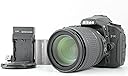
The Nikon D90 is a professional-grade DX-format DSLR featuring a 12.3MP CMOS sensor, 4.5 fps continuous shooting, and an 11-point autofocus system enhanced by Nikon's Scene Recognition technology. It includes a versatile 18-105mm VR lens and offers 720p HD video recording at 24fps. With a high-resolution 3-inch LCD, EXPEED image processing, and advanced exposure controls, the D90 empowers serious photographers to capture stunning stills and cinematic videos with precision and speed.
| ASIN | B001ENOZY4 |
| Age Range Description | Adult |
| Aperture modes | F3.5–F5.6 |
| Aspect Ratio | 3:2 |
| Auto Focus Technology | Continuous, Contrast Detection, Face Detection, Live View, Multi-area, Phase Detection, Selective single-point, Single |
| Autofocus Points | 11 |
| Best Sellers Rank | #330,168 in Electronics ( See Top 100 in Electronics ) #482 in DSLR Cameras |
| Brand | Nikon |
| Built-In Media | Battery, Body Cap, Eyecup, Neck Strap, Remote, Shoe Cap, USB Cable |
| Camera Flash | Built-In |
| Camera Lens | 5.8x AF-S DX Nikkor 18-105mm f/3.5-5.6G ED VR |
| Color | Black |
| Compatible Devices | Computers, external storage devices, and other devices with USB or A/V ports |
| Compatible Flash Memory Type | SD, SDHC |
| Compatible Mountings | Nikon F (DX), Nikon F (FX) |
| Connectivity Technology | HDMI, USB |
| Continuous Shooting | 4.5 |
| Customer Reviews | 4.4 out of 5 stars 483 Reviews |
| Digital Scene Transition | zoom |
| Display Fixture Type | Fixed |
| Display Resolution Maximum | 920,000 |
| Display Type | LCD |
| Dots Per Screen | 920,000 dots |
| Dynamic Stops | 10 stops |
| Effective Still Resolution | 12.3 mp |
| Expanded ISO Minimum | 200 |
| Exposure Control | Automatic, Bulb, Manual, aperture-priority, i-TTL program flash, program AE, shutter-priority |
| File Format | JPEG |
| Flash Memory Bus Interface Type | SDIO or SD bus interface |
| Flash Memory Speed Class | 2 |
| Flash Memory Supported Size Maximum | 32 GB |
| Flash Memory Type | SD/SDHC |
| Flash Memory Video Speed Class | U2 |
| Flash Modes | Auto, Slow Sync |
| Flash Sync Speed | 1/200_sec |
| Focal Length Description | 18-105 mm |
| Focus Features | Nikon Multi-CAM1000 |
| Focus Mode | Single-Servo AF (AF-S) |
| Focus Type | Automatic with Manual |
| Form Factor | Mid-size SLR |
| Global Trade Identification Number | 00388800040441 |
| HDMI Type | Type C Mini HDMI |
| Hardware Interface | HDMI, SDHC, USB |
| Image Capture Type | Stills & Video |
| Image Stabilization | Optical, VR |
| Image stabilization | Optical, VR |
| Item Weight | 1.6 pounds |
| JPEG Quality Level | Fine |
| Lens Type | zoom |
| Manufacturer | Nikon |
| Manufacturer Part Number | 25448 |
| Maximum Aperture | 3.5 f_stop |
| Maximum Focal Length | 10.5 centimeters |
| Maximum Shutter Speed | 1/4000 seconds |
| Memory Storage Capacity | 8 GB |
| Metering Methods | Multi, Center-weighted, Spot |
| Minimum Focal Length | 18 millimeters |
| Minimum Shutter Speed | 1/4000 seconds |
| Model Name | Nikon D90 |
| Model Number | 25448 |
| Model Series | D90 |
| Optical Zoom | 6 x |
| Photo Sensor Resolution | 12.3 mp |
| Photo Sensor Size | APS-C |
| Photo Sensor Technology | CMOS |
| Real Angle Of View | 170 degrees |
| Recording Capacity | 2 hours |
| Screen Size | 3 |
| Sensor Type | CMOS |
| Series Number | 90 |
| Shooting Modes | Close-up, Custom, Landscape, Monochrome, Neutral, Night Portrait, Portrait, Vivid |
| Skill Level | Professional |
| Special Feature | Lightweight |
| Supported File Format | JPEG |
| Supported Image Format | JPEG |
| Total Still Resolution | 12.3 mp |
| Total USB 2.0 Ports | 1 |
| Total USB Ports | 1 |
| UPC | 018208915750 018208254484 388800040441 |
| Video Capture Format | MJPEG |
| Video Output | HDMI |
| Video Resolution | HD 720p |
| Viewfinder | Optical |
| Viewfinder Magnification | 0.96x |
| White Balance Settings | Auto |
| Wireless Technology | EyeFi |
| Write Speed | 4.5 fps |
| Zoom | Optical Zoom |
E**E
You don't know how much this thing really rocks...
In my optional star rating section I gave this camera mostly 5's, but hesitantly. I hesitate, because it is all relative and the assumption has to made either you know what you are doing when you pick this thing as you photographic weapon of choice or your cerebral cortex is wired like Deep Blue - "...challenge/smallenge, I read books on biochemistry on my lunch break and I am an accountant". Do not buy this camera unless you are ready to take for real photographs or you like fancy expensive paper weights. There is no sense in buying this behemoth or reading 200+ reviews if you just want to snap quick pictures. Buy yourself a fancy point and shoot like the Nikon Coolpix S8000 (No, I am not a Nikon employee, but I am brand loyal like NASCAR fans...Canon sucks*!) and keep it moving. This camera is a hassle to lug around, take out, hang around your neck, keep wandering hands off of, insure you aren't banging it against walls/rocks/heads/etc...unless of course you like taking pictures and understand you don't perform heart surgery with a butter knife, Mag-Lite and degree from ITT Tech. My assumption going forward in this review is you know as much about photography as I did when I bought this thing; if you know more you probably don't need to read my ramblings. Before you can reasonably use the camera you will need to buy a memory card. I spent $90 on a 16GB card. The guy at the camera shop says the one I bought is faster and better suited for photography. Of course I might have been the sucker he needed to make his nut for the day, but I have had no problem with the card so far and since I bought this camera in September I have taken over 10,000 photos and repeated uploaded and deleted. But you MUST have a memory card because the camera does not come with one. Out of the box, I bought with the kit, this thing should have come with a soundtrack (a la Disney's Lion King) and bright lights (briefcase in Pulp Fiction). The first thing I did was charge the battery. Then I started to read the novel known as a Users Guide on how to just take a picture; the thing is the "War and Peace" of manuals. Once the battery charged I formatted the memory card, went through the numerous pre-camera shooting settings (it was like preflight before a shuttle launch it took so long) and attached what has become my trusty-dusty 18 - 105 mm. After maybe 2,000/3,000 photos I started to get an error message. You would think for the amount of coin you shell out for this device there would be no issues. Because I only had one lens and consequently did not take it off at all, the contacts between the camera and the lens never "settled" (kind of like the good old days as a kid when you would have to smack the TV to get the picture to clear up). So after calling the help desk, in CA, not India, I was told I would have to keep removing and reattaching the lens. I did as prescribed and the problem went away. Please note I was so scared I went ahead and dropped the $150 (I think) on the extended service plan - coincidence, hmmmmm. I have not had the problem since; but you do have to keep your contacts on the camera and the lens clean. The software to transfer the pictures is pretty easy to use (I am in IT, so if the most technical thing in your life is toaster, you may need some help). The more you use the camera and buy stuff for it (I have bought 2 more lens (70 - 300mm 4.5 & 50mm 1.8)- 2 more in the works, a battery pack, an extra battery, a SB-900 flash, a tripod (just go ahead an buy one you will need it) and a backpack) the more you will learn about its great powers. I have had it for almost a year, over 10,000 photos deep and I am still learning. I do not regret this purchase at all! Join in the church of NIKON, the Kool Aid is fine, no really, I drink it all the time. I recommend this camera to everyone who asks who meet my similar criteria...you are a hobbyist, but will take payment for photos; you have a good eye - learn on a cheaper camera if your "eye" has cataracts; and you understand this hobby - much like Fame - costs. * I have no bases with which to judge Canon. Some of my closes friends have a Canon (they only mildly suck). Canon sucks simply because it is not NIKON. If I owned a Canon, perish the thought, NIKON would suck. I will say this, when I picked up the comparable Canon (I use comparable lightly, my friend) I knew the NIKON was for me.
D**R
Seasoned SLR user but first time Nikon owner
I have been into SLR and dSLR for over 20 years - Olympus OM-10, Canon Elan IIe, 2 Olympus digital P&S's, and Canon digital XTi. I've always have high regards for Nikon cameras but thought they were more expensive than I care to spend (and when compared to Olympus or Canon prices). When my 2-year-old Canon XTi started malfunctioning(totally useless for flash/low-light photography) and with the high out-of-warranty repair costs to get it fixed, I started looking for another dSLR. My choices were Olympus E620, Canon T1i and Nikon D5000 in one class group and Canon 50D and Nikon D90 in another class group. I really really like the Olympus E620 (as I did with my old OM-10 which I still have today) - everything about it shines except for its average IQ above ISO 800. Low-light/High ISO IQ is very important to me and is the top deciding factor when I was doing the comparisons, all else being equal. My experiences with my 2 Canon's can be compared to my cooking - 59% success, 40% misses and 1% brilliant hits that amazes even myself :) Basically, I had to work harder to get a brilliant shot with my Canon's. This is partly user errors and partly camera's average focusing/metering precision. So, it came down to D5000 and D90. The D5000 doesn't autofocus with older Nikkor lenses and there were a couple of recalls on certain production batches. I bought my Nikon D90(plus the 18-105mm kit lens) from amazon.com a few weeks ago and it was my very first Nikon. I was excited and apprehensive at the same time. I know that if I like it enough, I'll start spending/buying other Nikon lenses and my Canon's camera bodies and lenses would start collecting dust. After 1 week and 200 shots, WOW! This camera is like my wife's cooking - 98% brilliant hits and 2% misses. Everything(almost) about it is beyond reproach. I tried to find fault with it but every test I threw at it, it passed with distinction. The IQ, focusing/metering precision and speed, design and engineering are the best I have had seen in this class. ISO 200-3200 are very useable. ISO6400(the max) is also useable in a pinch but I would invest in a faster lens (which I did in a Nikkor 50mm f/1.8) to stay within ISO3200. Low-light shots without flash are sharp and color perfect. Daytime shots are punchy and crisp. Flash fills are just right - no bluish tint. There are more focusing/metering adjustments than I know when/how to use. This camera leaves me breathless :) One of the best features is the "My Menu". With the hundreds of adjustments and options, I had to trim them down and I narrowed down my most frequently used functions to these 4: 1) Picture Controls (various levels of sharpness/saturation with default ADL on) 2) WB settings 3) ISO settings 4) Autofocus-Area (Point, Dynamic, Auto-area, 3D-tracking) and I programmed them into "My Menu" for quick, easy access. Unless you carry the manual with you all the time, the "My Menu" is your next best thing. Things I like best: a) above-mentioned "My Menu" (and high customization) b) fast, accurate focusing/metering c) IQ in low-light/high ISO d) lenses including inexpensive older Nikkor's (many between $100-$200 range) eventhough this was not in my priority list given that Canon and Olympus also have equally good selections Things I can do without: a) Video - I already have a 1080p AVCHD Canon camcorder b) Live view - without an articulated screen, its usefulness is somewhat lost on me Things that I'm not happy with: a) flimsy battery door - this thing looks like it's going to break every time I open/close it Overall, I'm very very happy with my purchase and worth every penny. I hope it will serve me for at least 5-7 years. UPDATE (2010-08-11): I'm happy to report back that I'm still amazed at what this camera can do. And my biggest fear came true - I have been spending my kids' college funds like a drunken sailor on shore-leave on accessories ;) I've since added the following: 1) Nikon 70-300mm f/4-5.6G AF Nikkor SLR Camera Lens 2) Nikon 50mm f/1.8D AF Nikkor Lens for Nikon Digital SLR Cameras 3) Nikon SB-600 Speedlight Flash for Nikon Digital SLR Cameras 4) Sigma 10-20mm f/4-5.6 EX DC HSM Lens for Nikon Digital SLR Cameras 5) Raynox DCR-250, Macro-Scan 2.5x Super Macro Conversion Lens 6) Filters, filters and more filters: Circular Polarizer, ND 0.9 7) Lowepro camera bag to safely/securely hold all the new additions 8) Nikon cleaning kit 9) More functions to "My Menu" as I discover new tricks (e.g. AutoISO, SB-600 Flash master/slave mode) The frightening part is I'm not done yet - there are a few more items on my shopping list (uh-oh). I've never spent so much on accessories on a camera before. This attest to the respect I have for what this camera can do and how can I feed it with more gears so as to take me to the next level of photography.
B**Y
Best camera for the $$$
I've owned a point and shoot camera for 2 years now, and I have always been jealous of the quality and versatility of DSLR cameras. I didn't want to chunk down $1K on a camera without knowing about them, so I did a lot of homework. Before purchasing the Nikon D90 w/ kit lens, I researched several web sites along with other photographers and artists alike. All sources pointed to the Nikon brand for it's high quality build, reputation and ease of transition from newbie beginner shots to the professional arena. I opted for this model in lieu of previous cheaper Nikon's so I can use older glass prime lenses with the D90, thus potentially saving me money in the future when it comes to buying different lenses. The kit lens is an excellent beginner lens, however after 500 or so pictures, I can see it's limitations, and will be looking for a 50mm f/1.4-f1.8 lens for better portrait pictures. I would not, however, go and buy a ton of expensive lenses before you use the kit lens and determine if it is enough for you or not. I searched several competitor web sites and stores and Amazon offers the best price for this kit. Other web sites are roughly $120-200 more for the same kit (October 2009). I knew that a camera of this caliber would be a challenge, so I bought a book on digital photography specifically around the D90 prior to purchase. I have the grasp of the basic functions, and regular day pictures, however night photography is a little trickier. I would highly recommend a tripod if you plan to shoot a lot in low light conditions. Even though the camera has VR, it does not fix all movement/exposure issues in low light conditions. MAIN PROS: - Great price - Ease of use (with basic features) - Interchangeable with older lenses for better future value - Live View - Great 12.3 megapixels for very sharp photos - In camera photo editing - Shoots in RAW & JPEG MAIN CONS: - Nikon software is TERRIBLE! I use a Mac running 10.6 snow leopard and the software crashes constantly. Nikon's web site has no solution for this, even after the software supposedly updates itself after install. Apple's Aperture, iPhoto and Adobe products have no problem recognizing the camera and quickly importing the photos. - Kit does not include a SD card, therefore preventing you from taking pictures right out of the box. Prepare to make a run to the store for a minimum of 4GB SD card (takes about 1K JPEG photos).
R**K
Great Camera
This is my first DSLR, and I couldn't be happier. I read endlessly about different cameras before I decided on the D90. In the end it came down to the D90, and Canon's 50D, mostly due to their price points. Both are truely awesome and feature packed camera's. I loved the feel of the 50D, as I have pretty large hands. The 50D is about a half inch wider than the D90, and a slightly larger grip. The D90's grip is great as well, just a little smaller. Because of this, I purchased a battery grip along with the camera (Zeikos ZE-NBG90), and it feels great. (If you're wondering why I'm only talking about Nikon and Canon, it's because both companies have an extensive range of products for all skill levels, so plenty of room for me to upgrade bodies and lenses in the future. They are also both extensively used by professional photographers, so there must be something good about them.) A few things made me ultimately buy the Nikon D90..... First, the included kit lens. Nikon includes a 18-105mm VR lens, and Canon includes a 28-135mm IS lens. Both have Vibration Reduction/Image Stabilization, and both cost about the same if you bought them separately. On a crop frame camera (aps-c size), which both of these are, The 18-105mm is more usefull and versatile as an all purpose lens. I felt that it would serve better indoors, in smaller spaces, than the Canon lens would. For other beginers out there, on a crop frame camera you have to use a multiplier to figure out what the actual range is of a lense. For Nikon, it's 1.5, and for Canon, it's 1.6. So my Nikon 18-105 lens functions like a 27-157 on my D90 crop frame (18x1.5 , 105x1.5) The included lens on the Canon 50D is 28-135mm which, on the 50D, would function like a 45-216mm lens. This would be a great range for outdoor use, but I felt it didn't get wide enough for indoor use. This lens mounted on a full frame camera would be more appropriate (no multiplier). In Canon's defense, there are two other 50D kits available, one with a 17-85mm lens, and another with an 18-200mm lens. In my opinion, both lenses are inferior in quality to the 28-135, and they both are more expensive. The 17-85 kit was about $200 more, and the 18-200 kit was about $400 more. This made the 50D to expensive for me, especially when you could step up to the Canon 7D for $1500(body only) and $1900(with 28-135mm). Second are the number of buttons, and button placement. Everyone is different, and has different ideas about how cameras should be set up. For me, I like the idea of having more buttons on the outside, as the Nikon does when compared to Canon. If I have to go into a menu to get at a certain function, chances are, I'll forget I have that function. Being a beginner, I wanted as much in my face as possible to help me learn. This also makes for very fast adjustments for beginers and advanced photographers alike. As for button placement, the Nikon just felt more natural. Again, everyone is different. Lastly, I considered both Nikon's and Canon's full line of cameras. I do plan on upgrading in the future, so I looked at the upper end cameras as well. Whatever lenses I buy for my D90, I want them to work on whatever body I might upgrade to in the future (lenses are expensive!!!) I think I just liked Nikon's take on photography tools a little better. From styling to functionality, Nikon just seemed more... me. I may regret this, as Canon also makes outstanding products, and it seems like they have a lot more lenses, although I havn't actually counted. For now, I'm looking forward to a long relationship with Nikon, expecting that their more pricey camera bodies function as naturally and comfortably as the D90 does. I absolutely love the Nikon D90, and am very happy I bought it. I feel it's a great camera for beginers, and it'll grow with me as a photographer. I was able to create amazing images right out of the box. It's very easy to use. I sat on the couch with it that first night and just played with menus and settings, and learned my way around the camera very fast. I'd recomend the D90 to anyone, beginners and advanced amatures alike. I used cameralabs.com extensively before I decided on anything. Outstanding website with a lot of writen and video reviews on a great many cameras and lenses. Thanks Gordon!! A few tips if you buy the D90... *an 8g memory card will give you about 350 RAW+JPEG shots, or 1000+ JPEG shots *the D90 shoots video... barely. If you want to shoot video, buy a video camera.... seriously. *if you're going to shoot video, or are going to use live-view a lot, you NEED an extra battery.
D**C
Great camera...if it worked! Buyer beware of Amazon and Nikon
Right out of the box, this camera had all of the problems that everyone else has reported - the flashing F-- error (indicating that a lens isn't attached, even though it is), CHA error (tried three different authorized SDHC cards, and it had problems with all of them), and the random lock up with the flashing ERR message. The only solution was to remove the battery. Then I could take five more pics before it would crash again. No good. I wanted to get an exchange through Amazon, but they no longer carry the camera (after one week!), so I'll have to wait a couple months for it to be back in stock. Of course, at that point, I'm sure it will be cheaper since the new Nikons are slated to come out at the end of August - lose lose for me. Or I can get a refund, but then I'll have to spend more on the same camera somewhere else. I had already maxed out my budget to buy this one, so I can't really afford to spend more. I bought mine when everyone was having a sale on Nikons, and now no one has them on sale, so not only would I be out another $100 at least, there's still no guarantee that I won't have to go through all of this hassle again the next time. I wish I had bought from anyone else besides Amazon, as everyone else seems to still have it in stock! I called Nikon, and I'll have to pay shipping to send it to them, then wait at least 7-10 business days for service (their quoted *average* service time - who knows how long it will actually take), then have them ship it back to me (don't know if I have to pay for that or not, didn't say). So I'm out additional money, I STILL won't have a camera for at least two or three weeks of prime summer shooting season, and when I do, I'll just have to hope that they indeed fixed it properly (exchanging for a new one would make me feel a lot better than forever owning a known lemon). I was so excited to have this camera for the summer, but now I'm just sad and frustrated. The camera itself seems like it would be great if it worked. It seemed very sturdy, had a fantastic feature set, and took great images. It looks like my best option is to just return it to Amazon and buy the Canon T2i from someone else instead. :-(
T**S
Which camera do I choose????
I've been using a point and shoot camera for about 5 years now - I'm by no means a photographer, just an average dad trying to take some pictures. My son recently turned one and I've been finding it more and more difficult to capture those precious moments. I press the button on my point and shoot....delay...missed the shot. Also whenever I take photos indoor I've found they are always blurry or noisy, just not very good. So I elected to get a Digital SLR camera - wow they are expensive! I did very extensive research before making the most important decision. Which one do I get??? I decided to narrow my search to Canon and Nikon, the two top brands. I was considering the Canon Xsi, Canon 40D, and Nikon D90. I quickly decided the Xsi was not for me. On paper it looks great. It has a ton of great reviews and I'm sure it takes amazing pictures. The price was the cheapest of all the cameras I was considering. After visiting Best Buy and actually trying the cameras out the xsi felt like a toy compared to its big brother the 40D. Also the kit lens was very disappointing as far as zoom capabilities. I did like the 40D a lot. The body seems really solid and well build (even more so than the D90). I loved the 6fps rapid shooting (although I can't imagine I would every really need to shot quite that fast). The kit lens seems like a huge improvement over the wimpy one on the xsi. The camera seemed good to me but after picturing my wife using it, it seemed just a tad to "big and heavy". Some people might disagree. The D90 had a few features that really appealed to me. One of the main things I really liked about the D90 was the beautiful 3" VGA screen for reviewing. This screen was a big reason why I went with this camera over the Canon models. It's the same size but has 4 times the resolution. Why would you care about this? It's just really nice when you take a shoot you can immediately tell if you got it or not. With the canons I found you had to either zoom in or download to the computer before you could really tell if the photo came out well. The D90 also just had a lot of other tricks up its sleeve that I thought were nice. There is a HDMI output to hook this baby up to your fancy HDTV. The camera also has built in software that creates an animated slideshow of your pictures for viewing on the TV. Again, doesn't really effect image quality but it's a cool feature. There's also some neat post processing you can do right on the camera including red eye removal, black and white filter, or tilt the picture if you accidentally took it at a slight angle. Of course there is the movie mode also (lack of auto focus makes this feature a little disappointing actually). One final selling point for the D90 over the 40D was the kit lens. For me the kit lens is very important because I don't really plan on purchasing a bunch of different lenses and swapping them out all the time. I just want a decent "all purpose" lens. The 40D's 28-135mm kit lens just felt a little to "zoomed-in" for me. After playing with it I wanted to be able to zoom out more but was unable to. The D90's 18-105 feels like a pretty good range for me (keep in mind that these cameras have a 1.5 multiplier built in). The best advice I can give is to go try the cameras out before you order one. Just go with the one you feel most comfortable with, trust your gut. I've been very happy with my D90 but I'm sure all of the cameras I was considering would have been a huge step up from a point and shot. UPDATE 12/3/12 Still really happy with this camera. It takes amazing pictures and has held up very well. I would buy it again no questions asked.
J**W
A good camera for energetic, detail-oriented amateur photographers
I got the Nikon D90 after considering the Canon T2i in some detail. The two major features that sold me on the Nikon was a superior exposure and color system, and a better kit lens. Since I have a long technical involvement in photography I don't mind customizing a lot of settings and changing settings before shots. If that isn't your style, you might think twice about the complexity of the D90. The biggest drawback is the focussing system, for me. I have tried the automatic and manual focussing both, and seem to trip over some detail of the system a little too often for my comfort. If you have it on single point auto focus, you can be reasonably sure of what you are going to get for focus...reasonably. But too often I have used this set up on, say, a single face in a group or on a flower stamen, for example, and found that the actual focal point in the image fell about 5-8% of the distance to the object behind the object under the focus highlight in the viewfinder. Not terrible, but enough to spoil some carefully set-up shots. Autofocus using 3d focussing does not work for me, and multipoint focussing always leaves me with the focus point highlight somewhere I don't expect it. If I am very alert and fully aware of what is going on, I can catch this and correct it by half-pressing the shutter and manually moving the focus point where I want it using the click dial. But it spoils the flow of attention on a shot. In fairness, I suspect some tutoring by an experienced user might overcome these perceived difficulties, but the documentation and materials I have found online do not address this issue well enough for me so far. I don't think there is a perfect camera out there. It took me over 20 days of shooting every day to finally feel I understood the options and their effects on my shooting style. I only gave the Canon an hour in the camera shop and several hours of close reading on the web, and that isn't the basis of a fair comparison. But the pentaprism viewfinder does provide a larger, brighter in-camera image to compose with. If you like to experiment, the range of control you have is great. And since I am on a limited budget, the kit lens gives me a broader range of focal lengths to work with. I also like the battery life and the size/form factor of the camera. It fits my hand better. My impression might be skewed by the fact that I got a Nikon s8000 at the same time, and despite the smaller image sensor on the s8000, it is giving the D90 a real run for its money in image quality and ease of use in quite a range of picture settings. The D90 is superior in low light and fast response, which alone still makes it worth it all for me. But I have shot the same outdoor scene with both cameras, and printed 13 x 19 prints and could not tell which was from which camera. Indoor shots are usually easy to distinguish. The D90 feels rugged and well made, and I haven't had the info drop-out from the lens problem that seems to plague some users. Ideally I would like to have waited for the next version, which would have full HD, stereo mike external jack, and 50% or more increase in sensor resolution. But I finally decided that the wonderful color and exposure intelligence built into the D90 was not going to get appreciably better in the next version, and increased sensor resolution has hit a physical limit where design tradeoffs have to be made, so I went ahead and took the plunge. I haven't regretted it. But I would be careful to whom I recommend it. If you are impatient or intimidated easily by technical complexity, this camera might end up on your shelf more often than not. As a side note, I was concerned at first about the weird video on this camera. Read around on the web and you will find out what I mean. But after taking a series of videos on the tripod, foregoing zoom and pan and concentrating on focal plane movement only, I am pretty happy with it as a DSLR adjunct to my full HD camcorder.
R**L
Excellent camera and still comparable if not better than newer models
I've owned this thing for 4 years or so now. Nikon has introduced a few models since then, but this thing is still just about perfect for the picture taking I do. Lots of lens choices, tons of features, ergonomics just fit my hands like I designed it for myself. I've looked at the newer stuff, and for the few things they've "improved" on, I still think this was and is the best fit for me. Only reason I could ever see moving it to second camera status is if I ever decide to go full frame. I'd love too, but tough to justify the price when this D90 does such a fine job even with the reduced sensor size. Here's some points to consider if looking at one of these to buy. Its a 12.3 megapixel camera. Smallish by recent new cameras, but more than enough to print very nice pictures 11x14 or larger in some cases. If you are using it for 4x6, you will have excellent results. The camera does shoot HD video, but it is limited to the 720, it will not shoot 1080. In my experience, autofocus during video shoots leaves something to be desired. The camera, with the kit lens, 18-105, has very decent low light capabilities. Of course, the kit lens is slow, so a faster lens would improve low light capabilities. On a nice bright day, without using flash, the camera pops off 4.5 or 5 frames a second. I have used this camera a lot at the drag strip and have captured lots of great wheelie action using the continuious shooting. My daughter was also a polevaulter, and this feature allowed me to catch lots of great action shots as she went up and over the bar. I used it a few times, indoors, for high school basketball, with the 18-105 lens, it was slow and not so great. With a faster lens, excellent results indoors shooting action shots. The camera itself has lots of choices to select the type and heat range of the lighting you're shooting in, so great results are possible with incandesent, florescent, halogen, sunlight, moonlight, you name it, the camera can shoot in it. There are quite a few in camera editing functions to correct, um, operator error. LOL. Camera shoots in both color and black and white. There are various settings which allow quit, low grade snapshots, fine picture quality, and up to RAW settings. RAW allows, actually demands, that you have computer capabilities to edit the photos. RAW prints cannot be processed at your local Wal-Mart. The detail possible and editing possible in RAW is unbelievable. Be forewarned tho, RAW eats up lots of storage on your SD cards. There is an option to shoot both fine and RAW at the same time, which allows easy printing of the fine, and the capability to edit and change appearances in the RAW format. This camera has an internal focusing motor for the autofocus lens'. Nikon 3000 series does not have this feature. What does this mean? Not all lenses will autofocus on a 3000, where practically all autofocus lenses will function on the D90. There is also an auto/manual switch on the camera body which allows you to manually focus any lens attached to the camera if you desire more control than the autofocus feature allows. Speaking of lenses, the mounting design Nikon is using has been around since the late 70s. This means that some really nicely made Nikon lenses that you may have laying around from the 80s or 90s have a really good chance of working great on the D90. In the first part of my review, where I give my personal likings of the camera, I mention its a reduced sensor camera. This sorta works to your benefit. The reduced sensor has a multiplying effect on the lens rating. This is approximately 1.5 times. So, a 100mm lens on a D90 is equivalent to a 150mm lens on a full framed camera. 400mm is equal to 600mm, and so on. The camera has a nice large screen on the back to select options in the cameras menu. You can also change to live view which allows the screen to function as the eye piece. The screen is stationary, it does not tilt, swivel, flip, etc. Using it in live view also slows down the reaction of the shutter a bit. On top of the camera is a small simple screen that shows many of your settings at a glance. Using the small screen and function buttons you can switch shot quality, ISO, check battery charge, number of shots taken and number remaining on card, F stop, flash, etc. The camera also has two dials in very well placed positions. A front dial right below the shutter release, and a rear dial behind the shutter release. These dials do quite a few things, such as changing ISO, flash, and using both front and rear dials, you can change F stops and shutter speeds without pushing any other buttons first. So, for those desiring manual operation instead of auto, everything is very easy to change while looking through the eyepiece. The camera has a pretty decent built in flash and the capability of adding external flash attachments. In this review, I've only touched on a fraction of this cameras capabilities. I highly recommend this camera if you can get ahold of one new or used.
A**N
Je suis satisfaite du produit
Tout était parfais
R**I
Amazing!
Great deal, the camera is amazing. It's a great startup camera, the quality is truly awesome! Came in very fast exactly as it was described.
Trustpilot
1 month ago
5 days ago