The Collected Poems: A Bilingual Edition (Revised)
Product ID: 1694970
Desertcart purchases this item on your behalf and handles shipping, customs, and support to Finland.
A revised edition of this major writer's complete poetical work And I who was walking with the earth at my waist, saw two snowy eagles and a naked girl. The one was the other and the girl was neither. -from "Qasida of the Dark Doves" Federico García Lorca was the most beloved poet of twentieth-century Spain and one of the world's most influential modernist writers. His work has long been admired for its passionate urgency and haunting evocation of sorrow and loss. Perhaps more persistently than any writer of his time, he sought to understand and accommodate the numinous sources of his inspiration. Though he died at age thirty-eight, he left behind a generous body of poetry, drama, musical arrangements, and drawings, which continue to surprise and inspire. Christopher Maurer, a leading García Lorca scholar and editor, has brought together new and substantially revised translations by twelve poets and translators, placed side by side with the Spanish originals. The seminal volume Poet in New York is also included here in its entirety. This is the most comprehensive collection in English of a poet who―as Maurer writes in his illuminating introduction―"spoke unforgettably of all that most interests us: the otherness of nature, the demons of personal identity and artistic creation, sex, childhood, and death." Review: An Astounding Collection - I had hoped to delay a review of this compendious volume until I could have managed to distil a summary of Lorca's poetic vision. But I can't. The sheer amount of work he crammed into the fifteen years from 1921 to 1936 is simply astounding, as is his stylistic range. There is, for example, the almost musical brevity of the early SUITES (Lorca was an accomplished pianist), some of which, in their surreal imagery, are as taut as a haiku: The air pregnant with rainbows shatters its mirrors over the grove. There are the longer forms of the GYPSY BALLADS (1924-27), with their air of popular storytelling, a narrative of loss that leaves many of its questions unresolved. There are the sprawling Whitmanesque poems he wrote from America in 1930-31, later published as POET IN NEW YORK. And there is his return to simplicity in his final years with THE TAMARIT DIVAN, pain (and sometimes joy) contained in almost classical form: Every afternoon in Granada a child dies, every afternoon. Every afternoon the water sits down to talk things over with its friends. [...] Fortunately, this volume has a 64-page introduction by Christopher Maurer that quite superbly places Lorca in his geographical, social, and stylistic context. Born in Andalusia, he challenged the hegemony of Madrid, fighting for a style closer to the heart of his people. Born of a bourgeois family, he nonetheless felt a lasting concern for the poor, and was ultimately shot as a leftist by Franco's troops. The friend of Buñuel and Dali, he was a surrealist of words, but with the natural invention of a child, and always in touch with the pulse of his country: [...] I will give everything away and weep my passion like a lost child in a forgotten tale. This collection contains all of Lorca's freestanding poetry, but not his sometimes equally poetical prose, nor the songs included in his PLAYS ; his productivity is even more amazing when you consider how hard he was working as a playwright, theater director, and social educator. He was also a visual artist; this book uses a lovely watercolor for its cover and line drawings to mark the various sections. But it may well be too much to digest; a more compact ANTHOLOGY has been in print for some time, with translations by such poets as WS Merwin, Stephen Spender, and Langston Hughes. The dozen translators represented here are less celebrated individually, but their collective work is very fine. Still, when a poet uses words as Lorca did, as images whose rightness is instinctive rather than literal, there can be no one correct translation of his work. Fortunately, both this and the Merwin anthology contain the original Spanish as well, so readers can absorb the poet's unique atmosphere for themselves. Review: I was drawn to the myth of Lorca as martyr ... - I was drawn to the myth of Lorca as martyr of the Guerra Civil. While the introduction does touch on this, it concentrates on his craft and the manner in which is work developed from his experience of life. The poems are quite accessible and I found the translations very helpful. It has enriched my view of Spain and an époque that was hidden from view when I began to read more widely.
| Best Sellers Rank | #172,944 in Books ( See Top 100 in Books ) #19 in Spanish Poetry (Books) #27 in Hispanic American Poetry #354 in Poetry by Women |
| Customer Reviews | 4.8 out of 5 stars 255 Reviews |
R**E
An Astounding Collection
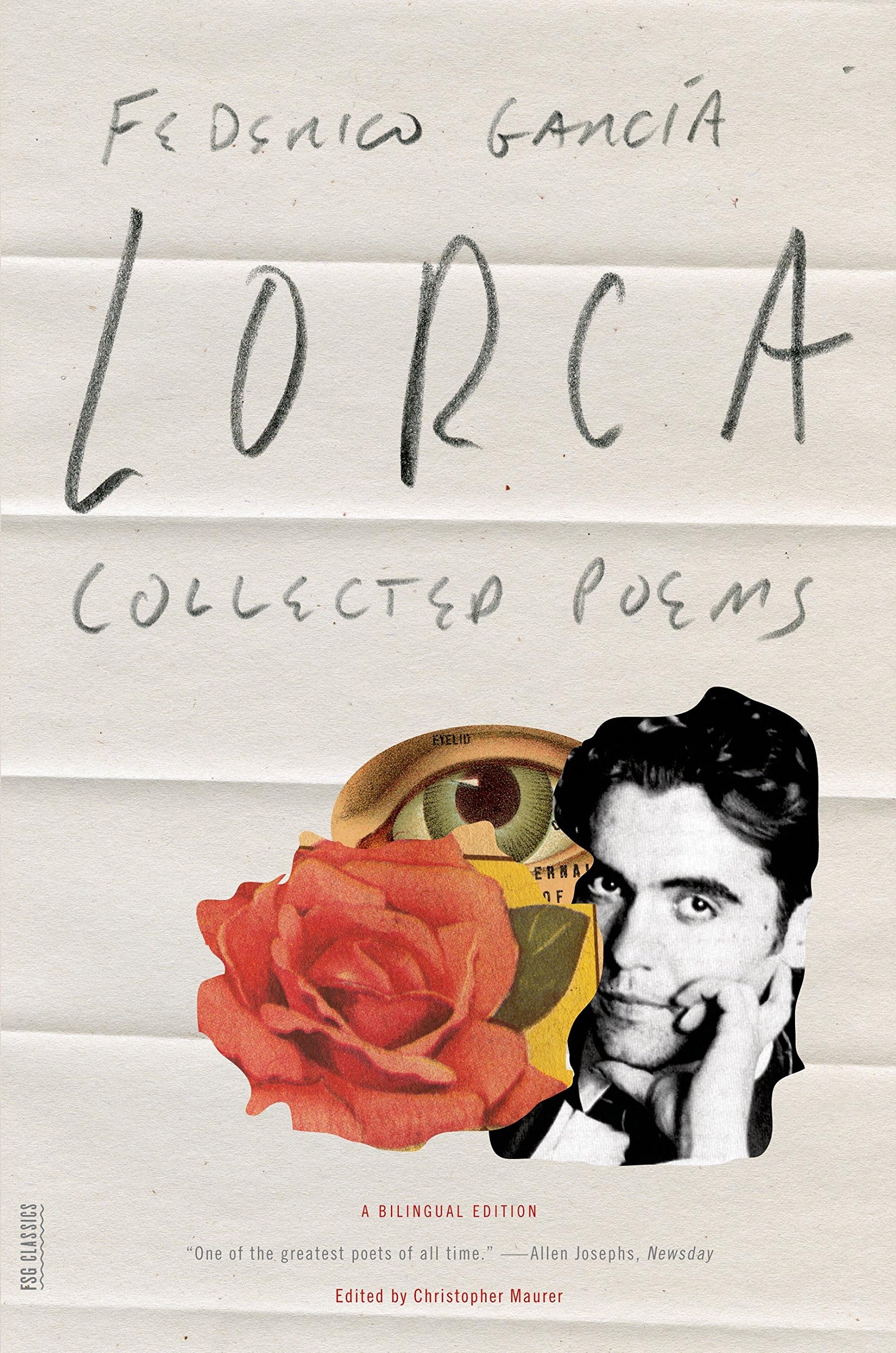
I had hoped to delay a review of this compendious volume until I could have managed to distil a summary of Lorca's poetic vision. But I can't. The sheer amount of work he crammed into the fifteen years from 1921 to 1936 is simply astounding, as is his stylistic range. There is, for example, the almost musical brevity of the early SUITES (Lorca was an accomplished pianist), some of which, in their surreal imagery, are as taut as a haiku: The air pregnant with rainbows shatters its mirrors over the grove. There are the longer forms of the GYPSY BALLADS (1924-27), with their air of popular storytelling, a narrative of loss that leaves many of its questions unresolved. There are the sprawling Whitmanesque poems he wrote from America in 1930-31, later published as POET IN NEW YORK. And there is his return to simplicity in his final years with THE TAMARIT DIVAN, pain (and sometimes joy) contained in almost classical form: Every afternoon in Granada a child dies, every afternoon. Every afternoon the water sits down to talk things over with its friends. [...] Fortunately, this volume has a 64-page introduction by Christopher Maurer that quite superbly places Lorca in his geographical, social, and stylistic context. Born in Andalusia, he challenged the hegemony of Madrid, fighting for a style closer to the heart of his people. Born of a bourgeois family, he nonetheless felt a lasting concern for the poor, and was ultimately shot as a leftist by Franco's troops. The friend of Buñuel and Dali, he was a surrealist of words, but with the natural invention of a child, and always in touch with the pulse of his country: [...] I will give everything away and weep my passion like a lost child in a forgotten tale. This collection contains all of Lorca's freestanding poetry, but not his sometimes equally poetical prose, nor the songs included in his PLAYS ; his productivity is even more amazing when you consider how hard he was working as a playwright, theater director, and social educator. He was also a visual artist; this book uses a lovely watercolor for its cover and line drawings to mark the various sections. But it may well be too much to digest; a more compact ANTHOLOGY has been in print for some time, with translations by such poets as WS Merwin, Stephen Spender, and Langston Hughes. The dozen translators represented here are less celebrated individually, but their collective work is very fine. Still, when a poet uses words as Lorca did, as images whose rightness is instinctive rather than literal, there can be no one correct translation of his work. Fortunately, both this and the Merwin anthology contain the original Spanish as well, so readers can absorb the poet's unique atmosphere for themselves.
D**R
I was drawn to the myth of Lorca as martyr ...
I was drawn to the myth of Lorca as martyr of the Guerra Civil. While the introduction does touch on this, it concentrates on his craft and the manner in which is work developed from his experience of life. The poems are quite accessible and I found the translations very helpful. It has enriched my view of Spain and an époque that was hidden from view when I began to read more widely.
L**.
Excellent.
I find his poems hauntingly beautiful. One of my favorite is the one about a losing a loved one who has gone "off to the stars". Highly recommend this collection!
I**A
Such a beautiful book
I was a Spanish literature major in college and my friends always loved how beautiful this book was. I recently purchased a second copy for a friend. Great book to share Spanish poetry with my English speaking friends!
W**K
Beautiful Lorca
Federico Garcia Lorca's words are soulful and sublime!!! This bilingual book captures some of his most wonderful works, including my favourite "Luna Ilena Al salis" "Full Moon At Moonrise" with the lines, "y el corazon se siente, isla del infinito"! I would love to learn more Spanish by reading Lorca's poetry. I only wish he had a better ending to his life. How sad for Lorca, with his beautiful words, to be murdered by political forces known as the 'blues'. Leonard Cohen, poet, songwriter, singer, & friend of Lorca, gave him a beautiful tribute, by naming his daughter Lorca, and then, in Vienna, he sang a rapturous soulful rendition of Lorca's "Little Viennese Waltz" called "Take this Waltz"...it thrills my heart and soul, as does this book which I will always read and cherish!
M**S
Excellent bilingual compilation
There are a lot of things to like about this book--a very ambitious collection across many years of the poetic works of Spanish poet Federico Garcia Lorca. It is concisely presented chronologically. It includes a great deal of varied material from his books of published poetry, as well as some uncollected poems. It provides a variety of translators, along with the original Spanish on the facing page, which I found exceptionally helpful. I've always felt that Lorca translates well, that is, that his individual voice was so unique it comes through clearly regardless of the language, but reading the original Spanish adds so much more to his poems, even with my primitive grasp of the language, and one can see how some translators have gotten closer to it than others. I would recommend this book to anyone who'd like to read the poet in English, yet get the richness and texture of the original language as well. My only quibble with the book is the size and weight make it very uncomfortable to hold and read for long periods, but this really isn't a case where an e-book would be the way to go. The pleasure of thumbing back and forth, getting a real feel for the progression, is worth the discomfort.
M**N
Great
As a translator of Lorca (see Poet in New York, Grove, 2008, with Pablo Medina), I am not always fond of these translations. But this is a great volume, in part because bilingual, in part because some of the translations are terrific. The most important poet Spain produced in the 20th century, probably ever, but I'll leave that argument to someone else, I can't imagine why any non-Spanish speaking English speaking reader would not own this.
H**N
Poetry of Lorca is superb!
I usually find most modern poetry boring. Not Lorca's. His poems are short but potent and piercing, full of vivid imagery. His Spanish is difficult to translate literally into English while still retaining vibrancy, but this translator did a good job. The Spanish poetry is presented on the left-hand pages and its English version on the right-hand pages for easy comparison. Not a literal translation by any means, but a very effective one. A strong recommend.
S**D
Buy it
Buy it
L**A
Beautifully comprehensive
I bought again cuz I gave my first one away as a gift to someone learning Spanish:)
D**E
Definitely a good purchase
ALL of Lorca's poetry in both English and the original Spanish plus much interesting background on this much overloooked poet who was a major influence on Leonard Cohen, so much so that he named his daughter Lorca.
S**S
Excellent!
Excellent!
M**N
Excellent book
Opens are in English and Spanish- great for learners
Trustpilot
1 week ago
2 weeks ago