
Desertcart purchases this item on your behalf and handles shipping, customs, and support to Finland.
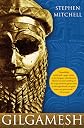
Discover one of the masterpieces of world literature with this acclaimed edition that allows us to see how beautiful, intelligent, and alive it is. Acclaimed translator Stephen Mitchellโs lithe, muscular rendering of Gilgamesh allows us to enter an ancient masterpiece as if for the first time. His insightful introduction provides a historical, spiritual, and cultural context for this ancient epic, showing that this epic is more potent and fascinating than ever. Gilgamesh dates from as early as 1700 BCEโa thousand years before The Iliad. Lost for almost two millennia, the eleven clay tablets on which the epic was inscribed were discovered in 1853 in the ruins of Nineveh, and the text was not deciphered and fully translated until the end of the century. The epic is the story of literatureโs first heroโthe king of Uruk in what is present-day Iraqโand his journey of self-discovery. Along the way, Gilgamesh discovers that friendship can bring peace to a whole city, that a preemptive attack on a monster can have dire consequences, and that wisdom can be found only when the quest for it is abandoned. In giving voice to grief and the fear of death, perhaps more powerfully than any book written after it, in portraying love and vulnerability and the egoโs hopeless striving for immortality, the epic has become a personal testimony for millions of readers in dozens of languages. Review: A non-specialist's humble opinion: stop browsing and read this version! - The Epic of Gilgamesh is a classic work of humankind, a tale rich in adventure, sensuality, and psychological depth and complexity. The narrator reaches out and grabs the reader immediately by inviting him or her to look around the mighty city of Uruk, to observe its walls, temples, and gardens (in our mind's eye, if nothing else)--all the works of the man-god Gilgamesh. Yet, our picture of Gilgamesh quickly becomes rather complex--we see him first as a mighty hero, then we see that he is both loved and feared by his subjects, as he fully exercises his sovereign powers. Gilgamesh tames Enkidu, his wild brother in arms, in a rather unorthodox way but in the end we see it is Enkidu who civilizes and humanizes Gilgamesh, who is forced to face his own mortality. Long after the Sumerian civilization ceased to exist and the grand city of Uruk disappeared beneath the sands, through this tale Gilgamesh lives on in the human consciousness--ironically, granting him the immortality he so desperately sought. When I set out to read the Epic of Gilgamesh, I learned that reading *THE* Epic of Gilgamesh is an impossible task--it doesn't exist! As a tale that is perhaps more than 4000 years old and likely started as a story told orally, it has been passed down in a number of versions in various levels of completeness, in a number of different languages, over a span of several millennia. When I browsed the reviews here on desertcart, I ran across a number of comments disparaging this "version" on a variety of points--the author does not speak the original languages of the tale (Sumerian, Akkadian, etc.), he has "filled in blanks" and moved around pieces of the text, etc. Some reviewers have mentioned that "truer" and "more scholarly" versions exist, but given the extremely wide and indeterminate origins of this tale mentioned above, those claims seem about valid as someone claiming to have the "true" recipe for chicken soup. What exactly does that mean, after all? I imagine a comment like that will send a few scholars into apoplexy (if the title of my review did not already), but being an academic myself (albeit in a very different field) I feel it is important to add a healthy dose of skepticism to these claims of the existence of an "original" or "true" story lest one think they are being cheated out of the "real deal" by reading a version such as this one. Likewise, as a speaker and translator of foreign languages myself, I understand the delicate balance (some might call it a trade-off) between staying faithful to the letter versus the spirit of the text--in other words, translation is as much art as it is science. The versions full of brackets and ellipses might be technically accurate, so-called "scholarly" translations of a given intermediate version (such as Sin-leqi-unninni's) or two, but at the same time it is not a faithful recreation of the experience of a Sumerian hearing the tale for the first time. Technical accuracy is easier to quantify than the aesthetic appeal of a given version or translation, but that does not mean that aesthetics are not important--especially for the non-specialist (which I would imagine includes the majority of desertcart shoppers). To that end, I highly recommend Mitchell's version as it gives the best of both worlds. Through copious notes, Mitchell cites where he varies from the older texts and translations so that one may track and compare versions. Meanwhile, he has crafted English verse that cleanly and clearly tells the tale of Gilgamesh better than any "scholarly" or other "non-scholarly" version that I have laid eyes on. His detailed introduction helps set a context for the text, its discovery, its relationship to other texts (such as epics in other traditions, and the tale's similarities with the story of the Biblical flood), and its relevance today. If you are interested in more technically accurate versions of the Epic of Gilgamesh (such as more conventional translations of Sin-leqi-unninni's "standard" version) then by all means explore other versions recommended by the reviewers much more knowledgeable than me in this area. But for people like me--the non-specialist more interested in reading the epic (with a lower-case "e") of Gilgamesh than chasing after the phantom "original" or "true" Epic of Gilgamesh--save yourself the trouble of thumbing through different versions and pick this one up. Review: Kindle & Soft Cover - An Outstanding Read! - I just finished reading this version of Gilgamesh, and I'm still feeling the glow. I'm not new to Gilgamesh - I had read several versions already, but I am new to Stephen Mitchell. This version is by far the best I have read! Beginning with a 65 page introduction which I found delightful to read (Do yourself a favor and don't skip it - It, too is interesting and lively and you'll enjoy the author's insights) - Michell's adept writing brought life and a sense of personal connection to this work that I had missed in past readings. Mitchell's words flowed with rhythm and feeling throughout this great literature, made greater than I had remembered in the hands of other writers. I purchased this work for my Kindle, but in view of one of the reviewer's complaint that the eBook was displayed in prose rather than as it appears in print, I also opted to buy the printed book as well. Upon opening the hard copy, I was disappointed to find that the print throughout was in a fairly small and light font ... definitely not what I would have wished. So I turned to my Kindle edition: I experienced no problem at all in the "prose vs poetry" lines - The rhythm was obvious (and enjoyed by me) in spite of lack of line breaks. I'm so glad I did buy the eBook - Very enjoyable reading and with no eye strain. Only one problem: I was surprised to find that I had reached the end so soon ... I had become so engrossed in the story that the time flew, and, though I wasn't reading for speed, it was one of the fastest reads I've had the pleasure to complete.
| Best Sellers Rank | #17,815 in Books ( See Top 100 in Books ) #1 in African Literary History & Criticism #3 in Middle Eastern Poetry (Books) #18 in Ancient & Classical Poetry |
| Customer Reviews | 4.6 out of 5 stars 1,764 Reviews |
C**S
A non-specialist's humble opinion: stop browsing and read this version!
The Epic of Gilgamesh is a classic work of humankind, a tale rich in adventure, sensuality, and psychological depth and complexity. The narrator reaches out and grabs the reader immediately by inviting him or her to look around the mighty city of Uruk, to observe its walls, temples, and gardens (in our mind's eye, if nothing else)--all the works of the man-god Gilgamesh. Yet, our picture of Gilgamesh quickly becomes rather complex--we see him first as a mighty hero, then we see that he is both loved and feared by his subjects, as he fully exercises his sovereign powers. Gilgamesh tames Enkidu, his wild brother in arms, in a rather unorthodox way but in the end we see it is Enkidu who civilizes and humanizes Gilgamesh, who is forced to face his own mortality. Long after the Sumerian civilization ceased to exist and the grand city of Uruk disappeared beneath the sands, through this tale Gilgamesh lives on in the human consciousness--ironically, granting him the immortality he so desperately sought. When I set out to read the Epic of Gilgamesh, I learned that reading *THE* Epic of Gilgamesh is an impossible task--it doesn't exist! As a tale that is perhaps more than 4000 years old and likely started as a story told orally, it has been passed down in a number of versions in various levels of completeness, in a number of different languages, over a span of several millennia. When I browsed the reviews here on Amazon, I ran across a number of comments disparaging this "version" on a variety of points--the author does not speak the original languages of the tale (Sumerian, Akkadian, etc.), he has "filled in blanks" and moved around pieces of the text, etc. Some reviewers have mentioned that "truer" and "more scholarly" versions exist, but given the extremely wide and indeterminate origins of this tale mentioned above, those claims seem about valid as someone claiming to have the "true" recipe for chicken soup. What exactly does that mean, after all? I imagine a comment like that will send a few scholars into apoplexy (if the title of my review did not already), but being an academic myself (albeit in a very different field) I feel it is important to add a healthy dose of skepticism to these claims of the existence of an "original" or "true" story lest one think they are being cheated out of the "real deal" by reading a version such as this one. Likewise, as a speaker and translator of foreign languages myself, I understand the delicate balance (some might call it a trade-off) between staying faithful to the letter versus the spirit of the text--in other words, translation is as much art as it is science. The versions full of brackets and ellipses might be technically accurate, so-called "scholarly" translations of a given intermediate version (such as Sin-leqi-unninni's) or two, but at the same time it is not a faithful recreation of the experience of a Sumerian hearing the tale for the first time. Technical accuracy is easier to quantify than the aesthetic appeal of a given version or translation, but that does not mean that aesthetics are not important--especially for the non-specialist (which I would imagine includes the majority of Amazon shoppers). To that end, I highly recommend Mitchell's version as it gives the best of both worlds. Through copious notes, Mitchell cites where he varies from the older texts and translations so that one may track and compare versions. Meanwhile, he has crafted English verse that cleanly and clearly tells the tale of Gilgamesh better than any "scholarly" or other "non-scholarly" version that I have laid eyes on. His detailed introduction helps set a context for the text, its discovery, its relationship to other texts (such as epics in other traditions, and the tale's similarities with the story of the Biblical flood), and its relevance today. If you are interested in more technically accurate versions of the Epic of Gilgamesh (such as more conventional translations of Sin-leqi-unninni's "standard" version) then by all means explore other versions recommended by the reviewers much more knowledgeable than me in this area. But for people like me--the non-specialist more interested in reading the epic (with a lower-case "e") of Gilgamesh than chasing after the phantom "original" or "true" Epic of Gilgamesh--save yourself the trouble of thumbing through different versions and pick this one up.
T**N
Kindle & Soft Cover - An Outstanding Read!
I just finished reading this version of Gilgamesh, and I'm still feeling the glow. I'm not new to Gilgamesh - I had read several versions already, but I am new to Stephen Mitchell. This version is by far the best I have read! Beginning with a 65 page introduction which I found delightful to read (Do yourself a favor and don't skip it - It, too is interesting and lively and you'll enjoy the author's insights) - Michell's adept writing brought life and a sense of personal connection to this work that I had missed in past readings. Mitchell's words flowed with rhythm and feeling throughout this great literature, made greater than I had remembered in the hands of other writers. I purchased this work for my Kindle, but in view of one of the reviewer's complaint that the eBook was displayed in prose rather than as it appears in print, I also opted to buy the printed book as well. Upon opening the hard copy, I was disappointed to find that the print throughout was in a fairly small and light font ... definitely not what I would have wished. So I turned to my Kindle edition: I experienced no problem at all in the "prose vs poetry" lines - The rhythm was obvious (and enjoyed by me) in spite of lack of line breaks. I'm so glad I did buy the eBook - Very enjoyable reading and with no eye strain. Only one problem: I was surprised to find that I had reached the end so soon ... I had become so engrossed in the story that the time flew, and, though I wasn't reading for speed, it was one of the fastest reads I've had the pleasure to complete.
D**.
Great starter edition (I think)
My interest in ancient religions lead me to Gilgamesh. This is the Mitchell version, he's unable to read or translate from the cuneiform but instead took several literal and not so literal English translations, using them he created his own "version". From reading other reviews this has lead to mixed opinions, it seems that he was very loose with the translations and being so free bothers some of the purists. For me personally, I don't mind a very loose rendering, I plan to follow this up with the Andrew George edition and I got this easier to read version as a sort of commentary. The introduction on this edition is some what long about 65 pages and he gives the entire plot summary for Gilgamesh, so if one is worried about spoilers then this should be saved for the end. I read it first and knowing the plot before hand didn't seem to hurt my opinion of the story. Most of the end notes are the more literal translations of certain passages that Mitchell was very free with, I read them but since I'm about to read another edition, I don't think it was worthwhile. As for the Epic of Gilgamesh itself, it was a great read. The version was very easy to read and the story itself was pretty interesting. I got way more into this one that some of the other early texts I've read. I think the most common thing known about Gilgamesh is that it contains its own version of the flood. Of course this brings comparisons to the Genesis account of the flood and the two stories are surprisingly similar, even down to both Noah and Utnapishtim sending out some sort of bird to see if the land was yet dry. One of the main differences between the two is that the boat in Gilgamesh is smaller and cubed, which reminded me of one Genesis commentary I read/heard which pointed out that the boat in Gilgamesh couldn't possibly float so therefore this has to be myth and the Genesis account is the true one, which caused me to chuckle a little. Anyways, the flood account was less than a tenth of this book and the rest was equally fascinating. I'm looking forward to read this one again.
T**D
My favorite story.
When I first read this story as an assignment for my Ancient History class, I fell in love instantly. It has inspired me so that I've since written several papers on it. The following is a collection of excerpts from one of my papers. What tale has stood the test of time better than The Epic of Gilgamesh? It is the story of how one man's tyrannical actions fade with the intimate friendship of another and when one dies the other searches for immortality in his grief. This story's themes of love, lust, loyalty, friendship, hubris, violence, existentialism, ambiguity, grief, fear, wisdom, futility, loss, and acceptance are relevant to every society of every age. In written form the story dates back as early as 1700 BCE, 1000 years older than Homer's Iliad or the Judeo-Christian Bible, making it the oldest story in the world. Since its discovery, The Epic of Gilgamesh has been translated and edited multiple times. Stephen Mitchell did not translate the text from Akkadian to English, but rather compared all translations and clarified any confusions for a smooth, readable version. The anthropological function of art is to bring people together, whether in support or opposition. This Epic has unified people for two thousand years. I personally am in love with this story of violence, love, loss, despair, and acceptance. It represents facets of some point in everyone's life, and therefore is approachable forever. This is easily my favorite book. I cannot conclude this ancient and magnificent story better than the story itself. "He had seen everything, had experienced all emotions,/ from exaltation to despair, had been granted a vision/ into the great mystery, the secret places,/ the primeval days before the Flood. He had journeyed/ to the edge of the world and made his way back, exhausted/ but whole."
R**N
EyeOfSiloam
Stephen Mitchell has put together a fine "book report." It is scholarly and has interpretations based upon Mitchell's academic perspective. As a result he actually participated in the destruction of the Great Walled Uruk. It is not a fault to be opinionated, but it would have served the reader far better had he understood the subject as religious material regarding the subject of immortality. When the Great Walled Uruk is understood to be the embroidery of the heavens the reader has an opportunity to review how the human perception of self and the cosmos has "evolved" since Gilgamesh was written. Even more important is that the creation aspect of Gilgamesh shows us how we have not changed in the same period of time. Both aspects are true, but Mitchell simply did not understand the subject because his focus was on death and the journey to the After Life, which Mitchell declares as not possible. Because of this opinion he does not include Tablet XII in the Epic and claims that it is generally accepted that Tablet XII was not original. This is a great error, for at minimum the reader should be allowed to make that decision. Repression of Tablet XII makes Mitchell's "version" a work of propaganda; anti-creationism propaganda. Tablet XII does not appear to be part of the Epic of Gilgamesh because it speaks of the After Life of Enkidu. To Mitchell that "fantasy" could not have been the original author's intent because it was too variant---as if the After Life should be "dรฉjร vu all over again". Perspectives change in the After Life. On this subject Mitchell demonstrated that he had never ventured into the heavens or the After Life. The Epic of Gilgamesh, as with all Creation Epics, needs to be read with one eye on the text and the other eye on the stars. That is what the Epic of Gilgamesh represents; Man's comprehension of Creation and the Creator as made evident by the signs in the stars the Bible calls the Manna from Heaven. This is not astrology, it is allegorical cosmology, it is Creationism, it is the Secret of the Gods.
J**R
Interesting book
Interesting book I enjoy listening to it
D**L
Very rewarding encounter with our ancient ancestors
A profound and compelling introduction to one of Earthโs earliest works of literature that connects the reader to an ancient history that is still very much our own
D**2
A Decent Choice To Start
In general, I am more interested in the scholarly translations of the Epic of Gilgamesh than I am those that attempt to create an English literary version of the Epic. That being said, Stephen Mitchell's new version of the Epic is a very readable adaptation, even if he takes a lot of liberties with the original story. Mr. Mitchell draws from several different translations, including Stephanie Dalley's and Benjamin Foster's, both of which I have read and can recommend to others as very good literal translations. He also uses Andrew George's "The Babylonian Gilgamesh Epic" which has been highly recommended to me, and which I look forward to reading. In his efforts to produce a more literary version of the Epic, parts of it have been cut or rearranged, so if you are looking for a pure translation, this is not only not a good choice but it would be one of the worst selections you could make. However, if you are looking for an enjoyable and easy to follow version of the Epic, this is a nice introduction. I would not suggest that you read only this edition though, but rather use it as a starting place to get a feel for the story and then move on to the other translations, which while more difficult to follow are ultimately more rewarding.
F**J
Excelente traducciรณn y muy buen libro
El libro se encuentra en perfecto estado, cumple con lo previsto en un libro.
I**M
Flows like fiction
The best translation that i have come across. It is easy and comprehensible. You do not have to go through it twice or more to to get the drift. The author mentioned that he referred to five or more available translations from the experts in the field before coming up with this book. A must first read if you want to refer to works by other experts in the field of translation.
I**S
็ด ๆดใใใๆฐ่จณ
Gilgameshใ็พๅญใใๆๅคใฎๅไบ่ฉฉใงใใใใจใ็ฉ่ชใฎๅๅใ็คบใใใฎใงใใใใจใชใฉใฏ็ฅใฃใฆใใใใใใใใใใฆๅคใใใใใใใซใใจใใ็ฟป่จณใใใฏใใใใปใฉใฎใใฏใใซใช็ฉ่ชใงใใใใจใๅ จใใใใใ็ฅใใชใใฃใใๅๆ ใจใๅๆฐใจๆญปใซ้ขใใใๅ จใๅคใณใชใ่ฑ้็ฉ่ชใงใใใใพใใใ็ฉ่ชใฎๅๅใฎไธใคใจ็ดๅพใใใจใจใใซใๆทฑใๆๅใใใๆฎๅญใใๆญ็ใใคใชใๅใใใชใใใฐใชใใชใใใใใฉใใใฆใใฎใฃใใใ็ใใใใใงใใใฎใใใใStephen Mitchellใๆๆใใใใใใใใฏไธ้จ้ ๅบใๅคใใใใ็ฐ็จฟใใคใชใๅใใใใใใฆใใใใใฎใใใใฏ่ฉณ็ดฐใชๆณจ้ใง่ชฌๆใใใฆใใใใพใใๆขๅญใฎ็ฟป่จณใใใจใซๅๆงๆใใฆใใใใจใใใๅญฆๅ็ๆญฃ็ขบใใซใคใใฆใฏ็ๅใใใใใใใใชใใใใใใใใใ่ถ ใใฆใไปใฎ่จ่ใงใใใใๆ ผ่ชฟ้ซใ่ฌกใใใฆใใใไธๆฐใซ่ชญใฟๅใฃใใๅบใใๅงใใใพใใ
S**N
gripping and a brilliant way of accessing this epic tale
Wow, gripping and a brilliant way of accessing this epic tale. highly recommend it
M**M
A classic not to be missed
A great interpretation of the classic story. Easy to read and the introduction explains the background to this epic. A must for the bookshelf.
Trustpilot
2 months ago
1 week ago