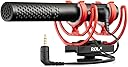
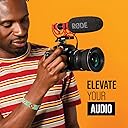
🎥 Elevate your audio game — the mic that adapts as fast as your creativity!
The Rode VideoMic NTG is a professional-grade shotgun microphone designed for on-camera use, featuring the same acclaimed acoustic design as the NTG5. It offers unmatched transparency, a supercardioid polar pattern, and ultra-low noise for pristine sound capture. Its auto-sensing 3.5mm output and USB compatibility make it incredibly versatile across cameras, smartphones, and computers. With infinitely variable gain control and digital filters, it adapts perfectly to any recording environment. Lightweight, durable, and backed by a 10-year warranty, it’s the ultimate all-in-one mic for content creators, podcasters, and videographers seeking broadcast-quality audio.
| ASIN | B081S9BCHF |
| Antenna Location | Singing |
| Audible Noise | 20 Decibels |
| Audio Sensitivity | 120 Decibels |
| Best Sellers Rank | #24 in Professional Video Microphones |
| Brand | Rode |
| Built-In Media | Microphone |
| Color | Black |
| Compatible Devices | SC19 Lightning Accessory Cable SC15 Lightning Accessory Cable SC16 USB-C to USB-C Cable VXLR Pro Transformer-balanced 3.5mm TRS to XLR adaptor SC11 TRS Splitter Cable SC10 3.5mm TRRS to TRRS patch cable WS11 Deluxe Windshield Boompole Professional Boompole - 3.3m Tripod Mini Tripod Stand VC1 Minijack/3.5mm Stereo Extension Cable (3m/10') DS1 Desktop Microphone Stand |
| Connectivity Technology | 3.5mm auto-sensing USB-C |
| Connector Type | USB |
| Customer Reviews | 4.4 out of 5 stars 1,316 Reviews |
| Enclosure Material | Aluminum |
| External Testing Certification | Não aplicável |
| Frequency Range | 20Hz – 20kHz |
| Hardware Platform | Camera |
| Impedance | 1 Ohms |
| Item Dimensions | 10 x 4 x 3 inches |
| Item Height | 3 inches |
| Item Type Name | Condenser Microphone |
| Item Weight | 94 Grams |
| Manufacturer | RØDE Microphones |
| Microphone Form Factor | Shotgun |
| Model Name | VMNTG |
| Model Number | VideoMic NTG |
| Number of Batteries | 1 Lithium Polymer batteries required. (included) |
| Number of Channels | 1 |
| Polar Pattern | Super Cardioid |
| Power Source | Usb Microphone |
| Signal-to-Noise Ratio | 79 dB |
| Special Feature | Stand |
| UPC | 698813006618 |
| Unit Count | 1.0 Count |
| Warranty Description | 10 Year |
P**R
Amazing mic for a great price
The first mic I received was from this distributer on Amazon. Right when I got it, it was bugged. Wouldn’t properly turn on or recognize that it’s plugged in. I was super worried I was screwed, seeing as I got it from Amazon rather than from Rode’s shop. However, I emailed Rode and they were happy to help! Sent me a replacement and I returned the buggy one straight to them. Since then this mic has been awesome. Recording youtube videos on my Sony A6400, streaming live on twitch, and recording podcast episodes, this mic always fits the job. It’s extremely versatile and I love that I now have a mic that does all of the above. Best price for this quality too.
R**R
Rode VideoMic NTG: A Five-Star Marvel of Versatility and Quality
I can confidently say that the Rode VideoMic NTG is an exceptional microphone that ticks all the right boxes for versatility, quality, and convenience. First and foremost, this microphone excels in its versatility. Whether you need it for your desktop setup, camera recording, or even mobile shooting, it effortlessly adapts to each scenario. Its ability to serve multiple functions effectively is a game-changer, eliminating the need for multiple microphones and simplifying your audio setup. In terms of audio quality, the Rode VideoMic NTG consistently delivers outstanding results. It can handle a wide range of environments, capturing clear and balanced sound even in challenging conditions. From indoors to outdoors, it performs admirably, ensuring your recordings are crisp and professional. The microphone's build quality is impressive, combining durability with a compact and user-friendly design. It's clear that Rode has paid attention to detail, creating a microphone that feels solid and reliable in your hands. Additionally, the thoughtful inclusion of features like automatic power management enhances the overall experience. This ensures that you're ready to record when you need it, without the worry of running out of battery. While the Rode VideoMic NTG may come at a slightly higher price point, its exceptional performance, versatility, and build quality make it a worthwhile investment for anyone serious about audio recording. It has even replaced other microphones in my setup due to its superior functionality. In summary, Rode has truly hit the mark with the VideoMic NTG. It's a five-star microphone that offers incredible value for its price. Whether you're a content creator, podcaster, videographer, or anyone in need of high-quality audio, the Rode VideoMic NTG is a must-have addition to your toolkit.
T**N
Video or Podcasting - This is the One Mic To Rule Them All! (+ how to connect via XLR)
I debated over this mic for quite a while. I liked the idea of being able to use it analog, connected directly to my field recorder, camera or phone - plus the ability to connect it directly to my computer digitally via USB. However, my primary use is connected to my field recorder, and I would have much preferred an XLR connector vs the 3.5 mm trs/trrs jack. I just so happened to own a Rode VXLR+, which adapts XLR to 3.5mm, and converts phantom power to 'plug-in power', so I figured I would give the mic a try. At first it did not work, and I almost returned the mic. The mic is intelligent and can switch between trs (camera) and trrs (phone - combo headphone/microphone jack) connectivity, using the provided trrs/trrs cable. The VXLR+ on the other hand... not so intelligent. It is designed for trs connectivity, not trrs. Connecting it via trrs did not work. But, before I boxed the mic up and sent it back, I figured I would try a trs/trs cable... and Voila! The mic sounds incredible! Really good gain, really low noise. While it definitely has a proximity effect, it maintains warmth/depth when booming at around 18". I made some quick test recordings this way, then A/B tested the unprocessed audio against some of the more professional sounding YouTube channels out there. I honestly think mine sounded better! ;) Using it in a podcast/voice-over fashion, 3"-6" away, plugged directly in to my computer, sounded equally amazing. My phone even recognizes the mic via USB! As an "on-camera" mic... meh. But the traditional NTG mics, or even the almighty MKH-416 would sound "meh" used as an on camera mic. It is just not what you do, if you want good quality audio! IMHO. Buy it!
K**S
Just buy this mic. That’s all you need to know
The rode ntg vidmic is literally the best on camera mic I’ve ever used. The audio from this mic is clean and just perfect balance between low end and high end frequencies. It has the ability to cut some super low frequencies (2 high pass roll offs) and boost some highs (8k-14k shelf) to help boost some highs when using a deadcat. I love the gain control which can be adjusted quickly on the fly. Great build, great design, great options. Just buy this mic! Great usb mic and studio boom mic as well
J**.
Great sounding mic, but make sure to check all of your options!
Several people compare this mic to the VideoMic Go II. I've used both and I absolutely prefer the sound of the Videomic NTG. That said, neither mic can defy physics so sound treatment is critical when it's further than, say about 1m (3ft) from you. It does pick up lows nicely at closer range and the directional nature of the mic reduces some ambient noise/room tone and it's absolutely better than your on camera mic, But I'm not sure if the extra $150 is worth it over the VideoMic Go II. That becomes a personal preference thing. A few key points: -Most of the Mic's critical controls (gain, boost, high pass filter) are on the mic itself. (It's all via your desktop on the Videomic Go II). For some, having quick adjustments without a computer or mobile device around is worth it. Did't really sway me one way or another. -The USB-C option is great because it connects as a mic source that most recording devices see and it also acts as a way to store on-board presets not accessible through the buttons on the unit itself. -The headphone port flexibility is nice. Acts as either analog out or something to plug your monitors into for (near) zero latency. -The metal construction feels nice and durable. Definitely great for tossing in a bag and taking on a shoot. -If you're going to use it outside, get the "dead cat"/"dead mouse" wind muff. It's way better than the foam one that ships with the mic. -If you have a DJI Osmo Pocket 3 you can plug the mic directly into the USB-C port and the OP3 will recognize it as a microphone. It sounds AWESOME compared to the build-in mic array. I'd recommend before buying this or any other mic that you watch/listen to as many reviews (with headphones on) as possible. I really wish Rode would either reduce the price on this mic by about $50 or do a sweet sale on it like the've done with the StreamerX. One can only hope!
A**L
Easy to use
Durability is good, Audio comes out amazing. The functions on the controls are easy to use
F**E
Totally unreliable. Didn't think it was possible to hate a mic.
Totally unreliable. I just came home from a shoot and found several (8 out of 53) recordings without sound - yet there were recordings in "scenes" before and after. It seems that there is a LAG in its ability to reset fast enough if you record one after the other. I don't know how much lag it needs to reset but the fact is that it couldn't keep up with the camera itself (a Canon R6) Also, worst documentation ever. There are NO instructions for WHERE files are recorded to and how to retrieve after recording. Site was down for half a day so couldn't download RODE CENTRAL, no one answered published customer support phone. And 2nd time recording and there are NO RECORDINGS TO BE FOUND despite all systems go. Feel that their HOW TO is sorely lacking. Bizarre. Update: Just did ANOTHER SHOOT. And despite testing night before and day of shoot, the next 6 takes done in the first hour of the shoot either recorded NOTHING or just some hint of volume with hiss. I have no understanding as to why because I investigated but changed NOTHING, just did tests and THOSE worked. I just am out of theories as to what the problem is. Update: Rode replaced with a new one. I've lost audio ONCE with it and the audio quality is SUBPAR. I just don't understand what I could be doing wrong to get such an inferior outcome compared to the rest of the reviewers. I've used it more now on my R5C and bringing the video into Premiere - it is too loud and too much static. I've played with starting volumes 6 and 10 because when I did 0/1/2 on the first RODE I had, I couldn't hear the audio. This shouldn't require me to do testing for the best setting - any setting should yield something better than what I'm getting. But testing I will do! Update with replacement: I just did the first true test for a poolside shoot but ON CAMERA (no budget for sound op and couldn't swing another setup). I did several tests before shooting - and all gave me ZERO peace of mind. I told the actors to speak louder and went for it because I couldn't waste any more time testing and googling tips/advice in real time despite ALREADY having done this ahead of time.) I just don't how it can be so bad - it's worse than my in-camera sound. And even on RODE site, there is NOTHING, no tips, no information that tells you what anything DOES beyond what it IS HATE IT.
G**N
This is super-versatile and has worked great with everything
I love this mic! Sounds good, low noise, very directional. Ever since getting it I've used it for all my videoconferences. I have it on a mic boom just above my head about 12-18 inches away and it sounds very nice and clean. Allowed me to stop needing to wear headphones during conferences, I could just have the audio coming out of speakers. Aside from this, you can use the mic as a USB device with a PC or you can plug in an analog TRS or TRRS cable, it will automatically detect the configuration of the jack so you can use it with almost any device. I use it as a USB mic with my PC, in analog mode with a Sony A7R4 and have also used it as a USB-C mic with an iPad Pro and with an iIphone through Apples analog adapter. All worked and had great sound. The directionality of the mic will let you put it just below or just above you out-of-shot and still get good sound. It's not magic though, for best quality the rule with mics is "closer is better" You will probably get best results 1-2 feet away. Try to get closer if the person is a quiet talker. There are a few minor flaws with the USB mode. One is that the gain control knob has no effect in USB mode, you have to adjust volume levels with PC software which is not as convenient. Also the "safety channel" feature doesn't work in USB mode (this is where it records normal audio on one channel and the other channel 20db quieter, so you can recover audio in post production if it suddenly gets too loud and clips). Not sure why these don't work but it would be great if Rode could do a firmware update to fix it. Also the mic is supposed to work with an iPhone through a USB-C to lightning cable. I tried this with a high quality cable I have and it didn't work. Rode support says you have to use their UCB-C to lightning cable. Not sure why this is, maybe they have some active electronics in their cable. I just know I tried several good quality USB-C->lightning cables I had and they did not work.
Trustpilot
2 months ago
2 months ago