
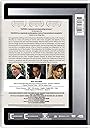

Maurice
Product ID: 52982532
Details
- ContributorBen Kingsley
- FormatNTSC Subtitled
- GenreBlu-ray Movie
- LanguageEnglish
- Runtime2 hours and 20
Set against the stifling conformity of pre-World War I English society, E.M. Forster's Maurice is a story of coming to terms with one's sexuality and identity in the face of disapproval and misunderstanding. Maurice Hall (James Wilby) and Clive Durham (Hugh Grant) find themselves falling in love at Cambridge. In a time when homosexuality is punishable by imprisonment, the two must keep their feelings for one another a complete secret. After a friend is arrested and disgraced for "the unspeakable vice of the Greeks," Clive abandons his forbidden love and marries a young woman. Maurice, however, struggles with his identity and self-confidence, seeking the help of a hypnotist to rid himself of his undeniable urges. But while staying with Clive and his shallow wife, Anne, Maurice is seduced by the affectionate and yearning servant Alec Scudder (Rupert Graves), an event that brings about profound changes in Maurice's life and outlook. Cohen Film Collection is proud to present a gorgeous new Review: Forster would have approved! - This is the one of the most faithful novel-to-film adaptations that I have seen. American director James Ivory has a wonderfully British sensibility, and the movie vividly recreates late Edwardian England in muted autumnal colours. In particular, it gives the 21st century viewer a very real appreciation of what it must have been like to be gay in such a society. The cast is uniformly excellent. James Wilby was not Ivory's first choice for the central role of upper-class Maurice (Daniel Day Lewis and Julian Sands were earlier contenders), but he gives an outstanding and totally plausible portrayal. Equally good is Hugh Grant, years before he found fame as the archetypal British twit. Grant's role is a difficult one; he must at first engage our sympathy and fondness, then gradually lose our respect as he seeks to enter "respectable" society. Ultimately, we come to despise his cowardice. Grant achieves all of this without descending into caricature - a considerable feat. Rupert Graves makes a fine Alex Scudder, the lusty undergamekeeper who seduces and transforms Maurice. Apart from a slightly inconsistent accent, he, too. seems entirely plausible and fans of DH Lawrence's Lady Chatterley's Lover should note that this full-blooded lad pre-dates Lawrence's own gamekeeper by many years! An outstanding supporting cast of seasoned pros includes the late, great Denholm Elliot and Ben Kingsley in small, but pivotal roles as, respectively, a bullying doctor and a hypnotist, both of whom Maurice unsuccessfully seeks help from. This movie has a superb period atmosphere, a leisurely but rewarding pace, plenty of understated passion, memorable music and great script-writing. Kudos to the scenarists for being so faithful to the spirit of Forster, while at the same time adding scenes to remind viewers of the real dangers for gay men in Edwardian England. Outstanding. Review: Romantic and irresistible - The filmmakers did an incredible job of bringing E.M. Forster's touching novel to life -- and I suspect that was no easy task because so much of the novel involves the main character's innermost thoughts and feelings. However, Merchant and Ivory did a beautiful job conveying the loneliness, fear and desperation of the main character, Maurice Hall. The movie follows Maurice (James Wilby) down his road of self-discovery; from his embarrassing teen years to Cambridge (where he gets his first exhilarating taste of love) to his post-collegiate years as a young man struggling to come to terms with his sexuality in a time when homosexuals were mercilessly persecuted. The movie is also very much about class struggle. Maurice is a gentleman born and bred, with a penchant for snobbery. As he comes to terms with his sexuality, he is forced to deal with differences in class when he realizes he is in love with someone from the serving class. Readers of the novel will be delighted as much of the wonderful dialogue from the book appears in the film. The characters were perfectly cast, with Hugh Grant (before he was a mega star) as Clive Durham, the perfect young gentleman from Cambridge (and Maurice's first love), Rupert Graves as the smoldering, lower class hunk who wins Maurice's heart, and Ben Kingsley in a hilarious turn as Maurice's junk-psychologist. James Wilby was spot-on in the title role and he perfectly captures the isolation, sadness and ultimate joy of the conflicted Maurice. "Maurice" is a touching love story that anyone -- straight or gay -- can enjoy. Romance knows neither of these terms. And, the movie *is* unabashedly romantic and optimistic -- your heart will soar when Maurice finally gives in, casts societal conventions aside and visits his beloved at the boathouse. The hopeful ending is inspiring, though the close-up of Clive at the window at the end of the movie will break your heart. Beautifully filmed, superbly acted -- a must-see film.
| Contributor | Ben Kingsley, Hugh Grant, Rupert Graves |
| Customer Reviews | 4.7 out of 5 stars 940 Reviews |
| Format | NTSC, Subtitled |
| Genre | Blu-ray Movie, DVD Movie, Drama, Drama/Love & Romance |
| Language | English |
| Runtime | 2 hours and 20 minutes |
M**R
Forster would have approved!
This is the one of the most faithful novel-to-film adaptations that I have seen. American director James Ivory has a wonderfully British sensibility, and the movie vividly recreates late Edwardian England in muted autumnal colours. In particular, it gives the 21st century viewer a very real appreciation of what it must have been like to be gay in such a society. The cast is uniformly excellent. James Wilby was not Ivory's first choice for the central role of upper-class Maurice (Daniel Day Lewis and Julian Sands were earlier contenders), but he gives an outstanding and totally plausible portrayal. Equally good is Hugh Grant, years before he found fame as the archetypal British twit. Grant's role is a difficult one; he must at first engage our sympathy and fondness, then gradually lose our respect as he seeks to enter "respectable" society. Ultimately, we come to despise his cowardice. Grant achieves all of this without descending into caricature - a considerable feat. Rupert Graves makes a fine Alex Scudder, the lusty undergamekeeper who seduces and transforms Maurice. Apart from a slightly inconsistent accent, he, too. seems entirely plausible and fans of DH Lawrence's Lady Chatterley's Lover should note that this full-blooded lad pre-dates Lawrence's own gamekeeper by many years! An outstanding supporting cast of seasoned pros includes the late, great Denholm Elliot and Ben Kingsley in small, but pivotal roles as, respectively, a bullying doctor and a hypnotist, both of whom Maurice unsuccessfully seeks help from. This movie has a superb period atmosphere, a leisurely but rewarding pace, plenty of understated passion, memorable music and great script-writing. Kudos to the scenarists for being so faithful to the spirit of Forster, while at the same time adding scenes to remind viewers of the real dangers for gay men in Edwardian England. Outstanding.
G**S
Romantic and irresistible
The filmmakers did an incredible job of bringing E.M. Forster's touching novel to life -- and I suspect that was no easy task because so much of the novel involves the main character's innermost thoughts and feelings. However, Merchant and Ivory did a beautiful job conveying the loneliness, fear and desperation of the main character, Maurice Hall. The movie follows Maurice (James Wilby) down his road of self-discovery; from his embarrassing teen years to Cambridge (where he gets his first exhilarating taste of love) to his post-collegiate years as a young man struggling to come to terms with his sexuality in a time when homosexuals were mercilessly persecuted. The movie is also very much about class struggle. Maurice is a gentleman born and bred, with a penchant for snobbery. As he comes to terms with his sexuality, he is forced to deal with differences in class when he realizes he is in love with someone from the serving class. Readers of the novel will be delighted as much of the wonderful dialogue from the book appears in the film. The characters were perfectly cast, with Hugh Grant (before he was a mega star) as Clive Durham, the perfect young gentleman from Cambridge (and Maurice's first love), Rupert Graves as the smoldering, lower class hunk who wins Maurice's heart, and Ben Kingsley in a hilarious turn as Maurice's junk-psychologist. James Wilby was spot-on in the title role and he perfectly captures the isolation, sadness and ultimate joy of the conflicted Maurice. "Maurice" is a touching love story that anyone -- straight or gay -- can enjoy. Romance knows neither of these terms. And, the movie *is* unabashedly romantic and optimistic -- your heart will soar when Maurice finally gives in, casts societal conventions aside and visits his beloved at the boathouse. The hopeful ending is inspiring, though the close-up of Clive at the window at the end of the movie will break your heart. Beautifully filmed, superbly acted -- a must-see film.
T**.
A Lesson For Screenwriters
This is a beautifully crafted film, right up there with most other Merchant/Ivory productions. The sense of time and place, the performances, the lyrical mood, the music--all are far above the usual standards of "commercial" filmmaking. E.M. Forster conveyed a powerful message in his novel, and it's right there on the screen. Still.... NOTE TO SCREENWRITERS (with spoilers): As a writer, I was most fascinated by the deleted scenes included with the DVD. There are 2 in particular that I really think Ivory should have kept in the final cut. Watch the film, then watch the deleted material. I'm referring to the scene where Hugh Grant comes to James Wilby's bedroom, and especially the extended version of the final scene between the two on the terrace outside the house. The first scene tells us a lot we really should know about Grant's character. The extended final scene is most important: It is here (in the outtakes) where Maurice (Wilby) has his only moment of strength and resolve. He finally tells his tormentor exactly where to get off the train, and he grows immeasurably in the estimation of the audience. Grant reacts with (momentary) guilt, and when he tries to cover by heartily suggesting the usual lunch in town, Wilby is gone. Grant is left alone on the terrace, calling, "Maurice? Maurice?" into the empty dark. Now, *that's* an exit for the title character! And it really drives home the power of the (included) final image of Grant in his bedroom later, staring out the window while his clueless wife continues to be clueless in the background. If we'd seen the earlier incident in Maurice's bedroom and the full-length final confrontation, how much more powerful that last image would be! Why, oh why did Ivory cut them?!! See if you agree with me. That aside, this is a remarkable film, one of the few major releases to face a difficult subject head-on (see also: SUNDAY BLOODY SUNDAY and BROKEBACK MOUNTAIN). But those outtakes are extraordinary--a lesson for screenwriters.
K**O
How did I miss this movie all these years?!
Seriously! Evocative, sad, hopeful and very thought provoking, it's one of those films that stays with you for a while. Thank you, TCM and Merchant Ivory for introducing me to what is now one of my all-time favorite movies. James Wilby is astounding as middle-class Maurice Hall in 1910's England, who falls in love with upper-class Clive (a baby faced Hugh Grant, who is brilliant in the role) during their years at Cambridge. Clive's position and future expectations cause him to put the brakes on any physical relationship with Maurice, so they share a 'platonic' love for a couple of years. Then, the imprisonment of a mutual Cambridge friend for 'public lewdness', e.g. homosexuality, causes Clive to break things off completely, leaving Maurice devastated. Clive eventually marries, but keeps Maurice in his life on his terms, as a friend. Maurice, however, still carries a torch for Clive. On a visit to Clive's estate, Pendersley, Maurice becomes aware of the earthy, beautiful, lower class gamekeeper Alec Scudder, played by a radiant Rupert Graves (seriously, search for Alec Scudder on YouTube, and you'll be able to see him for yourself. And then you'll thank me!). Scudder's character starts out in Maurice's peripheral vision, sort of lurking on the edges, but then becomes a dominant force in the last third of the movie. He approaches Maurice first, and totally turns his world upside down. Not only was homosexuality a crime in those days, but a relationship with someone outside of your class was totally frowned upon. These serious issues, plus Alec's plan to emigrate to Argentina, are overcome in the very moving end scenes. So sweet! I have to admit that I watched this movie after "Room with a View" jump started my Rupert Graves obsession, and I've been searching out as many of his films as possible since then. Honestly, the man is truly gorgeous here, and he brings a tentative self confidence and abandon to the role of Alec Scudder that just makes you root for him. Graves has only gotten better as he's gotten older; he has the ability to totally morph into a role and make it his own. While there is a lot of male nudity (thanks again, Merchant Ivory!), the scenes are very tastefully done; nothing hardcore at all, but soft, thoughtful and romantic. The DVD extras are great; over 30 minutes of extended scenes, a few of which flesh out Maurice's character a bit more, and a few more extended scenes of Maurice and Alec which I really wish had been left in. There is also a great 'interview with the filmmakers', and a wonderful interview with the cast from, I believe, 2004, where they talk about their experiences making the film, a few witty anecdotes about collapsing beds and discussions they had about how to handle the love scenes (quite funny), and also, both James Wilby and Hugh Grant do a great James Ivory impression. I'd highly recommend the movie and this version of the DVD.
F**K
A modern classic
have long been a fan of Merchant/Ivory productions, perhaps the best known being 'A Room with a View' and 'Howards End'. However, there is a Merchant/Ivory production made in the same time and with the same qualities that often gets overlooked, and in so being, it is in keeping with its source. Merchant/Ivory have worked through the writings of E.M.Forster's novels with flair, style, and grand film-making, very much in keeping with the grand style of Forster's writing. However, the novel Maurice was not published in Forster's lifetime. He believed, even to his death in 1970, that is was a novel ahead of its time. Yet Forster completed it in 1914. Alas, it was due to the English (and more general) tendency to discount gay characters as being appropriate subjects for literature, particularly when they are sympathetic, almost romantic characters. In Forster's own handwriting, a note on the manuscript found after his death read 'Publishable, but worth it?' This is a basic tale of sexual awakening in post-Victorian England, showing the relationship and the contrast between Maurice Hall and Clive Durham. Both are undergraduates together, and through the course of very English educational encounters, discover in each other 'the love that dared not speak its name', a situation reinforced by all worldly standards. I heard it once remarked that one thing that makes so many people rankle at discussions of homosexuality is that many people rankle at frank discussions of ANY sexuality. This dictum would certainly be true of the turn-of-the-century British. In one scene, even the professor teaching Greek glosses over references in the translation that are unappetising to him. In the end, we see the relationship between Maurice and Clive run full course, and see the classic options: Clive runs in a panic into marriage and a respectable life with a wife who seems to think she is a keen judge of human nature, but really hasn't a clue on this one; Maurice opts for love true to his nature, but at what cost? Alas, we don't know. The manuscript was unfinished, and the film likewise comes to no firm conclusion. The film and novel are great representations of Edwardian London and country life, as well as university life at the time. The minor sociological issues that arise; the class system is illustrated in wonderful characters (from the Durham household, a country-gentry, but essentially untitled family, to the Halls, a suburban middle class, to Scutter and the servants at the Durham estate, some of whom are as scathing toward a middle-class pretender like Hall as any upper-class person would be). The film, like most Merchant/Ivory productions, is an almost perfect period piece -- settings, costumes, mannerism, it is almost as if camera and crew were magically transported back in time to get the proper setting. Maurice Hall is played by James Wilby, who turns up in other Merchant/Ivory productions such as Howards End, but who has thus far failed to make much of an American presence. Clive Durham is played, on the other hand, by Hugh Grant, who looks very much different and younger from the Hugh Grant who went up a hill and came down a mountain to attend four weddings and a funeral only to get stopped by the police for solicitation in Hollywood... Superb minor supporting performances by Simon Callow and Denhom Elliot, also Merchant/Ivory regulars, help round out the cast, as well as a cameo by Ben Kingsley as the Edwardian verison of a reparative therapist, trying to hypnotise homosexuality out of Maurice, suggesting that he swagger more and walk around with a gun to increase his feelings of masculinity; this doctor utters my favourite line in the film: 'The English have always been disinclined to accept human nature.' He then suggests that Maurice move to France or Italy, where such as he are in less jeopardy. A very interesting film all around, a bit slow moving at times, but in all a great piece of film-making from great film-makers. Oh, yes, it is pronounced 'Morris' (like the cat).
S**Y
True to the book !
E M forester wrote this book in 1913. It was a crime then. On his orders the book was not released for many years after his death. Making this film as a follow-up to the hugely successful Howard’s End caused Merchants and Ivory a lot of criticism and grief. This is truly a beautiful and memorable film. It’s a film that also closely follows the book. Lovingly
D**R
Gorgeous, breathtaking acting tour de force
This is certainly one of the most beautiful films I have ever seen, from an aesthetic point of view. I felt swept up by the scenery, the music, the costumes. But, aside from the surface beauty, there beats underneath the heart of a true classic. This is one of Merchant/Ivory's most under-rated films. It is the adaptation of the E.M. Forster novel, 'Maurice', which itself remained un-published until after his death. The film is completely faithful to the book, so faithful, in fact, that it stretches to two and a half hours what could have been told in under two hours. But, no matter. It never ceases to amaze me how the British can produce films of such breath-taking detail and clarity, and spend only a fraction of the budget that their American counterparts do. James Wilby stars as Maurice Hall, who falls in love with his classmate, Clive Durham, portrayed by Hugh Grant. They are both undergraduates at Cambridge. The time is the Edwardian era, and they must keep their feelings under wraps. Clive is much more reserved than Maurice, in the long run. Eventually Clive gives in to the pressures from his mother (an icily perfect Judy Parfitt) and marries the pretty but uninteresting Anne (Phoebe Nichols). Maurice and Clive never consummated their relationship, and from the looks of things, there isn't much of a sexual relationship between Clive and his wife. Maurice finds his solace and his savior in Alec Scudder, the gamekeeper on Clive's estate, played with ferociously understated sensuality by Rupert Graves. Indeed, the second half of this film belongs to Rupert Graves. He is young, baby-faced, but with a deep voice and a confident swagger, and the simmering sexuality about ready to explode. You can see his feelings in his eyes. It would be impossible for Maurice to turn him down. This is where the film received some criticism; since Maurice and Alec are from different classes, backgrounds and education, surely their relationship would wither and fade once the passion had ended? E.M. Forster received the same criticism when he shared his manuscript with a few select friends. But, part of the reason the book succeeds is because of the belief and fervent hope that the relationship between Maurice and Alec will work. It must work, against all the odds of society. The portrayal of the period's homophobia is exquisite. There is a heartbreaking scene where Maurice tries to confide in the family doctor, portrayed by Denholm Elliott. Dr. Barrie merely reacts to Maurice in disgust. Maurice turns to a quack hypnotist, played by Ben Kingsley, but finds he cannot deny his true nature. Since Hugh Grant has become mega famous in the 10 plus years since the film was made, it is often referred to as a "Hugh Grant film." Grant is extremely reserved in the role, showing no signs of his future as a comic actor. I would have preferred him to portray Maurice Hall, however. James Wilby is sweet and believeable, but he lacks something in the role. Although he does balance well with the erotic Rupert Graves, as Maurice seems as confused and searching as he is intended to be. A breath-taking, entertaining and extremely intelligent film; I highly recommend it.
S**.
and ultimately fall in love. The story is set in England of the ...
Saw this many years ago when it came out, and never forgot how moving a story it was. Came across it here on Amazon by accident while looking for another film, and immediately added it to my cart! A very underrated and fairly unknown film that stars Hugh Grant long before he became a famous person. It is the story of two young men who meet at university, and discover that they have feelings for one another, and ultimately fall in love. The story is set in England of the early 1900s, a time and place when being gay was absolutely not accepted, and thus forces them to become extremely closeted, which in turn leads you down the road of frustration and drama that goes with it. Although this is a gay themed movie which may not be everyone's cup of tea, what makes this move a great film, is that the director focuses on telling the dramatic story of the individuals as persons, who are trying to navigate something new and foreign to them, and the trials and tribulations of not being able to openly be who you are, for fear of being imprisoned and bringing shame upon your family. The focus is not on the "gayness" so to speak, but serves at the back-drop to the tragedy and triumph of the characters. There is some light nudity in the film, but nothing remotely comparable to the nudity and gratuitous sex seen in the films of today, or even on television for that matter. With that said, I don't think it is an appropriate movie for children, but rather for mature audiences. A great film, that I hope you will enjoy...
P**6
Film d'une vie
Un film que j’ai vu à sa sortie et qui m’a marqué à jamais. A voir et revoir sans jamais se lasser. D'une beauté toute britannique, somptueux, magnifique. Le seul regret que j’ai dans cette édition remasterisée sensationnelle avec pléthore de bonus est qu’ils n’aient pas mis l’affiche originale en jaquette.
C**N
Excelente restauración por aniversario
Es una gran película y se ve como nunca y con la música también restaurada. La compré de segunda mano pero está perfecta.
V**O
Bellissima edizione!
Bellissimo! Cercavo questa versione per vedere gli extra, poichè la versione italiana ne è priva. Sul film le parole sono vane poichè non possono arrivare a descrivere un Capolavoro qual'è "Maurice". Un applauso a tutti, dal regista, agli attori, alle scenografie, ai costumi e alle musiche meravigliose. Imperdibile e unico. Meraviglioso, struggente e delicato. Un film che tocca il cuore e l'anima. Un film senza tempo. Un film per sempre. Tutto questo è "Maurice".
A**O
Superbe. Un amour toxique.
Une décision peut changer le cours d'une vie.
A**O
Calidad muy buena
La busqué por mucho tiempo preciosa historia
Trustpilot
2 days ago
5 days ago