
DOWNLOAD THE APP


Customer Services
Copyright © 2025 Desertcart Holdings Limited
DOWNLOAD THE APP
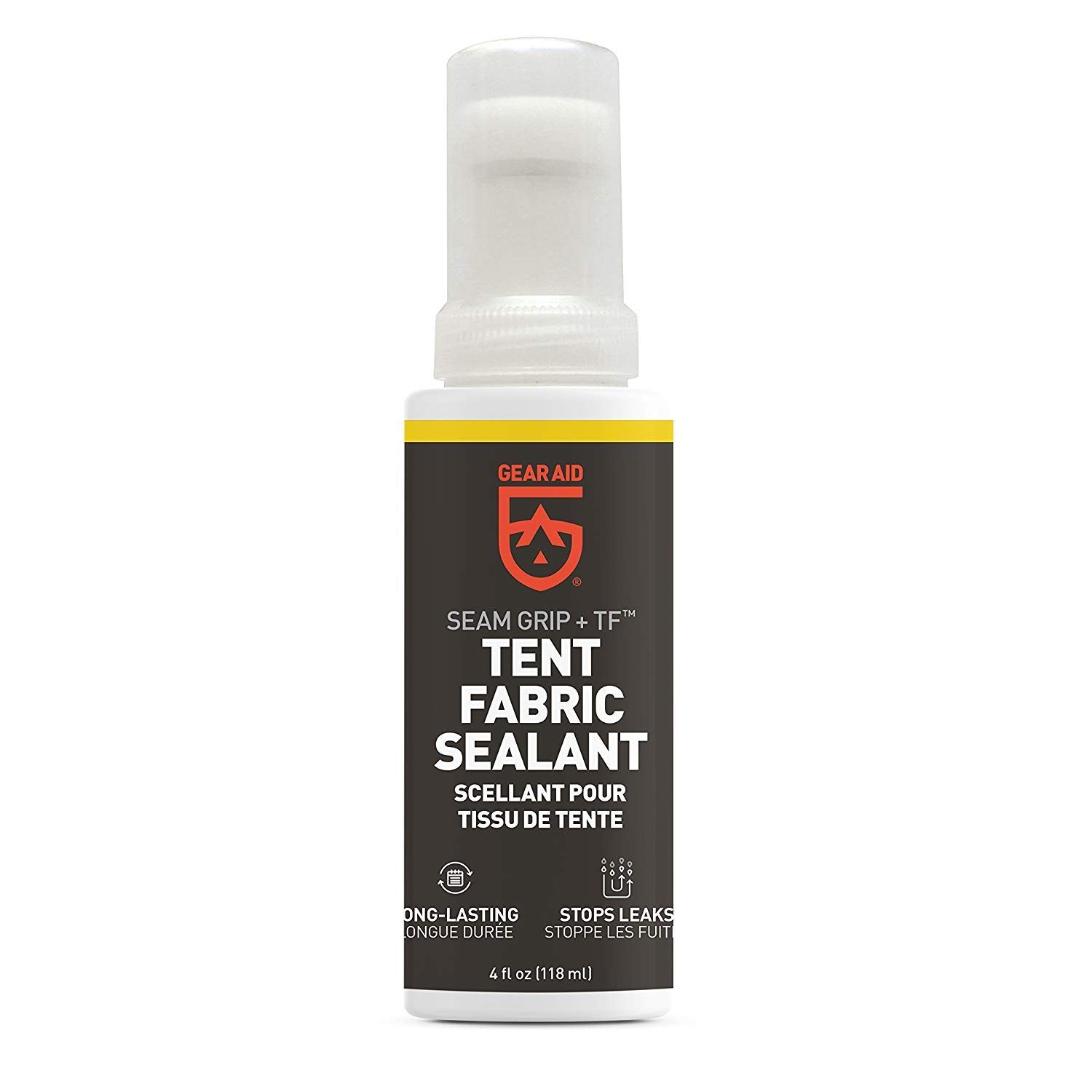
💧 Seal the deal on every adventure — stay dry, stay unstoppable!
Seam Grip TF Tent Fabric Sealant is a 4 fl oz water-based formula designed to restore and waterproof nylon tent floors, rainflies, and tarps. Covering up to 85 sq. ft., it applies easily with a built-in foam applicator, drying to a flexible, nearly invisible polyurethane coating that seals seams and prevents leaks. Ideal for renewing old, flaking PU coatings, this trusted Gear Aid product ensures your outdoor gear stays protected and ready for any weather, backed by a 2-year warranty.



| ASIN | B00MAZJJDW |
| Best Sellers Rank | #99,897 in Tools & Home Improvement ( See Top 100 in Tools & Home Improvement ) #240 in Hardware Sealers |
| Brand | GEAR AID |
| Brand Name | GEAR AID |
| Color | Clear |
| Compatible Material | Synthetic Fabric |
| Customer Reviews | 4.6 out of 5 stars 579 Reviews |
| Global Trade Identification Number | 00021563110005 |
| Included Components | Seam Grip TF Tent Fabric Sealant 4 fl oz |
| Item Dimensions | 1.75 x 1.75 x 6.5 inches |
| Item Form | Foam |
| Item Type Name | Tent Fabric Sealer |
| Item Weight | 0.22 Pounds |
| Item dimensions L x W x H | 1.75 x 1.75 x 6.5 inches |
| Manufacturer | GEAR AID |
| Material | Blend |
| Material Type | Blend |
| Style | 4 fl oz - 1 Pack |
| Style Name | 4 fl oz - 1 Pack |
| Surface Recommendation | Floor |
| UPC | 021563106053 021563110005 021566429418 |
| Unit Count | 4.0 Ounce |
| Warranty Description | 2 Year Warranty |
| Water Resistance Level | Waterproof |
D**R
Excellent! Easy to apply. Ignore the incompetents.
I was extremely hesitant to buy this, based on the multitude of reviews that claimed it was very difficult to apply, and Gear Aid's coverage claims are a lie. But I figured I'd give it a try before buying a new tent. Gear aid is correct. It covers an incredible amount of surface area. It is easy to apply. I used a single bottle to refresh an entire tent. I did the floor in about 40 minutes. I did the rain fly of a tent in about an hour. There's still a little bit left in the bottle. The best strategy is to use short 4-6 inch strokes, pushing the bottle away from you. Just keep moving over inch by inch, and cover the area, then back up and do the same thing again. You'll see the surface gets slightly damp that you've treated. It starts to dry relatively quickly, and sometimes can be hard to see where it's already been treated because of that. I haven't yet sprayed down the tent to see efficacy, but the old coating was still mostly effective so that won't be definitive. And from the small amount of liquid on my fingers, which dried into a polyurethane coating, seems pretty clear it works. Buy it, treat your gear, and enjoy. It's slightly tedious, but not hard. All you're doing is getting the surface slightly damp. You have to make sure to keep pressing the bottle down and squeezing a little bit during your strokes. Occasionally, stop, press down hard, and squeeze, to resaturate the sponge fully. Easy, not super time consuming, and a very inexpensive way to rehab a tent. You're painting on an extremely thin layer which closes the pores of the fabric and makes it waterproof. You are not putting down a multi-millimeter layer of polyurethane. Those people who claim it uses seven bottles, or four bottles, and that you need a paint brush, don't understand how DWR works. Think about the last waterproof jacket you bought, or your tent when it was brand new - it did not have a multi-millimeter thick layer of polyurethane on it. It looked and felt like fabric, and invisibly had a DWR coating on it. That's what you're restoring. That's what this does. And the sponge applicator allows out exactly the right amount of liquid.
P**A
Seals tent well and works into the fabric; doesn't cover as much as advertised
My PU coating had become sticky. I washed my tent and rainfly several times in concentrated laundry detergent, until most of the coating had pilled off (coming off as small round lumps, or pills). I let it soak for several hours in a tub of concentrated laundry detergent and water and agitated. I didn't measure, but probably had 4 times the normal amount of detergent. Then I scrubbed it with a brush to remove residual, finally washing in Woolite and then twice in just water. I let it dry thoroughly. I tried various ways to apply this product. What worked best for me was to pour it into a measuring cup, then use the applicator, dipping it into the cup to wet it, then making quick back and forth motions on small areas at a time. It absorbs into the fabric, so even though it doesn't go on evenly, it smooths itself out so long as I got the application fairly uniform. Dipping the applicator worked very well, and the applicator slides nicely across the fabric, minimizing the bunching of the fabric, and it actually goes on fairly fast even though the applicator is small. The final finish looks great, though the fabric is a little stiff. I ended up using about 3 bottles (12 oz) for a Sierra Design two person tent floor and rain fly.
J**H
If you think you need 2 bottles, buy three, etc.
This was my first time using this tent sealant, and like other reviewers have stated, 4 oz is not as much as you think it is. I have an older REI Half Dome 2 Plus tent that needed the whole rainfly redone. I bought two bottles of this stuff, thinking that would be enough, but I needed three bottles (another is on it's way). I still need to do about 3 feet by 4 feet section at the bottom of one of the tent ends. I know now that when I first started applying it, I put on too much and learned as I went, but next time I will probably be able to do this size tent with two bottles. I think the applicator that comes on the bottle is trash for larger jobs, but would be okay for small patch jobs needing a touch-up. It's not meant to do a whole tent floor or rainfly. Most of the videos I saw of how to apply it (the REI video in particular on how to waterproof a tent) show this guy just applying it to a small area of flaky residue. I took the foam tip applicator off (its not threaded or anything, it just slides out) and got an old plastic tupperware bowl. I dumped a little bit in after shaking and then got an angle tipped foam brush with wooden handle (these are mostly for painting and arts and crafts, but it worked great for what I needed). I then setup the tent and the rainfly inside out (it's for applying on the underside of the tent rainfly) and brushed it on the entire area, keeping a wet edge (where I could see where I had previously applied the product). Over time, I used my fingers to push the foam brush against the fabric even more and more tent sealant would seep out of the foam as I went, again, keeping that wet edge. I then let it dry like the instructions for 24 hours. It leaves a clear, non-viewable layer of polyurethane on the underside of the tent rainfly. I can feel the difference in the tent fabric when I run my fingers on it. It's hard to describe the difference, but the untreated area feels soft to the touch, like running your fingers across a newspaper, whereas the treated side feels slightly rougher, like the side of a cardboard Amazon box. I'm so happy to breathe new life again into my old gear. I haven't tried a rain test on it yet (still waiting on the 3rd bottle to finish it, but I think my tent will do great now. Just buy an extra bottle than what you think. You can use the extra sealant to do the tent floor to prevent a slipping sleep pad.
S**E
Worked Great!
Very pleased with this product. It gave new life to my favorite North Face fanny pack, which is no longer made, and now looks brand new! After many years of service, the rubberized waterproof interior layer was peeling off everywhere, so I decided to give this a try. The hardest part was the prep - I used rubbing alcohol and an old toothbrush and a 3M scrubbing pad to remove virtually all of the old rubberized material. Only a llittle remained in a couple of seams that I couldn't get to. Prep is the key to great results - be patient and spend the time to do it right. After thoroughly removing that rubberized material, let it completely dry before applying the new sealant. I turned my fanny pack inside out and followed the instructions, and used the applicator tip to apply a thin layer of sealant to every inside surface. The sealant goes on clear and dries clear, and covers the old rubberized material in the seams that I wasn't able to remove so it isn't visible and looks like the rest of the refinished interior. I am very pleased with how well this turned out, and still have 3/4 of the bottle left to do another backpack. Highly recommended.
P**R
Great product
A must have for anyone who’s bought a “waterproof” car cover, I applied this along the seams once, next rain I had a dry car, highly recommended,works great !
J**5
No more rain drips on my forehead.
I re-coated the floor and fly of a 2-person backpacking tent with this one bottle. It took some effort, as others have mentioned. It's tiring to squeeze the small bottle and make sure you overlap your coatings with the small foam applicator, but I didn't do it all at once. I coated a portion of my fly on a garage bench, let it dry, then moved the fly to coat another section the next day. After a few days, I had coated the whole thing. The condition of my tent wasn't terrible. The original coating was just barely starting to wear in a few places, but one main spot was just above my forehead. There were a few other spots. The floor had begun to wear around the edges. I didn't really have any flaking old polyurethane to get off, but I wiped the fabric with alcohol to clean and prepare it for coating. The fly had a worn spot that dripped to my forehead on rainy nights. No more drips! Yay!
Y**A
Gear Aid Fabric Protector
I am giving this a 4 star only because the bottle states it covers 85 sq ft. My tent is 8 X 10 for the floor plus there is side walls. I am on my 5th bottle and I hope to finish it. Other then that it works great. I purchased the Eureka Tent about 20 years ago and the coating started to flake off. You have to get all the old protectent off. Take it to a commercial laundry and wash it inside out. It may take a couple of washing. Make sure it is completely dry and all the flaking is removed. You only have to do the floor and the side wall if your floor goes up as part of the side wall. You still have to seam seal the all the stiching.
K**E
Easy to use and waterproofs very well.
I recommend using gloves, but this is easy to apply to repair issues with the bottom of your tent or waterproof bivys. Make sure you clean off any flaking pieces and then apply a light coat with some type of protection between the bottom of whatever you are treating and the floor, it dries much faster in a warm dry environment and after you treat it check for thin spots you can always apply a little bit more later but if you apply it thick it will peel off.
Trustpilot
3 days ago
4 days ago