We remain fully operational. Our teams are working around the clock to ensure your deliveries continue safely.

DOWNLOAD THE APP


Customer Services
Copyright © 2025 Desertcart Holdings Limited
DOWNLOAD THE APP
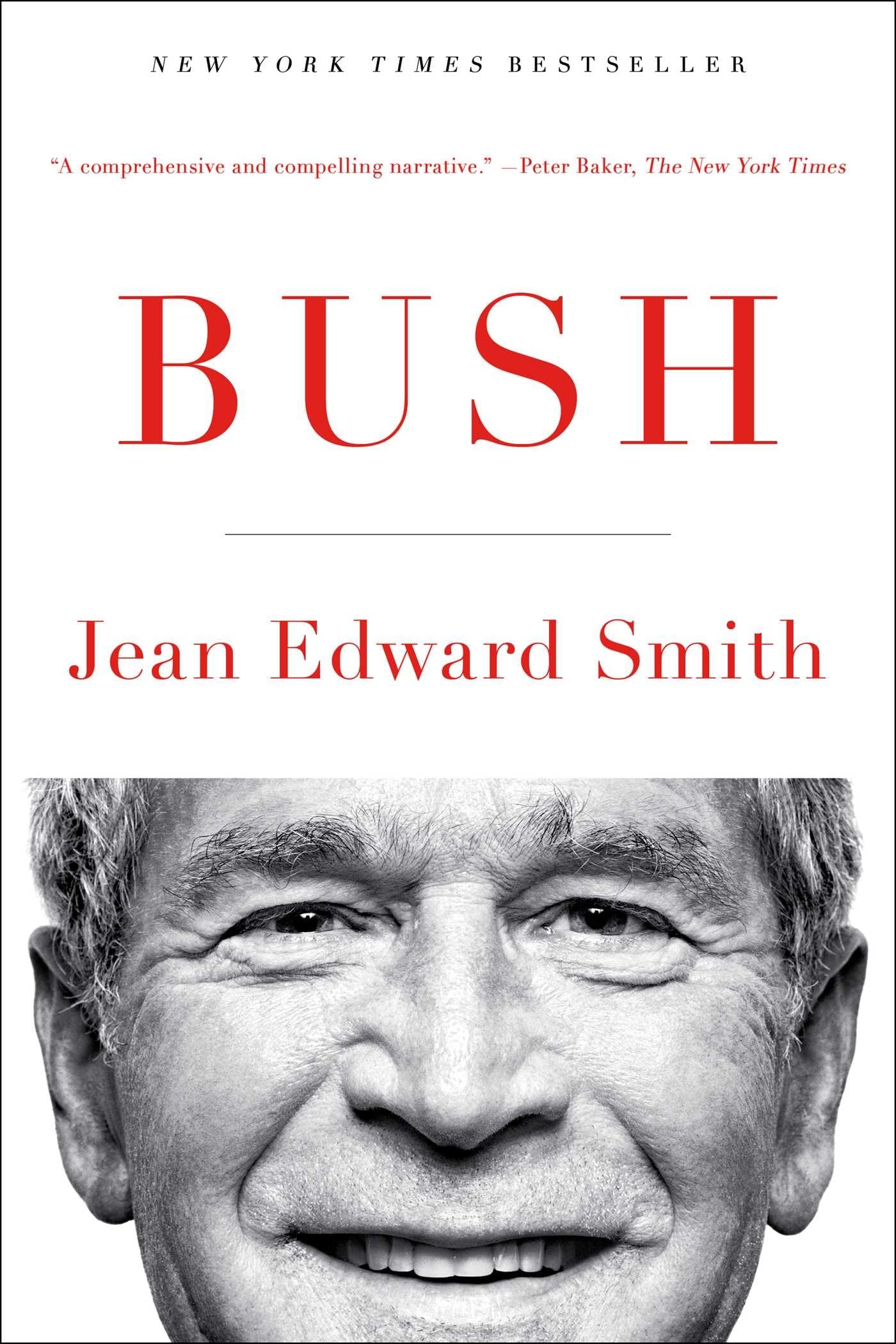
desertcart.com: Bush: 9781476741208: Smith, Jean Edward: Books Review: Another bullseye for Jean Edward Smith - Normally, and today’s version of normality in politics is anything but normal, it would seem wise to wait a bit before judging the performance of a president. It has now been almost eight years since George W. Bush left office. Jean Edward Smith, whose biographies of Eisenhower, Franklin Roosevelt and others have been outstanding additions to understanding them as individuals and as leaders. Now, however, Professor Smith takes on the presidency of a man still very much alive and whose term of office ended relatively recently. The nation seems to be still wrestling with many of the problems of the Bush administration – among others, unrest in the Middle East, a sluggish domestic economy, and rising crime levels. Despite the miniscule gap between the end of George Bush’s term and the arrival of the first comprehensive look at his presidency, this wonderful biography seems to hit all the right notes. It is fast-moving, extremely readable, at times exciting – particularly around the 2001 World Trade Towers bombings, and unfailingly fair. Unfortunately, the opening sentence of this book tells us that only rarely has the nation been so “ill served” as the two terms of George Bush. Wow. But then the ensuing pages show us in occasionally microscopic detail how Bush handled most issues apart from the Middle East with skill and understanding. It was the Middle East that was the albatross around his neck. Regrettably, as the war became more complex and far more dangerous, Bush became less interested in weighing opinions and recommendations on any policy other than his own. The war became a military and, with the horrors of Abu Ghraib in full view, a humanitarian train wreck. George liked to call himself “the decider”; he was indeed the author of the mess in the Middle East and this swamped almost all else – his superb responses to the economic turmoil beginning in 2007, his “No Child Left Behind” initiative, and his interest in moving relations with China to a higher plane. Bush was the son of a famous man, former President George H.W. Bush, and had a difficult relationship with him. George’s early years were often beyond difficult. He skimmed his way through Yale, drank heavily, only occasionally showing up for service in the Air National Guard, and contemptuous of his father. But he slowly began to turn his life around – left alcohol and tobacco behind, went on to Harvard Business School, began to put together an interesting business career, married a level-headed gorgeous young wife, started a family and moved slowly into government with his first office being the Governor of Texas. George had charm, common sense and ambition, all in equal parts. He defeated the Democratic nominee, Al Gore, in the highly contentious Presidential election of 2000 and began his journey through eight years of leading the country. Unfortunately, the group of advisors around him in the early days of his Presidency had a grand agenda that turned the Middle East into a cauldron of a military and political mess. Professor Smith is clear about the importance and overwhelming influence of the bad advice that hounded Bush’s two terms in office. By the end of this terrific biography, one has a clear grasp of Bush’s assets – humor, honesty, charm, drive and fairness. As he left the Presidency his approval ratings touched all-time lows relative to those of other Presidents at the end of their term. In the end, however, it seems that George Bush was the victim of rafts of terrible advice. Remember, as Professor Smith reminds us, George Bush was always trying hard to serve the country well. It was he, our nation’s forty-third president, who read 14 biographies during his term of office of our nation’s 16th president, Abraham Lincoln. Review: Good Biography But Unbalanced - Jean Edward Smith has written a very good and well researched biography about George W. Bush. But it is unbalanced as he showed his disdain for Bush in his opening chapter. This leads any reader with the idea that there is too much prejudice against Bush to get a fair take on him. He is very harsh on Bush for most of his presidency. Probably rightfully so. IMO we should have never gone into Iraq especially with the evidence shown that WMD's were very unlikely there. Bush could be very stubborn on these issues and usually didn't listen to advice given to him. Smith did give him credit on many of the domestic issues that came up during his time and it gives you a feeling that if Bush had decided not to invade Iraq that his Presidency would have been considered very good. Alas, it wasn't. I suspected during his time in office that he was either advised very badly or didn't listen to the advice given. It was sort of a combination of both. The author did a very good job of bringing this out. I was a young adult during Bush's time in office. I thought he did a very good good job initially leading us through the 911 crisis. But it spiraled downward quickly after that. The author did a great job on researching about everything in his Presidency and I would recommend this book for anyone reading Presidential biographies. Just be aware the author did not like Bush at all and it can be very unbalanced at times
| Best Sellers Rank | #513,064 in Books ( See Top 100 in Books ) #261 in US Presidents #560 in Political Leader Biographies #2,023 in Traveler & Explorer Biographies |
| Customer Reviews | 4.4 4.4 out of 5 stars (460) |
| Dimensions | 6 x 2.5 x 9 inches |
| Edition | Reprint |
| ISBN-10 | 1476741204 |
| ISBN-13 | 978-1476741208 |
| Item Weight | 1.74 pounds |
| Language | English |
| Print length | 832 pages |
| Publication date | July 18, 2017 |
| Publisher | Simon & Schuster |
D**M
Another bullseye for Jean Edward Smith
Normally, and today’s version of normality in politics is anything but normal, it would seem wise to wait a bit before judging the performance of a president. It has now been almost eight years since George W. Bush left office. Jean Edward Smith, whose biographies of Eisenhower, Franklin Roosevelt and others have been outstanding additions to understanding them as individuals and as leaders. Now, however, Professor Smith takes on the presidency of a man still very much alive and whose term of office ended relatively recently. The nation seems to be still wrestling with many of the problems of the Bush administration – among others, unrest in the Middle East, a sluggish domestic economy, and rising crime levels. Despite the miniscule gap between the end of George Bush’s term and the arrival of the first comprehensive look at his presidency, this wonderful biography seems to hit all the right notes. It is fast-moving, extremely readable, at times exciting – particularly around the 2001 World Trade Towers bombings, and unfailingly fair. Unfortunately, the opening sentence of this book tells us that only rarely has the nation been so “ill served” as the two terms of George Bush. Wow. But then the ensuing pages show us in occasionally microscopic detail how Bush handled most issues apart from the Middle East with skill and understanding. It was the Middle East that was the albatross around his neck. Regrettably, as the war became more complex and far more dangerous, Bush became less interested in weighing opinions and recommendations on any policy other than his own. The war became a military and, with the horrors of Abu Ghraib in full view, a humanitarian train wreck. George liked to call himself “the decider”; he was indeed the author of the mess in the Middle East and this swamped almost all else – his superb responses to the economic turmoil beginning in 2007, his “No Child Left Behind” initiative, and his interest in moving relations with China to a higher plane. Bush was the son of a famous man, former President George H.W. Bush, and had a difficult relationship with him. George’s early years were often beyond difficult. He skimmed his way through Yale, drank heavily, only occasionally showing up for service in the Air National Guard, and contemptuous of his father. But he slowly began to turn his life around – left alcohol and tobacco behind, went on to Harvard Business School, began to put together an interesting business career, married a level-headed gorgeous young wife, started a family and moved slowly into government with his first office being the Governor of Texas. George had charm, common sense and ambition, all in equal parts. He defeated the Democratic nominee, Al Gore, in the highly contentious Presidential election of 2000 and began his journey through eight years of leading the country. Unfortunately, the group of advisors around him in the early days of his Presidency had a grand agenda that turned the Middle East into a cauldron of a military and political mess. Professor Smith is clear about the importance and overwhelming influence of the bad advice that hounded Bush’s two terms in office. By the end of this terrific biography, one has a clear grasp of Bush’s assets – humor, honesty, charm, drive and fairness. As he left the Presidency his approval ratings touched all-time lows relative to those of other Presidents at the end of their term. In the end, however, it seems that George Bush was the victim of rafts of terrible advice. Remember, as Professor Smith reminds us, George Bush was always trying hard to serve the country well. It was he, our nation’s forty-third president, who read 14 biographies during his term of office of our nation’s 16th president, Abraham Lincoln.
K**R
Good Biography But Unbalanced
Jean Edward Smith has written a very good and well researched biography about George W. Bush. But it is unbalanced as he showed his disdain for Bush in his opening chapter. This leads any reader with the idea that there is too much prejudice against Bush to get a fair take on him. He is very harsh on Bush for most of his presidency. Probably rightfully so. IMO we should have never gone into Iraq especially with the evidence shown that WMD's were very unlikely there. Bush could be very stubborn on these issues and usually didn't listen to advice given to him. Smith did give him credit on many of the domestic issues that came up during his time and it gives you a feeling that if Bush had decided not to invade Iraq that his Presidency would have been considered very good. Alas, it wasn't. I suspected during his time in office that he was either advised very badly or didn't listen to the advice given. It was sort of a combination of both. The author did a very good job of bringing this out. I was a young adult during Bush's time in office. I thought he did a very good good job initially leading us through the 911 crisis. But it spiraled downward quickly after that. The author did a great job on researching about everything in his Presidency and I would recommend this book for anyone reading Presidential biographies. Just be aware the author did not like Bush at all and it can be very unbalanced at times
C**D
Well Worth Reading
This is a well researched, well written book that I found hard to put down. Smith had the benefit of written material produced by several of the people mentioned in the book, many of whom, including Bush, had written memoirs. He also was able to interview some of the people, not including Bush. I found there were two styles used by Smith. In much of the book he wrote as an historian setting out the facts. In other parts he appeared to be writing as a critic with somewhat less objectivity. The Preface could well have been deleted since it summarizes in a somewhat harsh way much of the criticism that follows. All in all history will record, as Smith strongly suggests, that Bush was a terrible President, maybe the worst we have ever had. Yet there were some things he did that were admirable. When he was Governor of Texas where the Governor has very little power he was able to work with strong Democratic officials to accomplish needed educational reform. As President he was responsible for putting in place No Child Left Behind and was a leader in working to combat AIDS. Surprisingly as a Republican he was able to pass legislation that added a prescription drug benefit to Medicare. Smith does cast doubt on the notion that Cheney and Bush were really calling the shots on Iraq. Although Cheney certainly was a strong supporter of the Iraq war, Smith concludes that Bush made the key decisions himself as the decider. Unfortunately he was surrounded with staff members, including Condoleezza Rice, who seemed to be more interested in catering to his wishes rather than presenting him with meaningful criticism of the steps he wanted to take. Surprisingly, Rumsfeld escapes with very little criticism. In fact, at one point Rumsfeld gave Bush a list of things that could go wrong as a result of the invasion of Iraq that proved to be very prescience. Smith casts doubt on the claim made by many that the surge was primarily responsible for what seemed like a successful turn in the war. Instead, he credits much of the success to the Anbar Awakening as the Sunnis sought to improve their own position. Smith also makes clear that there was substantial support both by the military and by foreign policy advisors for the removal of all US ground forces. The question whether Bush's father approved of the Iraq invasion seems to be answered by the criticism of the invasion made before it took place by Brent Scowcroft and James Baker, two of the father's closest friends. Smith does put to rest a couple of issues. Condoleezza Rice spent considerable time with the President - they even exercised together - but Smith says the relationship was entirely proper. He also claims that Treasury Secretary Paulsen and Bernanke were not correct when they claimed they did not have the authority to take over Lehman. As much as Bush thought he knew enough to make all the key decisions about Iraq, he did have the sense to know that he was not sufficiently knowledgeable about economic matters and therefor relied heavily on experts such as Paulsen and Bernanke. Smith spends considerable time writing about the evils of the intrusions on privacy that came from the Patriot Act. However valid those concerns were at that time, one cannot help but wonder whether the need for information about suspected terrorists will cause a rethinking of privacy concerns, particularly since there is very little personal data that is not already being collected by businesses (and in some cases by hackers). Anybody who uses the internet has to be aware that whatever he or she posts has very little likelihood of being completely private.
M**.
Fantastic read for a Brit with a keen interest in American politis + history. Some of the paragraphs are so well-written and so deftly analyse George Bush, that I would reread them three times over. I have learnt so much. Jean Edward Smith, thankyou.
J**R
Making a biography on a recent President is always risky. But Jean Edward Smith pulls it off with great success. It seems it was just yesterday that George W. Bush was a loathed leader overseas, while a divise one inside his country. In many ways, he changed history, although arguably not in a positive way. Jean Edward Smith is careful in not portraying Bush as a caricature (which is not easy, the character is full of traits which are laughable), but as a leader with great flaws- and some good decisions. Maybe only in Donald Trump's Presidency we can look back and recognize that as horrible as some of the decisions that W. Bush made- he was by no means comprable to what Donald Trump is. A very fair view of W. Bush, that can satisfy both his critics and admirers and that by itself, is a lot to say.
B**L
Have not finished reading the book yet. Extremely interesting - well written - certainly keeps the reader wanting to know more about the subject. Has changed my opinion of Bush and not for the better. Makes me really wonder how government functions with idiots in charge.
J**G
Excellent book. Extremely well researched. A real page turner that really provides solid insights into the Dubya Bush presidency.
J**E
This is a brilliant and comprehensive review of the presidency of George W. Bush. Smith is genuinely a captivating writer who makes reading very easy. However despite the brilliant writing the book itself is in awful condition. The book appears 2nd hand from the outside and the first few pages have arrived creased. This is very disappointing especially considering the premium price paid for a hardback. I would appreciate if the seller would contact me with either an apology or an offer of a refund. This is of course unfortunate because I really enjoyed the book.
Trustpilot
1 week ago
1 month ago