Desert Online General Trading LLC
Dubai, United Arab Emirates
Desert Online General Trading LLC
Dubai, United Arab Emirates
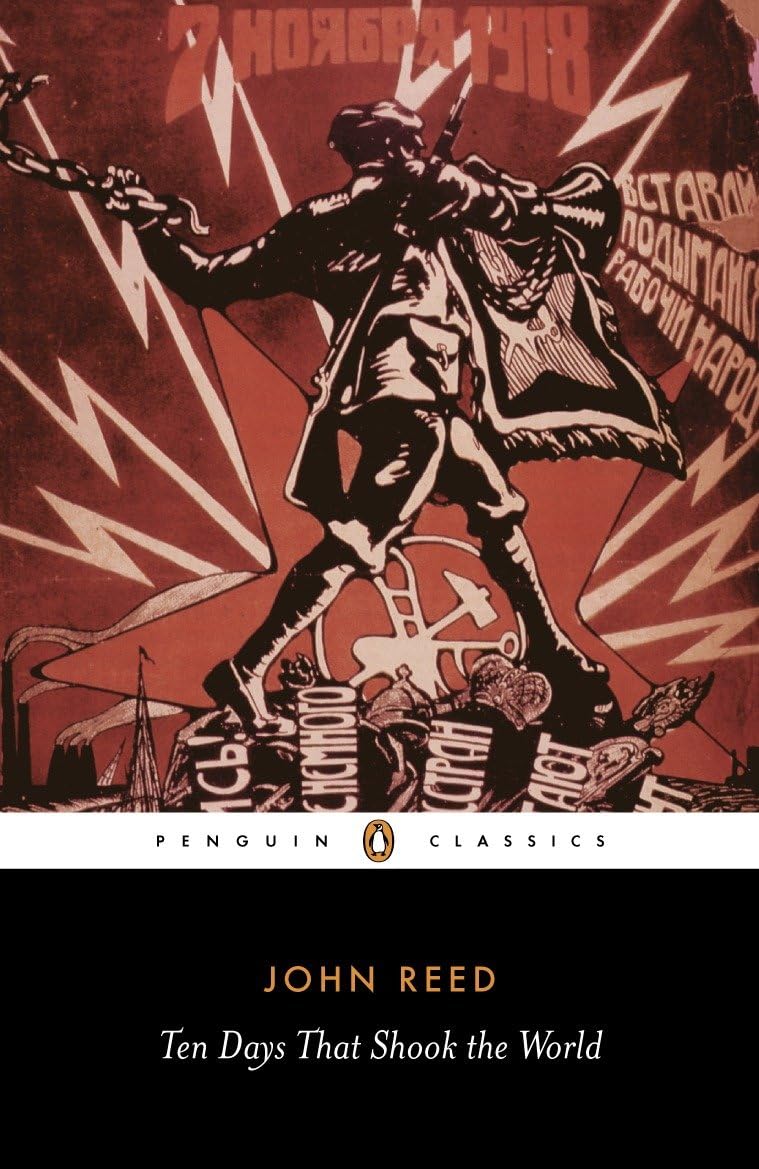
Ten Days That Shook the World (Penguin Classics)
W**E
haven't finished it yet
introduction explains that reed in certain parts takes literary license. however the book (so Far) definitely gives you the idea of what things were like.....the chaos and many factions all vying for power in the vacuum of the czar.
J**.
Great history book.
This is one of the most exciting history book written. Easy to read and about a hugely important event. Good for adults and older children even.
O**Y
well written and easy to comprehend
True historical account of October 1917 Bolshevik Revolution, well written and easy to comprehend.
A**R
Wish I could recommend it
I really wanted to like this considering both the author's and the text's reputation. (The other members of the DSA reading group who were reading it with me also seemed impressed so YMMV.) Unfortunately while Reed is a strong and evocative writer, his narrative of the Revolution assumes substantial background knowledge regarding the various factions/players that isn't as commonplace today as it presumably was among the left of his day. Even consulting the notes preceding the text and supplemental info online I often found myself lost and bewildered about who was doing what and why.On the plus side (and the reason this is a three-star and not a one star review) the book definitely brings the spirit of the events to life and made me want to learn more. I'm hoping that China Mieville's October is a bit more layman-friendly when I read it. Wrapping up: if you're interested in the topic, this is definitely worth reading, but it probably shouldn't be the first thing you read.
C**T
Recommended
As the title suggests, John Reed's account of the October revolution is unabashedly pro-Bolshevik. I suppose that makes it useful to a variety of different people. People who want to portray rank and file communists as dupes will find plenty of ammunition. On the other hand people who sympathize with communism will be able to contrast the idealism of the old Bolsheviks with the cynical cruelty of the Stalin regime. It can be read either way *with the benefit of hindsight.*To me the important thing about a book like this is that it can and should be read without that hindsight. Marx couldn't have possibly known, in the 1870's, how his magnum opus would be used to justify the crimes of the Stalin regime in the 1930s, nor could Reed have known that in the 1910's, any more than you or I or anyone else can know what will happen tomorrow or the day after. People had to do the best they had with limited information - obviously in this case a lot of people got a lot of things wrong. If we want to move the grounds of discussion out of the realm of politics and ideology, where all kinds of childish sophistry can masquerade as profound thinking, and into the grounds of history, where real conversation is still possible, we have to make allowances for the limitations of the human condition. Neither people who were for or against communism could have possibly known the future. As it turned out the people who were for it had to go on the record as having made a serious blunder, while people who were against it got to switch their line after the fact and pretend they had always known.At least for me, this book is a corrective to that kind of thinking. It gives a great deal of insight into what at least one early Bolshevik supporter was thinking, and how he saw the events of the revolution as they unfolded. It also shows how the Bolsheviks got into power in the first place, and how they were able to rally popular support at a time when they still needed it. There's nothing like a first hand account, if you want to understand the past. His portrayal of a city in chaos is also compelling. There isn't a great deal of intellectual content here, apart from the bare facts that he reports, but that's to be expected. We're already far too familiar with the main lines of argument, so it's not likely to be missed.If anything, what stands out about this book is the narrator's almost childish enthusiasm. He really thought he was standing on the cusp of a new epoch in world history. In a way he was, I suppose - though hardly the kind of epoch he had in mind.In any case I do recommend this book. People who think its fun to beat the dead horse of communism (or try to resurrect it) will find plenty to get excited about. More thoughtful people, who want to understand the actual events of 1917, will also find their efforts rewarded. Everybody wins.
B**B
Five Stars
The average American should have to read this book befor graduating from HIGH SCHOOL ...
D**L
History that changed the world
A classic worth reading.
C**G
Classic literature
See my review for Louise Bryant's "Six Months in Red Russia" (which --surely-- got the title wrong with "Six Red Months in Russia").
Trustpilot
3 weeks ago
2 weeks ago