
DOWNLOAD THE APP


Customer Services
Copyright © 2025 Desertcart Holdings Limited
DOWNLOAD THE APP
Full description not available
A**.
Good
Overall good, I liked the characters for the most part. Jane was probably my least favorite character, while Janus was my favorite.
F**T
Good sequel to Book 1
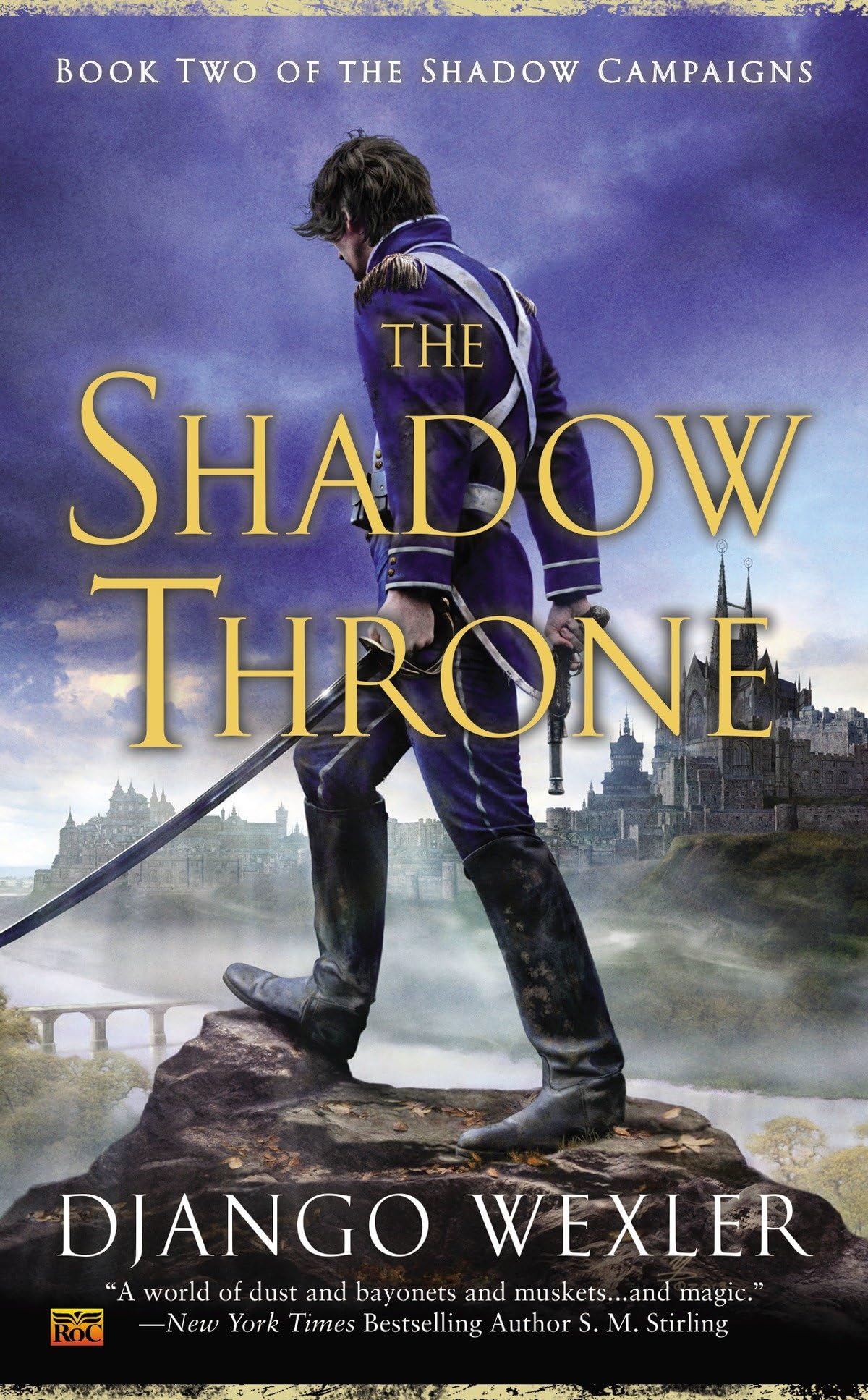
The Shadow Throne, by Django Wexler, is the second book in a series of novels dealing with the beleaguered kingdom of Vordan. Set in a time resembling the early years of Napoleon, in geography that could be Europe. It is a tale of war, political treachery and, a mysterious, ancient, and looming evil.The first book, The Thousand Names, introduced some of the characters who are continued in The Shadow Throne: Lt. Ihernglass, Capt. d' Ivorie and Major Vhalnich , veterans of an earlier victorious war against a native army led by a sorcerer. Now they have returned home to Vordan, where the king is near death and the heir, daughter Raesinia is trying to gain control of a seething populace teetering on the edge of revolution. The enemy is not the people, but the head of the Ministry of Information, one Duke Orlanko, who heads a secret army of assassins and thugs., and rapacious " tax farmers" who skin everyone.Author Django Wexler takes a bit of time in this 500 page book to describe what is going on in Vordan, setting up its competing factions and rivalries. He uses the first hundred or so pages well to flesh out his characters, as well as to give the reader a feel for the building tension in the kingdom. When violence erupts, it explodes across the pages.In a way The Shadow Throne reminded me of A Tale Of Two Cities, the Dickens classic novel of the French Revolution. Innocent people are caught up in sweeping events; evil people manipulate and scheme.Soldiers choose side and fight against odds, factions unite or perish. But beyond that familiar story is that under everything is a disturbing, encroaching evil, possessing some, controlled by others who have the Book of A thousand Names.I read the first book, and it would help a reader to get a sense of what was going on, but it is not totally necessary to enjoy this book. What it would do is to assure the reader that he/ she is in the hands of a skilled author who sets the stage and puts everyone in motion at the right time and direction.A very good second novel and worth putting on your reading list. A bit hard to categorize: call it a history of a fantasy world or a fantasy history of the world. Whatever, I recommend it.Notes: some romantic sex, some mild combat violence, a bit of black magic, but no walking dead this time...but who knows what the Wexler has plotted for the next installment. am looking forward to it.
C**Y
Would certainly recommend
(Warning, contains spoilers) This book, as the one before it, holds a depth that is captivating. Perhaps not as extensive a world history as say A Story of Ice and Fire, but nonetheless detailed. The characters' thoughts are as they should be--much of the time they are concerned with what is before them but in the same thought, they often reminisce on the past or meditate on the future. For myself, this is what makes the characters human despite their superhuman capabilities.The character of Marcus is perhaps the barometer against which the other characters should be judged. He is not as clever (or ambitious) as his superior Janus, nor does he possess the sharp wit of Winter, while his personal demons are not at the magnitude of Raesinia's. Yet, due to his normalcy, his actions are likely what a normal person, tested by war, would do. He is not vengeful, he is dutiful, he is patriotic, and he takes his responsibilities seriously, making him very relatable.Winter, on the other hand, went through quite a bit of development in this latest work. Indeed, despite finding herself in the company of women, she struggles with a loneliness encapsulated by her literal transformation at the end of the last book. She comes back from war changed, and civilian life is as alien to her as the army was when she first enlisted. Even when reunited with the woman she asked Janus to find, she retains that sense of distance, which I think will culminate interestingly into the next book.Perhaps the most irritating part of the book is the carrot Wexler dangles in front of us in Count Colonel Janus bet Vhalnich. Although his past is somewhat explored, it is lacking in detail. In sum, all we know is that he is from a secluded part of Vordan that is difficult even for the Concordat to infiltrate, he has studied magic, and he's a war hero. So who is he? What does he want? Many characters speculate, but he remains an enigma. I honestly thought we would learn more about Janus, but it seems that the mysteries regarding him will have to wait.I focus on these characters despite the introduction of others because of their presence in the last book. I believe that Wexler did a good job with the continuity, in which the characters are defined by the past though they are not consumed by it to the point that the first book is required like a dictionary or thesaurus. In all, I recommend this book to anyone who enjoys the flintlock fantasy genre.
Trustpilot
3 weeks ago
2 days ago