Some deliveries may take a little longer than usual due to regional shipping conditions.

DOWNLOAD THE APP


Customer Services
Copyright © 2025 Desertcart Holdings Limited
DOWNLOAD THE APP
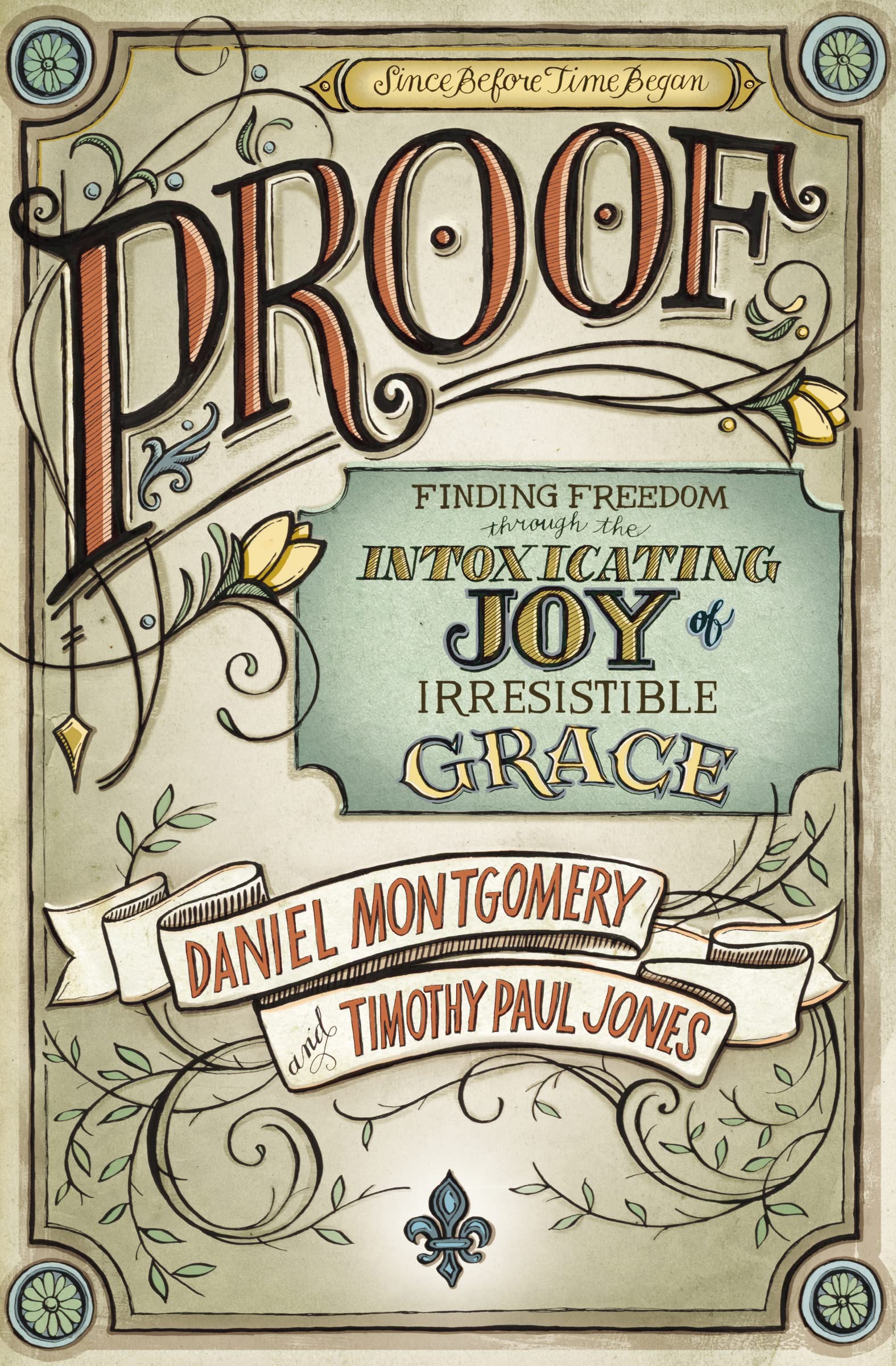
PROOF: Finding Freedom through the Intoxicating Joy of Irresistible Grace
J**.
An acronym we all want to embrace, because it's GRACE.
Preacher and writer Steve McCoy asked on Twitter what book one would recommend Christians should be required to read aside from the Bible, written in the last year. My reply to him was: “PROOF.“Daniel Montgomery and Timothy Paul Jones penned a book together that I would argue does need to be in the hands of your friends, church members or not. Why? Because we all have a propensity to think (and act) that making a “good” life is solely dependent on our efforts and that it’s all riding on our shoulders. Every person lives with a burden. We feel and know this to be true of everyone. The burdens can weigh different amounts, but it still weighs us down regardless. Montgomery and Jones also feel this and have experienced this in their various ministries. Thus they wrote a book to relieve us tired and sore weight-lifters, carrying our burdens with us daily, and to demonstrate the Biblical account of God’s “freedom and joy of the gospel.” The purpose of PROOF, according to the authors, is “to be an alarm clock that awakens you from the delusion that your destiny depends on you and frees you to discover the intoxicating joy of God’s wild and free grace” (16).Greatly subtitled, “Finding Freedom through the Intoxicating Joy of Irresistible Grace,” PROOF welcomes all who read to “drink deeply from the well of God’s grace and to share this grace with others” (133). So, what is the grace, and why have they titled it PROOF?When the authors talk of PROOF, they are referring to an acronym that summarizes five key facets of God’s amazing grace. “PROOF reminds us of five different ways in which we experience the grace of God at work in our lives” (20).P - Planned GraceR – Resurrecting GraceO – Outrageous GraceO – Overcoming GraceF – Forever GraceThis message of God’s saving act through his son Jesus who single-handedly frees us from the “unending treadmill of human effort” is the exact point of this book.You may or may not have heard of the “doctrines of grace” as a summary in Reformed theology (and also known as the five points of Calvinism) that are key teachings points for salvation that have been argued over for centuries. The goal of these two authors is not to make the doctrines of grace defensible – as from a sectarian framework – but rather to operate under a declarative framework, seeking to call people to behold the beauty of God and reclaim the rally-cry of the Reformation which is “Reformed, and always reforming.” They want the accent on the always reforming. They’ve written this book for our present generation in our present context with a fresh vision of communicating why grace is so outrageous, so awesome, and so needed.I appreciate this approach because I would not necessarily have known these authors were Reformed until the latter chapters of the book. They succeed in rearranging TULIP (the original acronym to summarize Calvinism) into PROOF and from the beginning chapter it grabs our attention and reminds us that we are to behold the magnificent, sovereign, and glorious God of the Bible, who chose to save undeserving sinners, changing our dead-beat hearts to turn freely to Him as beloved adopted children, “filling the bank accounts of [our] identity with all the goodness of his Son” (12).What is most appreciated in this book – aside from the exceptional content – is the section at the end of each chapter called “Proof For Life.” The authors provide Scriptures to meditate on along with song lyrics and the charge to memorize catechism questions and answers. This is helpful because it supplies the application part, the aftermath for the reader. They have clearly spent much time preparing this book and it shows with multiple Appendices at the end of the book including tables throughout further explaining PROOF in very simplistic and helpful ways.Whether you’re a closet Calvinist, an anti-Calvinist, or unknowing Calvinist, the book PROOF is declaring that God’s grace is always worth fighting for. Montgomery and Jones acknowledge they are standing on the shoulders of great pastors and theologians from the past and have written this book to push for a fresh vision of grace.This vision of grace leaves you amazed, relieved, and refreshed. In the revised doctrines of grace, aka PROOF, we can rest now, because “grace leaves us with nothing to prove because, in Christ, everything that needs to be proven has already been provided” (143).Wherever you are, this book invites you to come thirsty and discover the beautiful mystery of God’s amazing grace.
D**J
Really nothing new under the sunny tulip.
A good read. A few good points.Authors reject the terms Total Depravity and Limited Atonement...but they hold strongly to both concepts. Though they don't really explain, they apparently reject Unconditional Election as a term....but hold firm to the concept. And, of course, the entire 5 points receive new terminology and a fresh coat.Well done restatement. Kudos there. Just not much here that demands a purchase. Still, enjoyable read and engages reader well.
S**E
God's Grace from the right angle
Point: The doctrines of God's grace are not a club with which to beat people, nor a logical sequence to foster our argument, but a window through which we may see more clearly our great God.Path: The authors help to explain the doctrines of grace by jettisoning the confusion-creating acronym of "TULIP" in favor of their own, "PROOF." They take the reader through each of the doctrines:“Planned Grace - Before time began, God mapped out the plan of salvation from first to last. God planned to adopt particular people as his own children; Christ offered himself as a sacrifice for these people’s sins and as a substitute who satisfied God’s righteous requirements in their place (John 10:11 – 18; Ephesians 1:4 – 12).Resurrecting Grace - Everyone is born spiritually dead. Left to ourselves, we will never choose God’s way. God enables people to respond freely to his grace by giving them spiritual life through the power of Christ’s resurrection (John 5:21; Ephesians 2:1 – 7).Outrageous Grace - God chose people to be saved on the basis of his own sovereign will. He didn’t base his choice to give us grace on anything that we did or might do (John 15:16; Ephesians 2:8 – 9).Overcoming Grace - God works in the lives of his chosen people to transform their rebellion into surrender so that they freely repent and recognize Christ as the risen King (John 6:44, 65; Ephesians 2:4 – 10).Forever Grace - God seals his people with his Holy Spirit so that they are preserved and persevere in faith until the final restoration of God’s kingdom on the earth (John 10:27 – 29; Ephesians 1:13 – 14; 4:30).”In doing so they encourage the reader to focus on the extravagant gift of the grace of God instead of looking at the negative side of each doctrine. They include a catechism, songs to sing, passages to memories, and quotes to meditate on at the end of each chapter.Sources: The authors spend much time and effort pointing the reader to theologians throughout the ages, and some musicians and rappers at the same time. The expected individuals find their places throughout the pages, Luther, Calvin, Spurgeon, etc., as well as more modern individuals such as Piper, Carson, and others.Agreement: I appreciate what the authors have done here. Taking a different perspective on the doctrines of grace helped me to respond in worship and awe rather than enjoying the argument. I plan on using this resource to help others see what God has done and how we can appropriately apply it from Scripture. There is still much to be discussed on the whole issue, but I think what they have done genuinely serves the church.Personal App: Do I view the doctrines of grace as arguments for my view, or as a gift from God to produce in me a tender heart, willing hands, and a fervent spirit?Favorite Quote: ““The message here was vastly different from what we were used to! Learning that there is no way to earn God’s forgiveness was so freeing.” (Kindle loc 2847) It would be worth another read and I would recommend it to someone who:wants to see themselves and their God in a greater waystruggles with the terms "Calvinist" and "Arminian"has ever used the phrase "I don't know if I could worship a God like Calvin's"Other books along this theme would be:Forster, Greg. The Joy of Calvinism: Knowing God’s Personal, Unconditional, Irresistible, Unbreakable Love. Crossway, 2012.Haykin, Michael A. G., and C. Jeffrey Sr. Robinson. To the Ends of the Earth: Calvin’s Missional Vision and Legacy. Crossway, 2014.Piper, John. Five Points. Christian Focus Publications, 2013
Trustpilot
2 months ago
1 month ago