Some deliveries may take a little longer than usual due to regional shipping conditions.

DOWNLOAD THE APP


Customer Services
Copyright © 2025 Desertcart Holdings Limited
DOWNLOAD THE APP
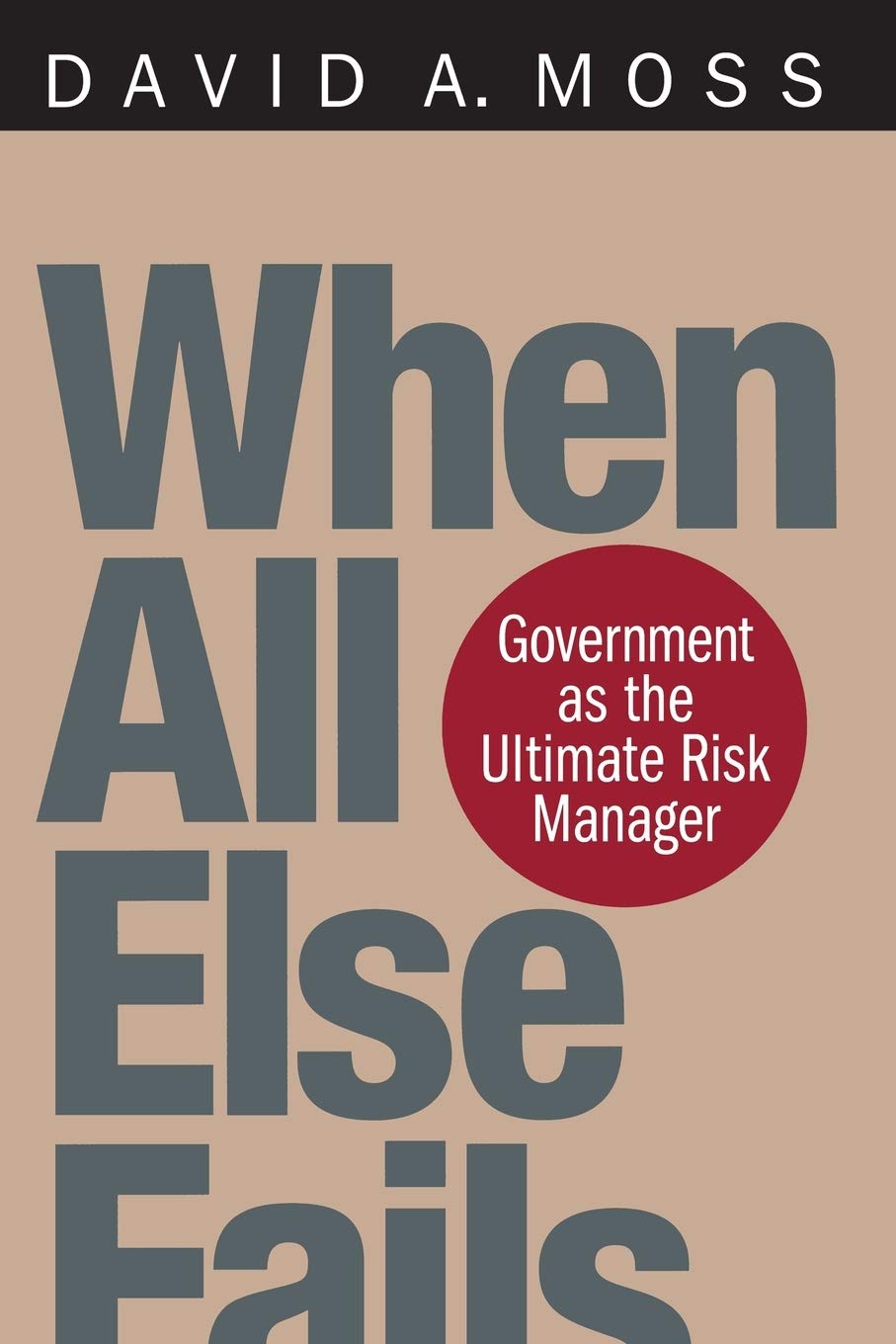
⚖️ When government takes the wheel, risk meets its match!
‘When All Else Fails’ offers a meticulously researched exploration of government’s role as the ultimate risk manager, blending historical context with legal and policy analysis. Ideal for professionals and scholars, this book delivers clear, engaging insights into how public institutions shape risk management frameworks across industries.
| Best Sellers Rank | #898,272 in Books ( See Top 100 in Books ) #28 in Insurance Law Business Law #258 in Microeconomics (Books) #343 in Government & Business |
| Customer Reviews | 3.8 out of 5 stars 11 Reviews |
P**O
A wide-ranging, top-notch book
This author has a lot to say about the topic, reviewing governmental trials, errors and developments in several settings: corporate limited liability, money, bankruptcy law, workers' insurance, social security, and product liability, among others. Each area is well-researched and crisply explained. The author moves at a good pace: the book is informative without bogging down, and is well-edited. My knowledge in these areas is significantly deepened, particularly in their legal dimensions, and I see debates and rationales of various players, private and governmental, weaving through the narratives, which I had been unaware of. For example, bankruptcy at an early stage (in a few colonies) appears to have been intended as an orderly and fair means for creditors to get at assets, and less in its modern form of a device more oriented to relief of debtors. Many such facets of the topic are set forth here, as they unfolded through time. This book came out around 2002, so sadly, I am left to apply its (clear and well-laid-out) ideas to the massive risk management events that have happened lately. But this book gives me a platform from which to consider such things as the Dodd-frank legislation and PPACA. I am grateful to the author for staying in a disciplined way on the topics, and not overstaying or getting lost in digressions. In my quest to learn a historical background to risk management, I previously read "Freaks of Fortune," which started with sea voyage insurance and walked through slavery and other 19th century institutions which are (arguably) risk management attempts. I like these sorts of books, which take a broad view of what arrangements in society may be considered "risk management," from family arrangements to various customs, to major legislation, and go in a scholarly and methodical way through the pertinent history.
J**.
Excellent book!
Provides excellent discussion material for a Masters level course in risk management I teach for public administrators. It outlines some interesting perspectives.
C**T
but a good read. Lots of great
Very academic, but a good read. Lots of great research
"**"
One of the best books on economic policy out there
I bought this book on the strength of a review in The Economist and was not disappointed. With policies as varied as limited liability, central banking, deposit insurance, and Social Security, American legislators transformed government into an insurer of last resort. Sometimes they shift risk from prospective victims to those better able to afford the loss (product liability); at other times they spread catastrophic risks over the whole tax base (flood insurance). The book charts the expansion of government in the United States from the late 19th century to its zenith in the late 1970s. The author answers the objections of the Chicago and Austrian schools - Becker, Hayek, Mises, and the others - in convincing fashion thanks to its moderate tone and extensive research. The prose is clear, surprising for a book dealing with such complex subject matter. The chapter on the emergence of limited liability corporations is particularly strong. Unfortunately, the chapter on product liability could have used a bit more skepticism. Few readers will share the author's view that tort lawyers are an unalloyed blessing. The author sidesteps many of the problems we now face with exploding damage awards and wide discrepancies in the awards handed down in various jurisdictions. Nor does he grapple with the consequences these problems impose for medical research and the US insurance industry.
F**.
Moral Hazard as Policy....
"Too Big to Fail" "A risk to the economy" We see these phrases in the media now more and more. What they imply is the mutalization of all risk i.e. the risks that individual managers take of "too large to fail" institutions will be borne by the government, and therefore all of us. If JPM or C rolled over today - would the US government let it happen? Would the IMF? Would the BIS? Of course not. We are all implictly short a load of puts on collective market risk. This incentivizes individual managers to make riskier bets (and actually forces them to do so, if they want to remain competitive). This therefore raises the strike of these puts higher and higher i.e. things can go very badly much sooner, and individual institutions are LESS insulated from market volaitlity than they were 30-40 years ago. Sub-prime moral hazard is playing itself out now (q1 '08). Credit creation through innovation unlocks equity and allows for economic expansion. This is a reasonable policy goal. However, Moss' claim is that this innovation (unlike in Silicon Valley), comes with a built in safety net that encourages excessive risk taking.
B**R
now the USGOV gets in the old shell game and enslaves your children to debt from mistakes of blythe risk takers today
A better title would probably be "you Joe Shmuck taxpayer are the ultimate subsidy for risk takers...who will hoover your dough out of your pocket with bait and switch faster than three card monte." Sure to rise on AMAZON's sales rankings, this is an excellent work that walks through the practical implications of the USGOV absorbing failed risk. I always tell my students "risk is the probability things will turn out badly" but am now thinking of switching it to "risk is the probability you'll hear `hi, we are from the government and we are here to help.' In your practical career in finance." Soon to be on every Washington Wonk's bedside, so jump in and actually read this excellent book so you'll be ahead of the game.
Trustpilot
2 weeks ago
1 day ago