

Desert Online General Trading LLC
Dubai, United Arab Emirates
Desert Online General Trading LLC
Dubai, United Arab Emirates
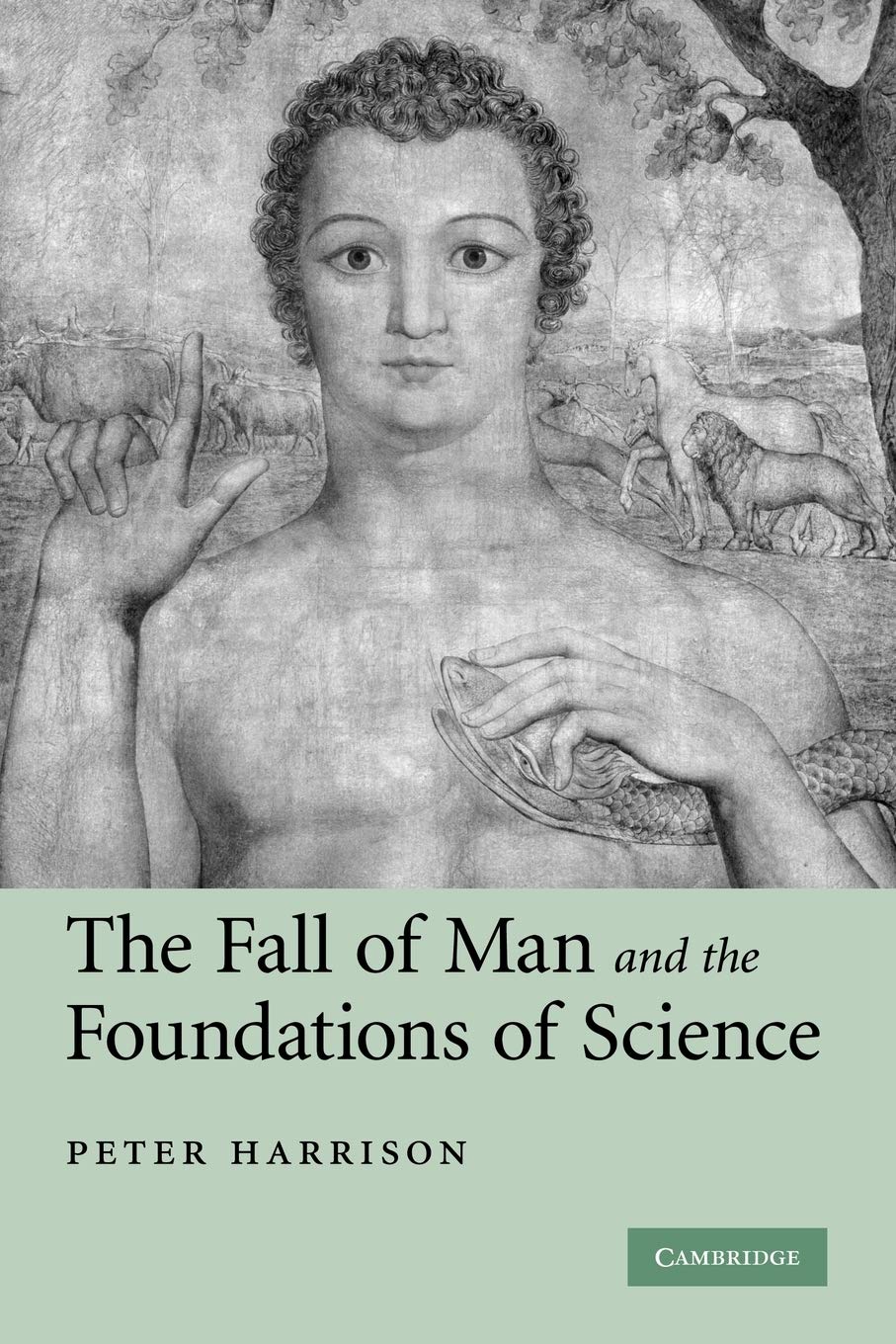
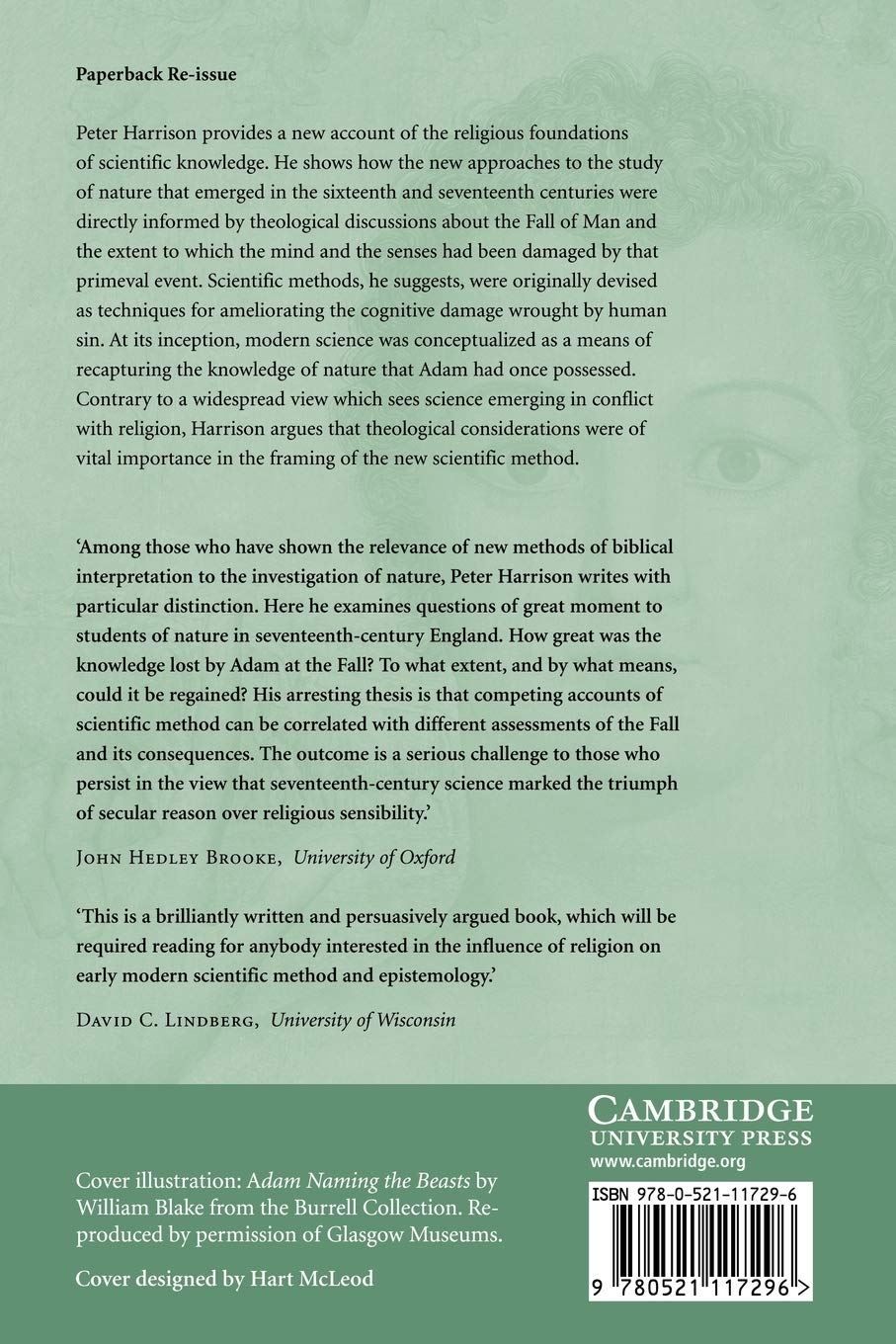
The Fall of Man and the Foundations of Science
C**R
'' 'Root cause of all evils in the sciences’, Bacon wrote, is that ‘we falsely admire and extol the powers of the human mind' ''
''The impotence of logic - First, the logicians had simply underestimated the extent of the problem they were seeking to rectify.‘The root cause of nearly all evils in the sciences’, Bacon wrote, is that ‘we falsely admire and extol the powers of the human mind.’ As a consequence, ‘we neglect to seek for its true helps’.''Therefore ''experimental science'' will overcome Adam's sin.''Second, not realising that error stems from multiple failures of the human mind, they had prescribed a single generic remedy.'' (173)This insight, drawn from the Bibical story of Adam's sin, inspired Bacon's program of ''experimental science'' to replace Aristotle.Another insight - Newton's rejection of the trinity enabled his incredible scientific method . . .''It was Newton’s rejection of the deity of Christ that indirectly led to his agnosticism about the fallen state of human nature. This in turn enabled him to combine two methodological principles that arose out of conflicting theological anthropologies. The essentially ‘optimistic’ premises of mathematical natural philosophy are brought together with the ‘pessimistic’ programme of experimental philosophy in a way possible only for someone lacking strong commitments to any of the prevailing models of theological anthropology. . . . So Newton’s theological heterodoxy did inform his natural philosophy.''Last paragraph - ''The birth of modern experimental science was not attended with a new awareness of the powers and capacities of human reason, but rather the opposite –a consciousness of the manifold deficiencies of the intellect, of the misery of the human condition, and of the limited scope of scientific achievement.''Harrison acknowledges this is a revision of standard claim that ''science'' was found when trust in human ''reason'' defeated religion.''Science, for many of its seventeenth-century proponents, was one such deficient institution, motivated by a vision of Adamic wisdom that had once been, and would be again. For now, however, it was devoted to the generation of a makeshift knowledge that would alleviate some of the burdens of the human condition in the hope of a better future in both the present world and that which was to come.''1 Adam’s Encyclopaedia- Science in paradise- Falling into ignorance- Inheriting error- Carnal knowledge and the divine light- Baptising Aristotle2 Augustine revived- Luther and the putrid philosopher- Depravity and doubt- Augustinus- The sceptical hypothesis3 Seeking certainty in a fallen world- Vestiges of heavenly light- Mathematical certainties- Adam, Moses, Hermes, Solomon- Inspiration, experience, and experiment4 Dethroning the idols- Self-knowledge and the sciences- The dominion of mind- The fallen body- Intellectual idolatry5 The instauration of learning- ‘Knowledge shall be increased’- Reversing Babel- Solomon’s House- The limits of reason- Anthropology abandoned''The central concern of this book is to illustrate the ways in which the myth of the Fall informed discussions about the foundations of knowledge and influenced methodological developments in the nascent natural sciences. While the first half of the book will be devoted to making this general case, the second half will focus on the more specific example of experimental science in seventeenth-century England.'' (2)''What should become apparent from the more general discussion is that the differences between competing strategies for the advancement of knowledge put forward during the sixteenth and seventeenth centuries can be accounted for largely in terms of different assessments of the Fall and of its impact on the human mind. The renewed focus on the Fall and original sin that is characteristic of the early modern period was occasioned by the religious upheavals of the sixteenth century. These events not only precipitated a crisis of confidence in the traditional sources of knowledge, but also coincided with a revival of an Augustinian anthropology that emphasised the corruption of human nature and the limitations of the intellect.'' (2)''Four aspects of this development will be examined.''''First, the early modern preoccupation with sin meant that in the realm of epistemology error was often equated with sin, and the human propensity to invest false claims with the character of truth was attributed to Adam’s fall.''''The second aspect of the thesis of this book, then, is that the various solutions offered to the problem of knowledge in the early modern period are closely related to assessments of exactly what physical and cognitive depredations were suffered by the human race as a consequence of Adam’s original infraction. If, for example, the Fall were understood as having resulted in the triumph of the passions over reason, the restoration of Adamic knowledge would be accomplished through re-establishing control of the passions, thus enabling reason once again to discharge its proper function. If the Fall had dulled Adam’s senses, this deficiency might be overcome through the use of artificial instruments capable of restoring to weakened human senses some of their original acuity.'' (4)''The third element of this argument concerns the religious background of these early modern discussions of the Fall and its impact on knowledge. One event that led to a renewed interest in the human condition and its inherent fallibility was the Protestant Reformation and the resurgence of Augustinian thought that accompanied it.'' (6)''While these are not unrelated to his epistemological views, Augustine’s understanding of the Fall and original sin, as already indicated, was to play a vital role in traditions of investigation rather different from that of the Cartesians. The experimental approach, I shall argue, was deeply indebted to Augustinian views about the limitations of human knowledge in the wake of the Fall, and thus inductive experimentalism can also lay claim to a filial relationship with the tradition of Augustinianism. In much the same way that both Protestantism and early modern Catholicism can quite legitimately be regarded as heirs of Augustine, so too can both of the chief sects of seventeenth-century philosophy.'' (6)
P**G
Outstanding historical discipline
An excellent, detailed historical summary of the Scriptural and anthropological origins of modernity. It dissolves the contemporary atheistic mythology and historical revisionism which says that modern science arose as an epistemological venture once the superstition of religion had been bypassed.I would expect that dedicated naturalists/atheists are not going to like this extraordinarily well researched and interpretive work. My only criticism is the somewhat lacklustre treatment of modern 'creationism'.
A**R
Game Changer
The book sets out a very bold thesis about how the religious doctrines of sin from Augustine, Luther, and Calvin shaped early modern science.At the heart of this thesis is that the scientific contributions of Protestants influenced by the Calvinistic idea of human nature (e.g., Francis Bacon) created early modern science.The book also looks at possibly confusing historical figures and their schools of thought. For example, Harrison states that some Protestants reverted to a non-Calvinistic theory (book gives them the controversial name of "scholastic protestants") of man that is essentially the medieval RCC (Roman Catholic Church) view while some members of the RCC (e.g., Jansenists like Pascal) adopted a near Calvinistic idea of human nature.Anyway, this book's thesis has the potential to change how the Anglo-American academy values and weighs the importance of a Calvinistic Christian world view, especially a Calvinistic view of human nature.
J**X
History of Religion
This is an excellent text. It is a scholarly look at the history of religion in view of scientific progress. While it has a philosophical tendency, this book maintains an objective perspective of the need for change in the historical evolution of monotheism.The high quality of English in this rather academic work could put it into the category of 'difficult reading' for the marginally illiterate.
Trustpilot
1 week ago
2 months ago