🎯 Precision fit, supreme silence — hear what matters, block what doesn’t.
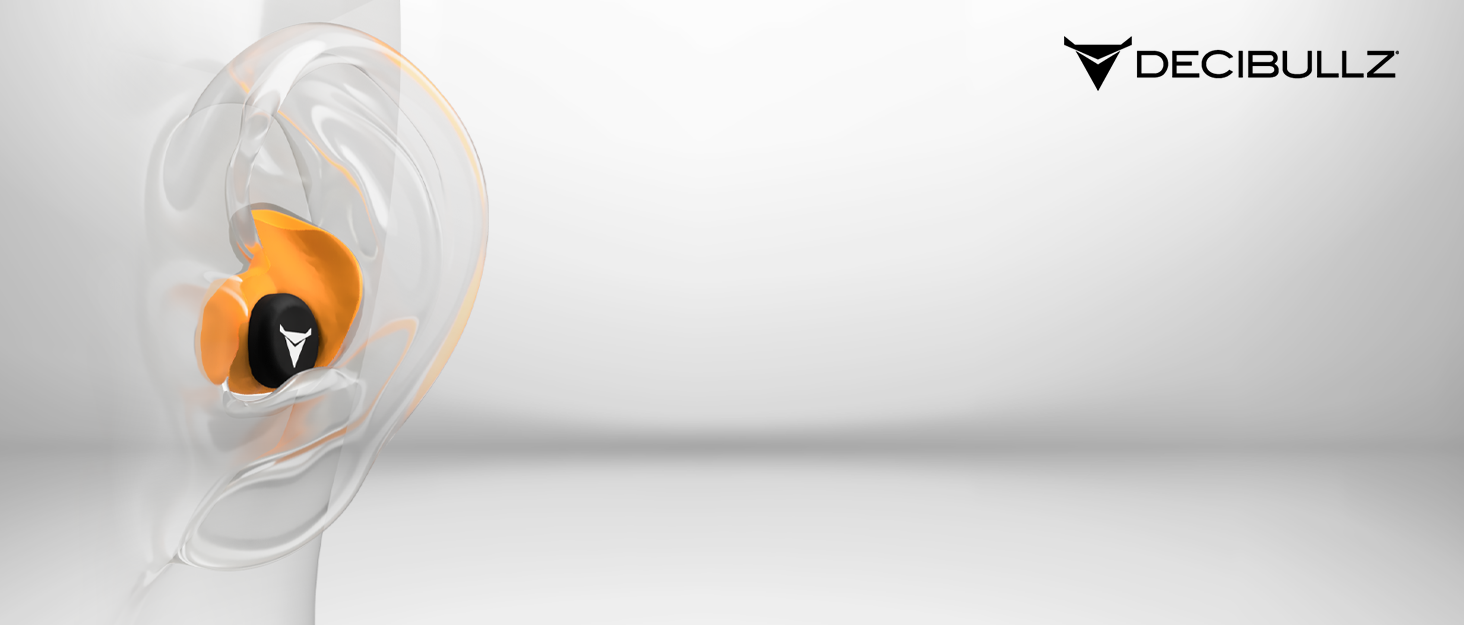
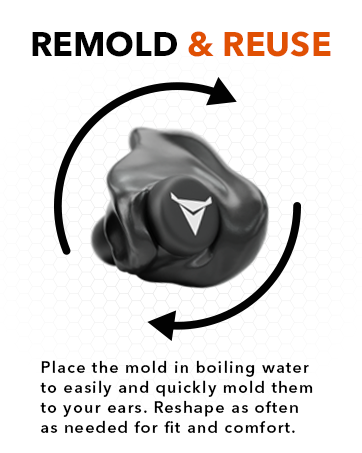
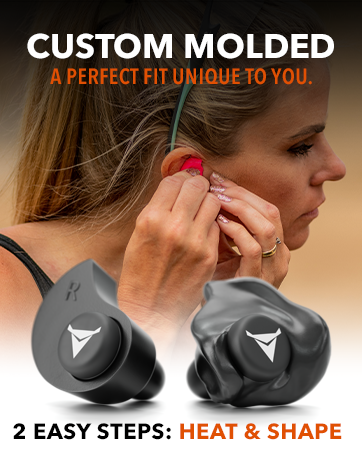
Decibullz Custom Molded Earplugs deliver the highest noise reduction rating (31dB NRR) with a unique thermoplastic mold that you shape to your ear for a flawless, comfortable fit. Re-moldable and reusable, they come with multiple ear tip options and a carrying pouch, making them perfect for shooting, concerts, travel, work, and more. Proudly made in the USA, these earplugs combine professional-grade hearing protection with customizable comfort for active millennials who refuse to compromise on sound quality or style.


| ASIN | B00WIXL4UM |
| Best Sellers Rank | #1,427 in Sports & Outdoors ( See Top 100 in Sports & Outdoors ) #1 in Hunting & Shooting Earplugs #42 in Earplugs |
| Brand | Decibullz |
| Brand Name | Decibullz |
| Color | Orange |
| Customer Reviews | 3.9 out of 5 stars 24,243 Reviews |
| Included Components | Decibullz Custom Molded Earplugs 31dB Highest NRR. Comfortable Hearing Protection for Shooting, Travel, Sleeping, Swimming, Work and Concerts (Orange) |
| Item Form | Pair |
| Item Nype Name | Cetyl-M Joint Action Formula for Horses (5.1 lbs)Decibullz Custom Molded Earplugs 31dB Highest NRR. Comfortable Hearing Protection for Shooting, Travel, Sleeping, Swimming, Work and Concerts (Orange) |
| Item Weight | 0.68 Ounces |
| Manufacturer | Decibullz |
| Material | Thermoplastic |
| Material Type | Thermoplastic |
| Model Name | Decibullz Custom Molded Earplugs 31dB Highest NRR. Comfortable Hearing Protection for Shooting, Travel, Sleeping, Swimming, Work and Concerts (Orange) |
| Noise Attenuation | 31 dB |
| Number of Items | 1 |
| Number of Pieces | 2 |
| Product Style | In-Ear |
| Recommended Uses For Product | Indoor/Outdoor |
| Reusability | Reusable |
| Size | 1 Count (Pack of 1) |
| Sport Type | Decibullz Custom Molded Earplugs 31dB Highest NRR. Comfortable Hearing Protection for Shooting, Travel, Sleeping, Swimming, Work and Concerts (Orange) |
| Style | In-Ear |
| UPC | 854843005421 |
| Unit Count | 1 Count |
| Warranty Description | Decibullz Custom Molded Earplugs 31dB Highest NRR. Comfortable Hearing Protection for Shooting, Travel, Sleeping, Swimming, Work and Concerts (Orange) |
H**K
Follow instructions carefully, very nice ear plugs
Update 10/25/25 I used the Decibullz earplugs at the pistol range and it performed noticeably better than cheap foam earplugs. Cheap plugs are not enough for me at the pistol range, but the Decibullz alone was suffcient. I would rank the Decibullz at just below cheap plugs with muffs. Decibullz with muffs does an outstanding job of reducing gunfire. I plan on using Decibullz and muffs at the rifle range where local shooter love to use muzzlebrakes. Original review: I was worried about molding these to my ears and whether they would really make a difference compared to traditional foam ear plugs. Turns out that these really deliver what they promise. First, the molding is easy and works perfectly if you follow instructions and watch the video. Start by attaching the plastic ear plug and plastic backing to the mold. Do one ear at a time and keep track of which ear mold is being molded. Check the thermoplastic mold for either a R or L to know the difference. Then heat water to boiling and pour the water into a coffee mug. Place the mold into the mug. Do not put the mold into water that is boiling. Wait 5 minutes. Use a timer. After 5 minutes remove the mold from the mug with a metal spoon and place it onto a plate for 30 seconds to cool. After 30 second put the plug into your ear hole and mold the thermoplastic so that your entire ear conch is covered and sealed. Wait until the mold is hard, about 2 minutes. Repeat for the other ear. If you need maximum hearing protection, remove the plastic plugs and install the rubber ear plugs. I will update this review after I go to the shooting range.
J**N
Best affordable custom-fit ear protection out there!
For a while, I was researching a lot of the top choices for hearing protection because my girlfriend and I were going to the Indy 500 for the first time, and we wanted to protect our ears. Having been to NASCAR races before, I knew what I was looking for and I also knew I didn't want over-the-ear ear muffs because they can put some strain on your head and cause sweat to pool around your ears. So, I wanted earplugs to counter these issues. I investigated a lot of options, but Decibullz was the first choice I saw and it stuck with me the whole time. I'll put it simply: These ear plugs are the best out there. With the slightest caveat. Most of the negative reviews for this product are due to user error. If you follow the directions and mold them properly, you will experience NONE of the issues they faced. These ear plugs were comfortable for an entire 3 hour race, no irritation, and no hearing loss at all. No sound bled through, and they didn't ever feel like they were going to fall out. The setup is pretty straightforward, but let me share what I did to make them fit absoultely PERFECTLY: 1. Setup the earplugs while boiling your water. I got the case/laynard/plugs bundle, so I used the non-laynard filters and the smallest tri-flange tip they had. This is to ensure the earplug goes in far enough into your ears to get a good inner mold(very important). 2. Once water and plugs are ready, do ONE PLUG at a time!!! This is crucial. The steps say to do both, but it is much easier when you can focus on one plug at a time. Let it sit in the water for 5-6 minutes. 3. Gently scoop the plug out with a spoon. I used a metal spoon and had no issues. And let it cool until you can touch it. Be careful not to squeeze too hard! 4. This is the most important part: Carefully put the plug in your ear. Make sure to rest it in your ear, and then ONLY push where the filter is initially. Making sure the plug is IN your ear properly is the most crucial step! And make sure it is in as comfortably far as possible. 5. Begin to massage the plug into the space of you ear. I focused on pushing to the back of my ear, then massaging above my ear lobe, and then the front of the ear. And then keep pushing on the filter to maintain that seal. Keep doing this for a few minutes. Also, very useful to have another person helping, but a mirror works too to ensure the whole ear canal is covered. 6. During this process, I also was squeezing my ear (top and bottom, front and back) around the mold to make sure it took total shape of my ear and to ensure it's not going to hurt my ears for being in a long time. 7. Once the plugs are hardened, carefully take them out and let them cool. Then repeat the steps for the other ear plug. 8. After all the plugs are molded, it is important to test the plugs TWO different times. First, test both plugs in at the same time to ensure the sound around you is at least muffled. Have some air blow into each ear. If you hear a lot of air/wind, then it is best to try and refit them to make sure your whole ear hole is covered. 9. If that test passes, then you will want to switch to the foam ear tips (these offer the best noise cancellation). Squeeze the foam tips so they compress and go further in the ear. Do the same test as the last step. If you have the same issue, make sure to change the tips BACK to the ones you used initally and then repeat the steps to refit them/warm them back up. 10. The plugs should significantly reduce the sound. Almost like you're underwater. But you should still be able to hear mostly everything. It reduces the noise, not cancel it out. For anyone looking to use these plugs for the same application as me (in-person auto racing spectating), then these are absolutely PERFECT! I was able to hear the cars go by at a reasonable volume, AND I could still talk to my partner between passes and hear the announcer clearly over the speakers. Because of how great these plugs were, I definitely anticipate using these for other applications (concerts, more races, anything that is loud). If you were on the fence about getting these plugs, please let this review be the sign to get them. Ignore the bad reviews, because they more than likely did not install them correctly. TLDR: Bought these plugs for IndyCar/NASCAR races, and worked perfectly for that application. I shared the steps I took to make them fit right, and experiencd none of the negatives the bad reviews shared because I followed the steps. Highly recommend getting these plugs!
E**.
– Custom‑Molded Earplugs (31 dB Attenuation)**
*“The best fit I’ve ever had – just a few tweaks and they’re perfect for work, sleep, and concerts.”* --- ### Why I Bought Them I’m a freelance sound engineer who spends half the day in noisy studios and the other half trying to catch a few hours of sleep in a city apartment. Over‑the‑counter foam plugs either “pop out” after a few minutes or muffle everything so much that I can’t hear alarms or my phone. The 31 dB rating promised a solid reduction without completely cutting off useful sounds, and the custom‑mold promise sounded like the perfect middle ground. --- ### The Ordering & Fit Process (5‑minute summary) | Step | What I Did | Tips | |------|------------|------| | **1. Impression Kit** | Mixed the silicone, pressed it into my ear canal with the supplied applicator, waited 5 min, then removed the set‑in‑place impression. | Keep the ear canal clean and dry before starting; a quick wipe with an alcohol pad helps the silicone cure evenly. | | **2. Shipping** | Sent the impression back in the prepaid envelope. | Label the package clearly and drop it off at the nearest post office within 24 h to avoid any delays. | | **3. Receive the Molds** | Got two identical earplugs in a small, sturdy box (plus a tiny cleaning brush). | Store them in the provided case when not in use; the silicone can pick up dust over time. | | **4. Insertion** | Gently pulled the outer ear up and back, slid the plug in until it “clicked.” | Don’t force them—if you feel resistance, rotate slightly and try again. The click means the flange is seated properly. | --- ### Performance (What the 31 dB actually feels like) | Situation | Noise Level (dB) | What I Hear | How Comfortable | |-----------|------------------|-------------|-----------------| | **Live Concert (≈95 dB)** | Reduced to ~64 dB | Music is still clear, but the crowd roar is softened. | No pressure after 2 h; they stay in place. | | **Construction Site (≈85 dB)** | Reduced to ~54 dB | Heavy machinery is audible but not painful; I can still hear safety alarms. | Slight warmth after 3 h, but no pain. | | **Bedroom (≈45 dB street noise)** | Reduced to ~14 dB | Almost complete silence; I can still hear my phone’s vibration. | Perfect for falling asleep; no “plug in the ear” feeling. | | **Studio Monitoring (≈70 dB)** | Reduced to ~39 dB | I can still pick up subtle cues in the mix, which is essential for my work. | Comfortable for long sessions (up to 6 h). | **Bottom line:** The 31 dB rating is a sweet spot—loud enough to protect you, quiet enough to stay aware of important cues. --- ### Pros 1. **Perfect Fit** – The custom molding eliminates the “wiggle” you get with foam or generic silicone plugs. No more readjusting every 10 minutes. 2. **Consistent Attenuation** – The 31 dB reduction is reliable across frequencies (125 Hz‑8 kHz), which is rare for cheap plugs that only block high frequencies. 3. **Durable Material** – Medical‑grade silicone feels soft yet holds its shape for months. I’ve used them daily for 4 months with no cracks. 4. **Easy Maintenance** – A tiny brush and the included cleaning solution keep them hygienic; a quick rinse with warm water works too. 5. **Discreet** – They’re low‑profile, so they don’t stick out in a professional setting or on stage. --- ### Cons 1. **Price Point** – At ~$45 for a pair, they’re pricier than bulk foam plugs. However, the lifespan (6‑12 months with proper care) makes the cost per use comparable. 2. **Initial Time Investment** – The impression kit takes about 10 minutes, plus shipping time (usually 3‑5 business days). Not ideal if you need earplugs immediately. 3. **One‑Size‑Fits‑All for the Ear Canal** – While the outer shape is custom, the internal channel is a standard size. Extremely narrow or unusually shaped canals may feel a tiny bit tight. --- ### Who Should Buy Them | User Type | Why It Works | |-----------|--------------| | **Musicians / Concert‑goers** | Protects hearing without sacrificing musical fidelity. | | **Industrial Workers** | Blocks hazardous noise while still letting safety alarms through. | | **Travelers & Sleepers** | Comfortable for long wear; reduces snoring and city noise. | | **Audio Professionals** | Allows precise monitoring in loud environments. | | **Kids with Sensitive Ears** | (Only if you can get a parent‑supervised impression) – the custom fit prevents the plugs from falling out. | --- ### Tips for Getting the Most Out of Them 1. **Re‑mold Annually** – Ear canals can change slightly with weight fluctuations or age. The company offers a discount on a second impression kit. 2. **Store Dry** – After cleaning, let them air‑dry completely before placing them back in the case. Moisture can lead to odor over time. 3. **Rotate Usage** – If you wear them >6 h a day, give your ears a 15‑minute break to prevent mild skin irritation. 4. **Use the Carrying Case** – It’s small enough for a pocket or a studio bag, and it protects the plugs from bending. 5. **Check the Fit Periodically** – If you notice a “loose” feeling, gently push the flange back in; the silicone will reseat itself. --- ### Bottom Line Custom‑Molded Earplugs with a 31 dB attenuation rating deliver exactly what the description promises: a comfortable, secure fit that reduces harmful noise while still letting you hear what matters. They’re a solid investment for anyone who needs reliable hearing protection on a daily basis—especially professionals who can’t afford to lose audio fidelity. **Would I buy them again?** Absolutely. The only thing that could make them a perfect 5‑star product is a faster “instant‑fit” option for those who need earplugs yesterday. Until then, they’re the best blend of comfort, protection, and durability I’ve found on Amazon. *— A sound‑engineer who’s finally slept through a night of city traffic, thanks to these plugs.*
R**.
Might be good for some ears...but not mine
Some background: I'm a really light sleeper and I'm SUPER sensitive to snoring. So for the past few years, my go-to earplug for sleeping is the #M TaperFit 2, in a large size because my ear canals are pretty big. But after the last few 200 count boxes of those, I've been running into quality control issues, so I decided to try something more sustainable. Enter these moldables from Decibullz. I really did my homework here. I watched a ton of in-depth reviews on YouTube, both from folks trying these for the range and for sleeping. And almost unanimously people rave about these plugs. So I grabbed a pair on same-day delivery and decided to give them a shot before re-ording TaperFits again. Amazon delivered them, and I spent some time reading the included instructions, and then just to be safe, I re-watched videos from reviewers as well as Decibullz to make sure I got the molding process right. Since I have such large canals, I went straight to the largest silicone in-ear plug size. After hot-soaking the plugs for five minutes and cooling for 30 seconds, I inserted the plugs as deeply into my ear canal as I could and began press-molding the plugs to completely cover the inside of my conch. I had my wife watch to make sure everything that could be covered inside my conch was covered. While waiting for the plugs to cool and set in my ears for five minutes each, we were watching TV, and I had zero issues hearing the show. So not a good sign so far, but I hadn't yet put the included end-caps in yet. After the setting process, I removed them and let them air-cool the rest of the way down. Last night at bedtime I inserted the end-caps and then pressed these back into my ear. After setting the silicone plugs into my canals, I could feel them slip ever so slightly back out, but seeing as the seal around my conch was still firm, I thought it might be normal. But as my wife was asking me how they worked, I realized I could hear her almost as easily as without the plugs. I noticed I was hearing my cat bathing herself all the way down the hall, which is quiet without anything in my ears. I pushed and held them in and they were about half as effective as my TaperFits, and when I let go they were practically non-existent in my ears sound-proofing wise. So all in all, in MY ears, these are a complete fail. Comparing with foam TaperFits, here's the rub: They are both rated at "maximum NRR" of about 31dB; the TaperFits say 32, but, they're comparable on paper. But when the TaperFits fit properly, the noise blocking is great. The finger-rub test -- where you gently rub two fingers together next to your ear -- is almost silent with the TaperFits. With the Decibullz, there was practically no difference: I could hear every detail of my thumb and forefinger rubbing together. A few observations about the Decibullz that I think contribute to the failures here: * The flanges on the silicone plugs are SUPER thin and light. This means they lack rigidity to remain expanded in the ear canal, or to hold them in place from slipping out of the optimal depth and position. I can also see these cracking and breaking down in no time, as I've experienced the same on other earplugs that had flanges this thin. See my included macro-lens super closeup video clip of how they flex and nearly fold with a very SLIGHT prodding with a tiny beauty tool. * The black endcaps that go into the hard plastic hollow core are also very thin. They seem to just act like a drum, propagating all vibrations from the outside that hit them, transferring that sound straight through the tube core, and into the silicon plugs themselves. * And then there's that hard, hollow, plastic core in the center of the molding, between the endcap and the ear canal tips. Why are these hollow?!? That's just a recipe to propagate as much sound as possible! These cores should be filled with some kind of sound/vibration dampening material, instead of providing an air pocket for compression in tandem with that drum-head of an end-cap. The engineering on this is frankly laughable. So what I would say in Decibullz defense here is that earplug performance is always going to be highly subjective to a degree. Everyone's ears are different and no one single product can be pest for them all as a result. But past that, there's just some engineering decisions here that leave me scratching my head as to how so many people can say these work well enough to ditch disposable foam plugs. I can't imagine the pain and volume I'd experience with a rifle going off on the other side of these tiny drums.
F**R
Good, but not easy.
Not bad sound deadening. But not nearly as easy to use as they would have you believe,. You have to heat each one up in boiling water, let it cool a minute, then put it into your ear and mold it to shape. Which sounds simple enough, until you realize there is no convenient way to look at your own ear, and that the way things feel is not necessarily the way they are. I got one in easily enough, on my right side. But the left was a nightmare. You can pull it out and re-do the process but once you try one or two times the plug is no longer close to the original shape and begins to get thin in places and fat in others and it gets to be a real challenge. It took me an hour to get the second one more or less correct. A few tips: 1.) There is a removable outer plug with a ridge or groove in it. Tie a piece of sewing thread around this and leave it dangle a few inches. This will look silly when you are wearing them, but it gives you something to grab to pull them out. Otherwise, once you get these to fit really well, you need a screwdriver and a pliers, LOL. 2.) Do not make the blanks extremely hot. Five minutes, as recommended, is too long. They become so soft that as you press them in the material squishes into the ear canal where, once it hardens, it will transmit sound, rather than block it. The hardened material must all stop at the rubber part. Instead, heat it a little... heat it a little, mold it a little. 3.) Finally, once you get them to fit really well and then remove them, the best way to put them in the next time is to put them into your ear rotated 90 degrees "forward" of the final position within the vertical plane and then, as you press them in, rotate them toward the back. This will allow the outer edge to "screw" into the outer rim of your ear and lock them in place. Once done you should be able to lie down comfortably and sleep with these in.
S**M
Perfect Solution for Shooters - Better Than Muffs Once Molded
These custom-molded earplugs have been a game-changer for my trap shooting sessions. After 1.5 months of regular use, I can confidently say they're superior to traditional hearing protection options, especially if you're tired of over-ear muffs getting knocked around by your shotgun stock. The molding process might look intimidating at first, but it's surprisingly straightforward and user-friendly. Once molded, they provide an almost perfect "snap-in" fit that's far more secure than disposable foam or wax alternatives. The noise reduction is impressive - they block out exactly what you need them to while maintaining a comfortable fit. Two minor criticisms: First, the lanyard needs to be purchased separately, which feels like an unnecessary upsell given how essential it is for keeping track of the plugs. Second, the initial molding process, while easy, can make some users nervous about getting it right (though it's actually quite foolproof). Compared to traditional ear protection options: - Superior fit compared to generic foam/wax plugs - No more interference with gun stock like over-ear muffs - Reusable and durable - Excellent noise reduction Pro tip: Take your time with the molding process and don't rush it. The results are worth the extra few minutes of careful attention. Bottom line: Despite the lanyard being sold separately, these are absolutely worth the investment for any serious shooter looking for reliable, comfortable hearing protection that won't interfere with their shooting form.
R**N
I had been using Surefire Defender earplugs for several years and really liked them. They blocked sound very well and were ...
I am a long range competitive shooter so I am frequently around a lot of other shooters who use muzzle breaks on their rifles, which makes them incredibly loud. I had been using Surefire Defender earplugs for several years and really liked them. They blocked sound very well and were usually pretty comfortable. However, during some of the longer competitions, especially the 2-day matches, my ears would begin to hurt and feel very uncomfortable were the earplugs press against the ear. My brother had a pair of these Decibullz earplugs and really liked them so I decided to give them a shot. I took the time to mold these earplugs very carefully to the shape of my ear, following all of the instructions. After molding I switched out the rubber earplug tips for the foam tips and tested them out. I was very pleased to find out that these were much more effective at blocking sound than my surefire earplugs. I can now be comfortable being around muzzle brakes all day long during competitions. Since these are custom molded, they feel very comfortable and I have not had any discomfort while wearing them. I noticed there are several reviews that say these earplugs do not block sound very well. I am sure many of these people had issues molding the earplugs or did not follow the directions properly. If you follow the instructions carefully and take the time to mold them right, these earplugs are extremely effective. Also, since these earplugs come with several different tips, I would suggest trying all of them to find out which one is the most comfortable and blocks the most sound. Personally I would recommend the foam tips as they are both comfortable and very good at blocking sound. If you chose to use these earplugs without any of the tips installed, do not expect them to block very much sound. They are intended to be used with both the inner tip that goes inside the ear and the outer plug that has the decibullz logo on it. Also, be aware that these should never be left in your pockets or on the dash of a vehicle during summer. If these go through the washing machine and dryer, they will be ruined and make a mess.
J**F
Do not work as well as cheaper disposable for motorcycles
As a motorcycle rider I am always trying new things to make riding more enjoyable and safer. I saw these and liked the idea of custom earplugs, and the fact that they are totally reusable, unlike the foam Macks I have worn for years and I definitely love, but get dirty and need to be thrown away after a week or two. These are rated at just 1db less protection than the Macks, which is negligable. Although they are rated at NRR 31, that is only with the extra foam tips, which they recommend your replace every 4-6 months. The silicone tips which are infinitely reusable do not provide this level of protection. It does not state what protection they do provide, but its nothing close to what the foam tips provide. So I either do not get the protection I want by using the silicone tips, or I do not get the environmental or cost savings I want because I still need to buy and replace the foam tips. Although the colored moldable part fits my ear perfectly, it is definitely hard once molded and not necessarily comfortable. Because they go deep into the ear and the molded part fits so snugly, they are tough to get ahold of when removing. When putting on or removing a helmet they do catch on the foam and pull out slightly, which never happens with the foam Macks as they sit deeper in my ear and have no hard parts to catch. The silicone part of these fits onto hard plastic piece which you insert into your ear canal and this part can be painful when inserting and cause irritation over time. The instructions do tell you to use a larger silicone if you feel the hard plastic inside (you are given a S,M,L with your purchase), but I have not been able to find a comfortable fit. Either I feel the hard plastic, or the silicone is too large for me to get a good seal. One last comment. If you stick your finger in your ear and move it in and out slightly, you can hear a high pitched sort of noise from the pressure. I get that same sensation from wearing these Decibullz. Almost like tinitus. I can ear my heartbeat and a constant noise which I do not hear with foam plugs. Perhaps all the positive reviews are genuine and you will have better results than I did, but for me, foam is the way to go. Cheaper, more comfortable, better noise protection, and you get a perfect new pair regularly. And if you lose one or two, who cares, just grab another. Try a few brands to find the size, shape, and firmness you like. I will be sticking with Macks ultrasoft for now.
Trustpilot
2 weeks ago
5 days ago