
DOWNLOAD THE APP


Customer Services
Copyright © 2025 Desertcart Holdings Limited
DOWNLOAD THE APP
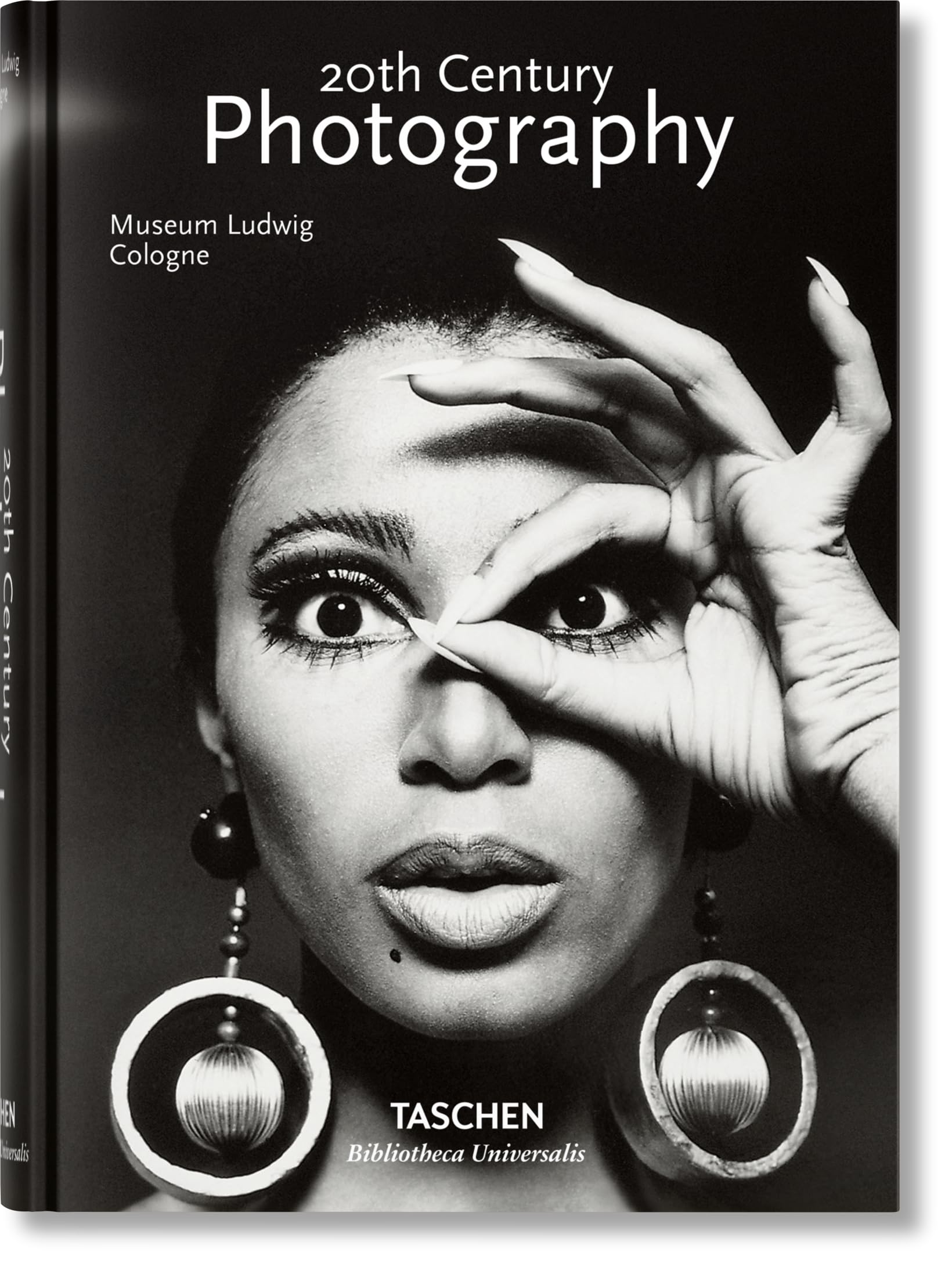
📸 Own a piece of photographic history—don’t miss out on this iconic visual journey!
20th Century Photography by TASCHEN is a premium, compact 200-page book featuring over 90 of the most influential photographers of the 20th century. Drawing from the prestigious German Museum of Photography’s collection, it offers museum-quality reproductions and insightful biographies, making it an essential reference and collectible for photography enthusiasts and professionals alike.
| Best Sellers Rank | 325,862 in Books ( See Top 100 in Books ) 140 in History of Photography |
| Customer Reviews | 4.6 out of 5 stars 221 Reviews |
L**R
A mini encyclopaedia of some of the outstanding photographers of the 20th Century
In some respects, this is comparable to Masters of Photography: A Complete Guide to the Greatest Artists of the Photographic Age , although I had ordered it, I returned it as too many of its photographers were unknown and obscure. I ordered this as its replacement. Published by Taschen, a German publisher of such high esteem that they sometimes publish special 'Art Editions' of individual titles that are as limited in edition numbers as are some prints, 1000-1500 typically, and which may sell at prices of several thousands of Euros per copy and still sell out! You do sometimes need to exercise a little care when ordering their titles as they often produce parallel versions in English and French in addition to the expected German. Whatever the subject or title, you will not be making a serious error of judgement were you to order anything of theirs, whatever its language. This is a small book, approximately 8x6-inches and with just under 200 pages. Published in 2001, it is a high-quality publication that highlights about 90 of the most eminent photographers of the Twentieth Century, with each photographer given a two-page spread. The book was in essence a catalogue for a 1996 exhibition held at and by the Museum whose name appears on the cover, about which I have little knowledge other than it is supposedly the foremost of its type in Germany and in some way comparable to that of Eastman Kodak in Rochester, New York. All the images are owned or held by the Museum, and may represent a significant proportion of its collection at the time. In view of the German prominence in the manufacturing side of photography with names such as Agfa, Leitz/Leica, Zeiss, Contax and many others in positions of prestige and eminence plus those of the post-war East Germany with its Pentacon that put good quality, inexpensive cameras in the hands of millions, it is not surprising that the country would host a Museum of Photography. There are several German and German-born photographers such as Steichen and Stieglitz who were and remain of international renown whose artistic rather than technical involvement was no less important or relevant and on a par with their possibly more numerous French counterparts. Within the confines of the imposed limitations of size, the book cannot be as comprehensive as some may wish and there are therefore some omissions that need not exist (other than by non-representation within the Museum's collection) and some inclusions that may be questioned. However, to be more inclusive, its size, bulk and cover price would need to increase. I know of most of those photographers included, some more so than others but, as the book originated in Germany, it is possible that some of the less familiar may be better known in that country and those surrounding it than in the UK. I cannot therefore substantially dispute its contents. In any event, I cannot know the full scope of the museum's collection. Most of the obvious candidates such as Ansell Adams, Cartier-Bresson, and Paul Strand are here, as are many more. Each of the segments, arranged alphabetically by surname, occupies a double-page spread with two or more images and a potted biography in each instance. No one photographer is therefore given any greater preference or precedence than any other. There is no index, nor is one needed by virtue of its sequencing. As with all Taschen books, its printing is of superb quality and although its size is an obvious limiting factor in being able to show its images to best advantage, there are none too small to be acceptable. If you can find a copy, and they can still be found, I would suggest that it be considered. As indicated above, there are other titles that appear to offer alternative collections of 'The Best', 'Greatest' or whatever else, but of those seen this is probably the best and least contentious. Consider it as a reference source and it may lead you to books which more comprehensively explore the subject photographers' work. For some there will be several alternative titles from which to choose, for others only one, but none at all for others. Such is the nature of photography.
M**S
A comprehensive overview at an amazing price
Although limited by what is in the Ludwig Museum this manages to include examples by just about every major western photographer on the planet with a slight bias to middle europe. Good examples are chosen for each and all are well reproduced in this small but very thick volume. I had the earlier shorter Icon version of the book and hesitated to duplicate images but this is so much better- if you have the icon version buy this- if not grab a copy now- a real bargain!
****
Taschen art books quickly become a passion - this volume is no exception
Following extensive spinal surgery, during the recovery phase, I rediscovered my love of art and the history of art. I already owned a few Taschen volumes but decided to build my collection. Buying used on Amazon is a great way to make this somewhat more affordable. I even found a few new titles selling cheaper than the used one on eBay. If you love high quality books, love art, love reading about art movements and artists across all genres - these Taschen books are hard to beat.
2**S
the variety makes it a useful reference
A slim A5ish size book of mostly black and white photographs from the 20thC. The book is organised alphabetically of well-known photographers, and by showing examples of their work the book contains an array of styles from surreal, to abstract to portrait to natural. The images are accompanied by text, so sometimes the image is small or takes a small portion of the page. It’s not a big book but for its size the content is interesting.
K**T
Who knew one small book could contain so much?
Some fantastic photography in here: a few well-known photographers/photographs/subjects and many I'd never come across before but I now love! Excellent descriptions putting photographers and their work in context. In my experience, you can't beat the quality of Taschen products. Excellent little book.
A**A
Excellent reference book
An interesting read and introduction to photographers I had not heard of. Well worth the money.
D**N
2th Century Photography, Museum Ludwig, Cologne
A very informative collection of some familiar and more obscure photographs and photographers. I especially liked the documentary images. Great value.
E**T
20th Century Fame
It was only as I tilted this book out of its cardboard delivery envelope that I realised the words ‘Museum Ludwig Cologne.’ I saw only 20th Century Photography before ordering and four quid discount for me to collect it at a local beer seller. And sure enough the opening Introduction gives an account of this and other museums’ history in relation to photographs (‘images’ are preferred here). After watching HIGNFY last night I began to think that fame is a positive in that it gets you away from the crowd. It separates an individual from the social norm. Said individual usually lives away from people often in the vicinity of other fames. So should I become famous? Is the question for this rambling outsider. Now we gloriously segue (hate that word) into what makes a photographer become famous. Will and talent must go forward but not without connections, usually via name or money. Looking through this particular collection I see only shit images. All detached inhuman prints devoid of shopping lists, cooking, children, I see only safe, constructed order. The story of my uploaded photograph. I had the stack of books coffee tabled. An obvious photograph. I tried from below and above then upon a stand, red wall would be good to clear distraction, and the camera on a tripod not hand held, photographing the camera. I had a photograph. But not until loaded into laptop. I tried Auto levels, I adjusted Brightness and other settings. The distortion effects hit the spot. Like Dali’s melting watch I had bent books in front of camera. A creative tale. I put upon Flickr as ‘Twisted Perspectives’ without a flicker. Two Views and not a Fave in sight. This is the story of will and talent without connections. I am sure I am not the only person having this view. And now we bring in the world. Artifice has to end. The images and the words must begin to be so close to reality that they become superfluous. The wide-angle or the close-up become infantile positions. Human strength is due to consciousness. Blocking-out consciousness with constant physical occupation makes for placid lives. I know you read these words as strange, disconnected but if you flip through a book of photographs you may now see them differently. You may not kill and die for orders.
Trustpilot
1 week ago
1 month ago