We remain fully operational. Our teams are working around the clock to ensure your deliveries continue safely.

DOWNLOAD THE APP


Customer Services
Copyright © 2025 Desertcart Holdings Limited
DOWNLOAD THE APP
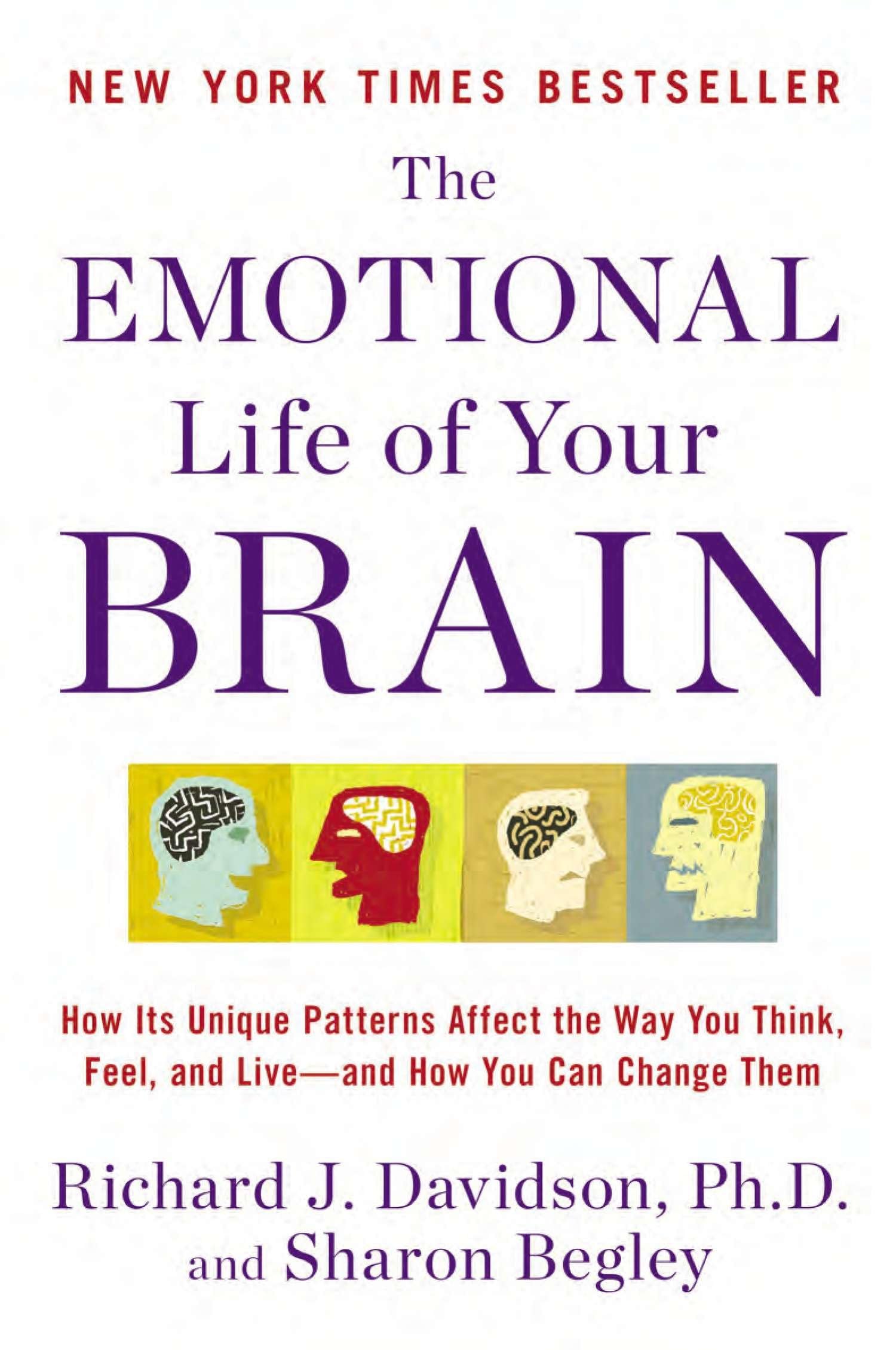
Buy PENGUIN The Emotional Life of Your Brain: How Its Unique Patterns Affect the Way You Think, Feel, and Live-And How You CA N Change Them by Davidson, Richard J., Begley, Sharon online on desertcart.ae at best prices. ✓ Fast and free shipping ✓ free returns ✓ cash on delivery available on eligible purchase. Review: It's a "must read" book The Emotional Life of Your Brain: How Its Unique Patterns Affect the Way You Think, Feel, and Live-And How You Can Change Them Review: Purchased this book in August, ‘20 and have been loving it ever since. It explains human behavior in possibly the most complete and helpful ways possible. If I could write a great book, and get it published, this would be it or at least the perfect guide for it. I love understanding human emotion and learning everything about it. All with an eye toward increasing happiness and compassion with scientifically solid info throughout. And carefully and clearly written. About all the major behavioral difficulties of today Superb suggestions are provided with great care, clarity and just enough detail. Highly recommended. It’s far more valuable than I ever imagined upon purchase and I expected mountains then. I continually read and learn from it almost three years later. Sincerely! 💥💥🤔 ...I am adding a quick note after submitting this review yesterday. It would have taken much more time for me to adequately describe the values of the vast amount of information in this book. It is so comprehensive yet very systematically presented and largely in a story form. Which adds to the joy of reading. But most importantly in my estimation is the depth, clarity, precision and compassion that one can sense all through the pages. It encapsulates all of my concerns and also what I have learned and hoped for in improving our ways of helping people with behavioral difficulties of many variations. A perfect example is the bottom half of p159 and p160. It suggests so much in just these few paragraphs. I hope I have been helpful !
| Best Sellers Rank | #66,317 in Books ( See Top 100 in Books ) #174 in Psychology of Personality #226 in Interpersonal Relations #919 in Mental Health |
| Customer reviews | 4.5 4.5 out of 5 stars (249) |
| Dimensions | 13.26 x 1.8 x 20.29 cm |
| Edition | Illustrated |
| ISBN-10 | 0452298881 |
| ISBN-13 | 978-0452298880 |
| Item weight | 1.05 Kilograms |
| Language | English |
| Print length | 304 pages |
| Publication date | 24 December 2012 |
| Publisher | Avery |
| Reading age | 18 years and up |
M**L
It's a "must read" book The Emotional Life of Your Brain: How Its Unique Patterns Affect the Way You Think, Feel, and Live-And How You Can Change Them
G**)
Purchased this book in August, ‘20 and have been loving it ever since. It explains human behavior in possibly the most complete and helpful ways possible. If I could write a great book, and get it published, this would be it or at least the perfect guide for it. I love understanding human emotion and learning everything about it. All with an eye toward increasing happiness and compassion with scientifically solid info throughout. And carefully and clearly written. About all the major behavioral difficulties of today Superb suggestions are provided with great care, clarity and just enough detail. Highly recommended. It’s far more valuable than I ever imagined upon purchase and I expected mountains then. I continually read and learn from it almost three years later. Sincerely! 💥💥🤔 ...I am adding a quick note after submitting this review yesterday. It would have taken much more time for me to adequately describe the values of the vast amount of information in this book. It is so comprehensive yet very systematically presented and largely in a story form. Which adds to the joy of reading. But most importantly in my estimation is the depth, clarity, precision and compassion that one can sense all through the pages. It encapsulates all of my concerns and also what I have learned and hoped for in improving our ways of helping people with behavioral difficulties of many variations. A perfect example is the bottom half of p159 and p160. It suggests so much in just these few paragraphs. I hope I have been helpful !
L**O
It is an important, open minded, and scientific book. It gives ideas, and hopes. I suggest this book to anyone feels the need for a change.
A**K
Richard Davidson is an accomplished psychologist who has, in many ways, pioneered the study of emotions from a neurological perspective. This book is a mix of autobiography, science, and self-help. I found that the first two work well, the third not quite so much. To begin with, the book tells the story of Davidson's career as it is punctuated by highlights of research. It does not follow chronological order though. Rather, it follows the main themes that Davidson researchers. Most importantly are the six dimensions of emotion. Davidson makes the rather dramatic claim that these supersede both temperament and personality. The latter is certain to be hotly debated by personality researchers, but Davidson argues that his constructs have a firm(er) neurological bases, unlike say the Big Five. The six emotional dimensions underlie personality and temperament, which are simply reflections of one's underlying emotional states. The six states are: Resilience: how quickly one emotionally recovers from negative life events. Outlook: how optimistic/positive one generally is. Social Intuition: how well one can read emotions in social situations. Self-Awareness: how well one is aware of one's own feelings and emotions. Sensitivity to Context: how one's emotions are influenced by contextual factors, and how aware one is of these external influences. Attention: how well one can maintain one's focus, in particular emotional focus. The first half of the book describes the scientific evidence for these dimensions, which is in my opinion the strongest part of the book. Davidson does present enough evidence to make it likely that there is significant validity behind his categories. There are some missing details. For example, what are the evolutionary benefits of being very high or low on these dimensions? In general, evolutionary details for these evolved dimensions is lacking, other than variability is good. Another issue is that some of these seem less likely emotional skills than cognitive ones (attention and social intuition in particular). I did find it very interesting how closely tied the prefrontal cortex was with many of these dimensions. Conventional neuroscience wisdom has been that emotions are the product of the lower, simpler, sub-cortical structures while higher thinking and reasoning was the domain of the newer (evolutionarily) pre-frontal cortices. Davidson's research rather strongly refutes that, suggesting that even the most modern and "advanced" parts of the human brain play primary roles in our emotional lives. Davidson then goes on to make the link between emotions and health. His case is persuasive, relying on double-blind experimental studies that demonstrate that positive emotions are associated with greater longevity. Not necessarily just because emotions make you healthier (they appear to do that), but because a positive outlook allows one to ignore difficulties and persist in the face of trouble. Of course, there are limits. Good thoughts alone won't likely get rid of terminal bone cancer. From there, Davidson discusses the link between meditation, emotions, and the brain. This is fascinating stuff, as we tests the minds of devoted Buddhist monks to see how meditation has changed their brains. He presents limited experimental evidence on the effects of even modest meditation on novice practitioners. Again, this is all good stuff. It's really in the last part of the book that things start to unravel. Inspired in part by repeated meetings with the Dalai Lama (that are fun to read about), Davidson has advanced the agenda of using meditation to improve one's emotional health by bringing extreme scores more into the middle range (usually negative scores, but positive ones too). Several different meditation and/or cognitive behavioral techniques are suggested for each emotional dimension. These are interesting, and are based on research discussed in the book. Unfortunately though, it appears that as of this moment, they are merely speculative guesses by Davidson as to what techniques would likely work. The rigorous scientific approach that characterizes the first 1/2 to 2/3 of this book is completely absent in his final, applied chapter. Which is too bad as it not only goes against what he's been preaching for the entire book, it would also be nice to know how to improve one's emotional states. The good news is that a scientist of Davidson's caliber is not likely to let a situation like that exist for very long. I am confident that, if he isn't already, he will soon be conducting research to determine just how effective his suggestions are at modifying the six emotional dimensions and their neurological correlates. So with that said, I can strongly recommend this book. It's a bold visions about human nature that is entertaining and well-documented. So long as one accepts that the further you go in the book the less evidence you're standing on, this is sure to be an interesting and valuable read for scientists, practitioners, and anyone interested in knowing about emotions and the brain.
B**C
This is just a really good book. I recently read Quirk: Brain Science Makes Sense of Your Peculiar Personality and the two of them together provide an excellent view of emotions and your brain. They are very different though. Quirk is kind of quirky and all about mice and (wo)men. This book has a much more professional and serious tone. They both are valuable and useful. This book traces the author's history in psychological and neuroscience research. At first that bugged me as it seemed to be all about him. Most of the research in this book is his own and/or that of his students. However, in the end I think that turned out to be a good thing both because he quite obviously is a preeminent expert in the field and he goes pretty deep into the implications of his own findings. In other words he knows what he is talking about and not just speculating about the meaning of someone else's work. In any case you see the history and the evidence in favor of the author's ideas build over time and he does an excellent job putting it all together. He definitely believes you can alter to some degree your emotional profile and he ends the book with suggestions for exercises on how do to that for any of the six dimensions he describes. You will come away from reading this book with a much deeper understanding of the dimensions of your emotional style and their underlying neural correlates. This book is definitely for the general reader and while it is densely packed with information it is not overly technical or academic. I highly recommend this to readers who are curious about the brain in general or emotions in particular. I'm disappointed that this book does not have Amazon's "Search Inside" feature so I will include the contents below and hope that helps you get a better feel for its contents: Introduction: A Scientific Quest Chapter 1: One Brain Does Not Fit All Chapter 2: The Discovery of Emotional Style Chapter 3: Assessing Your Emotional Style Chapter 4: The Brain Basis of Emotional Style Chapter 5: How Emotional Style Develops Chapter 6: The Mind-Brain-Body Connection, or How Emotional Style Influences Health Chapter 7: Normal and Abnormal, and When "Different" Becomes Pathological Chapter 8: The Plastic Brain Chapter 9: Coming Out of the Closet Chapter 10: The Monk in the Machine Chapter 11: Rewired, or Neurally Inspired Exercises to Change Your Emotional Style
Trustpilot
1 month ago
2 weeks ago