We remain fully operational. Our teams are working around the clock to ensure your deliveries continue safely.

DOWNLOAD THE APP


Customer Services
Copyright © 2025 Desertcart Holdings Limited
DOWNLOAD THE APP
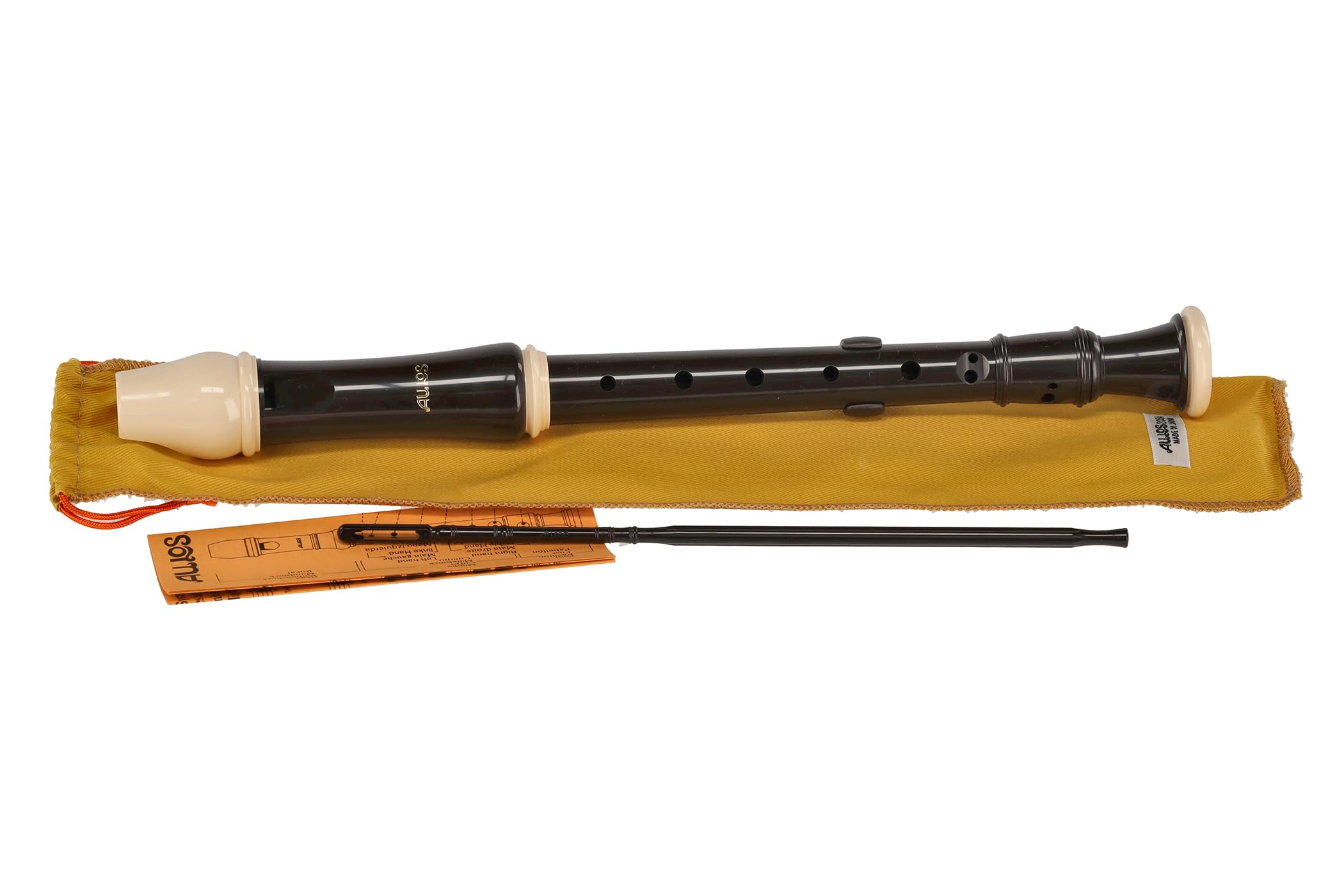
🎶 Elevate your first notes with the recorder that schools trust!
The Aulos 205A Descant Recorder is a premium beginner soprano recorder made in Japan, crafted from durable ABS resin with a 3-piece design for easy cleaning. Featuring Baroque fingering and a smooth windway, it delivers a strong, clear, and warm tone favored by music teachers across the UK. Supplied with a protective case, cleaning rod, and fingering chart, it’s the ideal starter instrument for children and beginners aiming to master their musical journey with confidence.


| ASIN | B000NCEQCS |
| Best Sellers Rank | 435 in Musical Instruments & DJ ( See Top 100 in Musical Instruments & DJ ) 7 in Recorders (Musical Instruments & DJ) |
| Body Material | Resin |
| Colour | brown/ivory colored |
| Country Produced In | china |
| Customer Reviews | 4.6 4.6 out of 5 stars (2,830) |
| Date First Available | 8 Feb. 2007 |
| Instrument Key | C |
| Item Weight | 81.6 g |
| Item model number | 205 |
| Material Type | Resin |
| Product Dimensions | 30.48 x 2.54 x 2.54 cm; 81.65 g |
| Proficiency Level | Beginner |
| Scale Length | inches |
| Size | Robin |
G**M
Brown and cream version of the Aulos 511B E Symphony Recorder. 5*****!
This is the brown and cream version of the Aulos 511B E Symphony Recorder, and I think it does look nicer than the black and white version that I borrowed to try before buying. I bought this at a sale price which was a lucky bargain, as I'd already decided on this model. This is as good as plastic/resin tenor recorders ever get. It even out performs many wooden tenor recorders, and you would have to pay many times the price to get a wooden one that matched its performance. It has a very balanced, solid and quality feel to it and produces a beautiful tone right through the range. The recorder is a 3 piece model and comes in a nice leatherette case with a cleaning rod, joint grease, clip on thumb rest and fingering chart/care instruction sheet. The centre section also has end caps for storage. The foot section has easy reachable levers for the low C and C#, which still produce a strong sound unlike many tenor recorders, and the tone is pleasant and easy to play right through into the high range. The precision build quality is apparent as soon as you start to assemble the recorder, with the joints fitting together perfectly. Only need very lightly greasing. If only all recorders were built to such exact tolerances! The finger spacing is typical of most modern tenors and as this is not my first tenor recorder, I found the spacing very comfortable. The tuning is spot on right through the range too, unlike my old tenor which was a cheaper brand and had serious uncorrectable tuning flaws. That has now gone to the charity shop! Aulos are not the cheapest of the plastic/resin recorders but this model is the best I've played. I'm usually a Yamaha fan, but after borrowing a Yamaha tenor and one of this model, I think the Aulos just has the edge on performance and sound. This makes it worth the extra few pounds to get the best. I can't find a single negative to say against it. 5***** for Aulos!
A**R
Good quality recorder
Really good quality recorder. Comes with a case and cleaning item which is very useful. Lovely sound too.
E**E
Fantastic value for money. Great to play.
I bought this to try to start relearning after a 36-year gap. At the time I bought it, it was just £4.65. My childhood recorders (descant and treble) were also from Aulos, and they played well and were pretty much indestructible. At under a fiver, this seemed like a fantastic bargain that would be more than good enough and, in case I didn’t enjoy it and gave it up after a week, I certainly wouldn't have wasted much money! It’s generally in tune, plays all the notes (chromatically) from middle C to D’’ (that’s the highest note, just over two octaves above middle C) with only a bit of a squeak on D’’ (I won’t blame that squeak on the Aulos; pretty sure that’s 100% my lack of recent experience). It doesn’t, of course, have the rich, mellow tone of a £2000 handmade, hardwood recorder, but it can make a pleasant, clear, consistent sound, across the registers. The only caveat is that it is easy to overblow the lowest notes and have them “crack”. If you try to correct this by blowing more gently, you can end up with the lowest notes sounding a little flat. Aulos has a reputation for excellent build quality and this model is no exception. Over the years, Aulos recorders will have regularly been sat on, used as a drumstick, chucked into school backpacks and had heavy books piled on top, then possibly used to whack irritating siblings, and mostly they have survived intact. I’m not seven any more, so I haven’t tried any of that, but it seems tough enough to survive it. It comes with a dark blue cloth drawstring bag, a thumb rest, a cleaning rod and a fingering chart. Like the recorder, its bag seems extremely well-made. It's made of a heavy-duty twill - even long-term, it should be hard wearing (and, importantly, washable). My main criticism is that it clogs fairly quickly - after about 10 minutes of playing, it starts to sound a bit “cotton-woolly” and I have to stop and dry it out. However, it’ll last an extra few minutes if you properly warm the head joint to body temperature before you start. TL;DR: Pros: Intonation - excellent - completely in tune. 👍👍👍 Response - excellent - easy to play the full range of notes. 👍👍👍 Tone - good - mostly pleasant, clear, consistent sound. Minor issues around the lowest notes. 👍 Quality - excellent - very robust. 👍👍👍 Appearance - Classic looks and I really like the ivory colour. 👍👍👍 Accessories - excellent - high quality and very useful. 👍👍👍 Cons: Clogging - happens fairly quickly; just keep it warm and swab out regularly. 👎 This recorder is obviously aimed at the primary school market, and it seems like a great choice for children of about 6-10. However, from experience, I can say that it is also suitable for adult beginners. I like the ivory colour - though, of course, that’s a matter of taste (it also comes in dark brown). I’d suggest that for a complete beginner of any age, you’ll want your first recorder to be a plastic one, and this is a good choice, though there are others you could consider. Yamaha, like Aulos, are a very reputable, long-established brand, and, for a child, they do some brightly-coloured, see-through descants (though I personally wouldn’t recommend them; who wants to see the spit clogging the thing up, as you play?!) Any of their recorder series starting YRS-3 are well worth a look, though. Aulos themselves do some well-regarded, more expensive descants, very suitable for the adult learner. The Symphony and 'Haka' models, especially, have great reputations, though, apparently, there isn't a bad Aulos recorder. However, if you are looking for an inexpensive recorder (it’s still only £6.49, as I type) that will get you, or your child, through the first year, or so, of learning, then there are far worse options than this.
M**N
Well made. Good tone
This is a very good quality plastic sopranino recorder from a respected manufacturer. It is well made and has a good tone. It comes with a cleaning stick and a fingeting chart, all in a sturdy soft plastic case. English fingering.
B**M
Good value
I'd never tried a tenor recorder before, though I've played descant (soprano) and treble (alto) recorders for very many years, and and I bought this for fun, to see what it was like. It's good. A nice warm tone and is fairly easy to play, though the fingers do have to be well splayed apart to cover the holes, and those with small hands would find great difficulty. This model is actually slightly smaller than others, and I picked it after doing a good bit of googling and research on Amazon itself. My problems stem from having somewhat arthritic fingers and wrists which tire much more quickly than on a smaller recorder, but I reckon the exercise is probably doing some good, so I'm persevering. It's excellent quality, comes in a nice case, and overall I am very happy to recommend this instrument.
P**A
Traditional style original plastic recorder
Excellent quality control from Aulos means even their cheap, basic, plastic, instruments are excellent.
S**D
Lovely recorder but no corduroy bag
Bought for my 7 yo daughter for school recorder lessons. Great recorder and nice quality but disappointed that it didn’t come in the corduroy bag - which would make it feel even more like the one I once used many moons ago.
J**A
Good one
All as described
A**L
Very well presented. Very nice tone. Sounds very pleasant and in tune. It is indeed easier to play compared to other plastic tenors like the Aulos Symphony or the Yamaha. I have small hands and I can tell the difference quite clearly, it is a dream for me.
F**A
Muito bom! Melhor que isso, só uma flauta de madeira profissional.
S**Z
Hier als Anfängerinstrument besorgt für kleines Mädchen mit 5 Jahren. Deutsche griffweise, somit unten nur mit 2x1 Loch statt 2x2 Loch. Einfacher zu greifen. Ich als Laie finde den Ton und die flöte klasse. Auch hat diese flöte einen "Haken" somit muss das Kind die flöte nicht festhalten wenn oben nicht gegriffen wird sonder es hängt die flöte auf den unteren Daumen auf. Super gelöst!!!
T**E
Ich besitze bereits eine Tenorholzflöte und habe mir diese sozusagen als "Backup fürs Grobe" gekauft. Außerdem sollte man eine Holzflöte ja wegen der Feuchtigkeit nicht stundenlang spielen, da lohnt sich ein Zweitinstrument auf jeden Fall. Von allen Kunststoffflöten, die ich habe, würde ich diese als (im Vergleich zum Holzpendant) beste bezeichnen. Die Flöte klingt warm und voll, nicht schrill in den Höhen und trotzdem definiert. Die Tiefen sind gut, vor allem da die kurzmensurigen Holz-Standard-Tenöre in den tiefen Lagen auch nicht viel besser klingen. Die Flöte ist weich genug, um im Ensemble mitzutragen, aber auch fürs Solospiel ausreichend geeignet. Ich würde den Klang irgendwo bei Palisander verordnen. Es ist ja nicht das Holz das schwingt, sondern die Rauheit des Flöteninneren, die durch Verwirbelnden den Klang beeinflusst (daher werden Kunststoffflöten eher unterschätzt, weil viele Laien analog zu einer Plastikgeige denken, die vom Schwingungsverhalten physikalisch nicht gut klingen kann, was bei Flöten aber gar keine Rolle spielt.) Durch den größeren Windkanal im Vergleich zu Alt und Sopran macht auch das Kondenswasser geringere Probleme, ein bisschen Spülwasser, und das Problem ist gelöst. Wie in einer anderen Rezension beschrieben, finden sich bei genauerem Hinsehen tatsächlich bei jedem Loch feine Nähte in der Kunststoffoberfläche. Es sind aber keine Risse, sondern kommt wohl vom Guss- bzw. Pressvorgang, wo der Kunststoff unterhalb des Loches wieder zusammenläuft. Vermutlich lässt sich das fertigungstechnisch nicht verhindern. Ich habe mich für eine Flöte ohne Klappen entschieden, weil hier überhaupt die meisten Probleme bei Kunststoffflöten auftreten. Einziger Kritikpunkt wäre die Nachhaltigkeit der Flöte. Während eine Birnenholzflöte nach ein paar Jahren verblasen ist und kompostiert werden kann, hält diese wahrscheinlich irgendwo eingegraben für 27000 Jahre ...
S**E
Excellente flûte à bec Tenor. Elle m'a réconcilié avec les ténors du fait de sa facilité de jeu, de son et de souffle. L'écart des doigts est à peine (1cm en moyenne même pas) plus grand que celui d'une alto. C'est quand même exceptionelle de la part de Aulos d'avoir réussi ce coup de maître sans changer la tonalité de l'instrument.
Trustpilot
3 weeks ago
3 weeks ago