

🚗 Elevate your paint game — spray like a pro, finish like a legend!
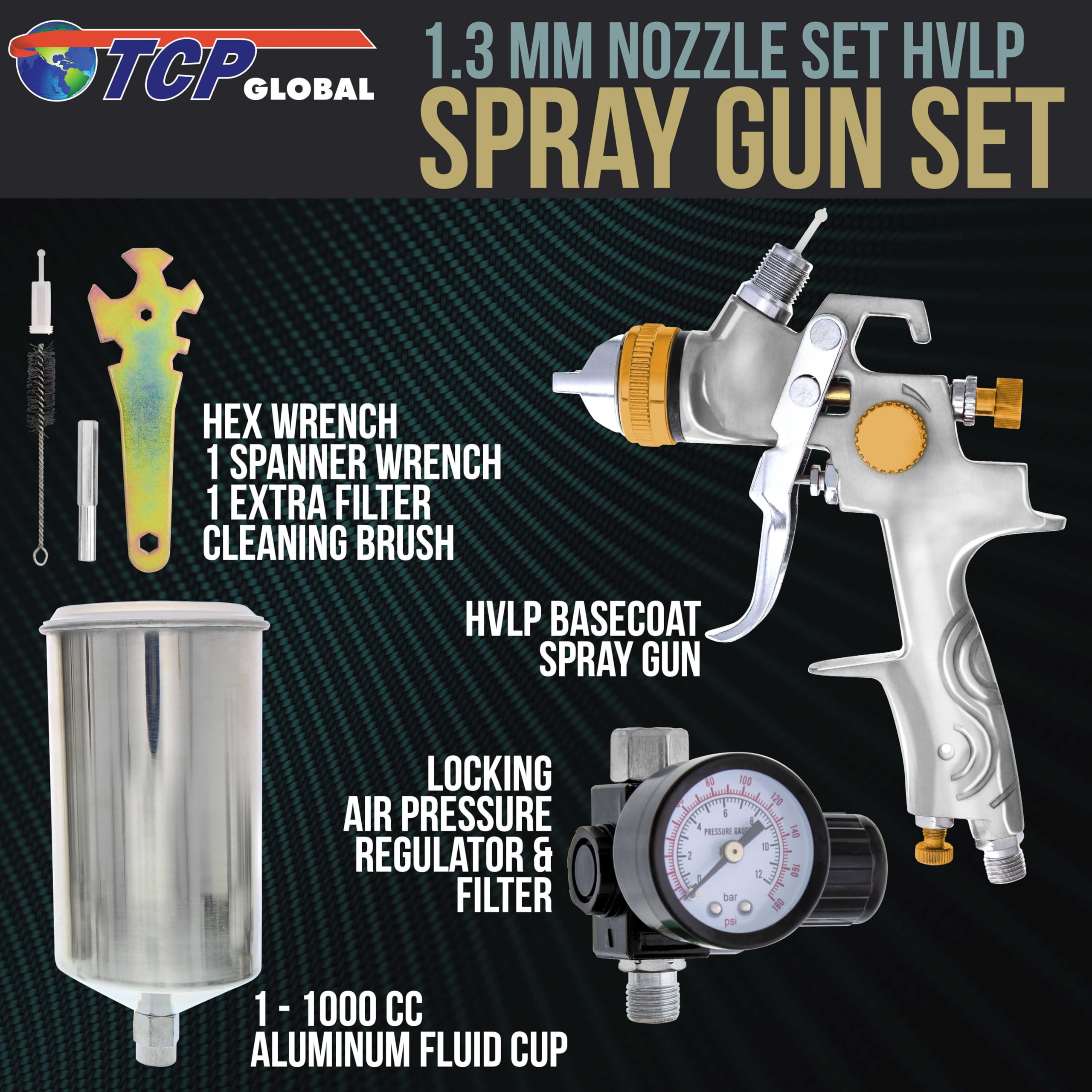
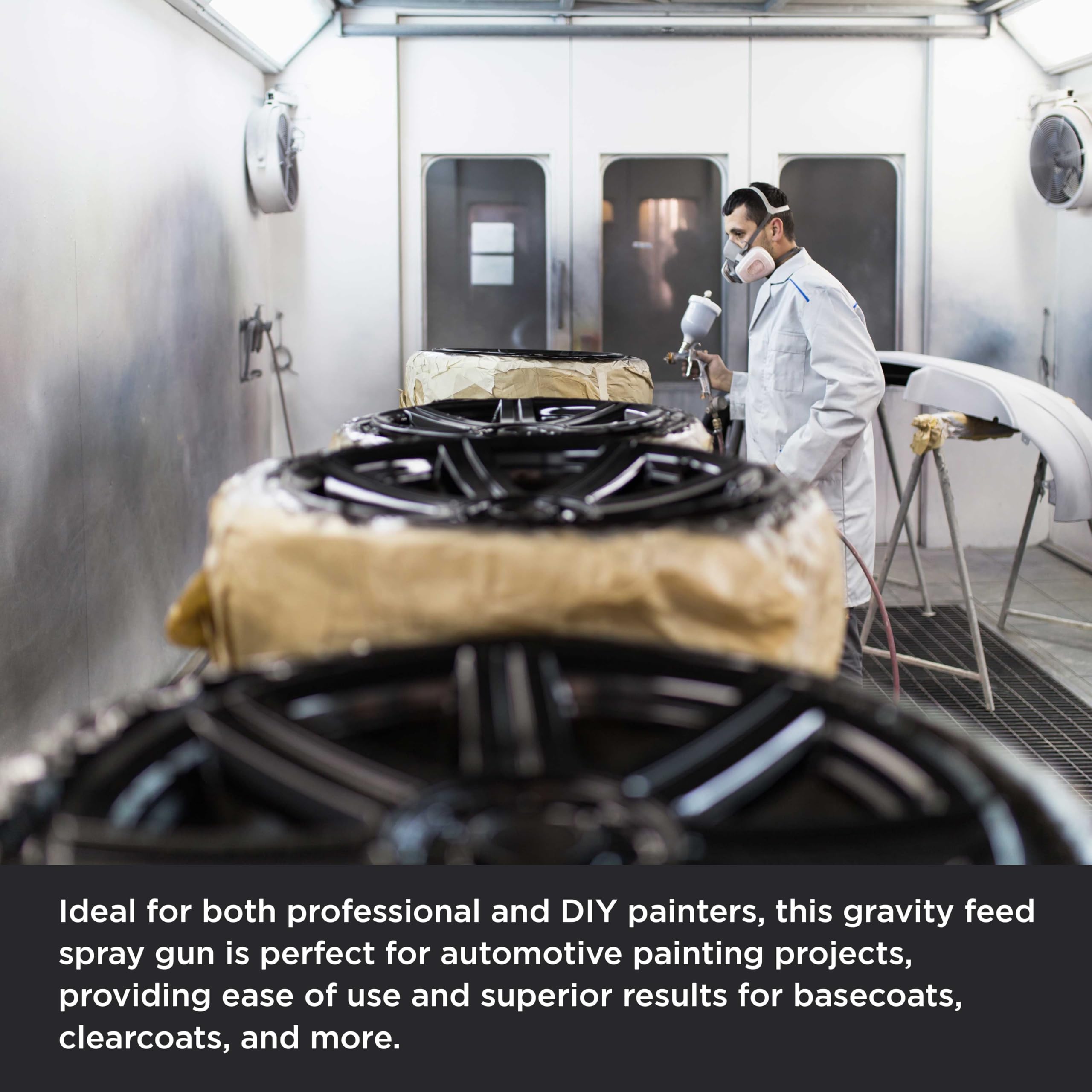
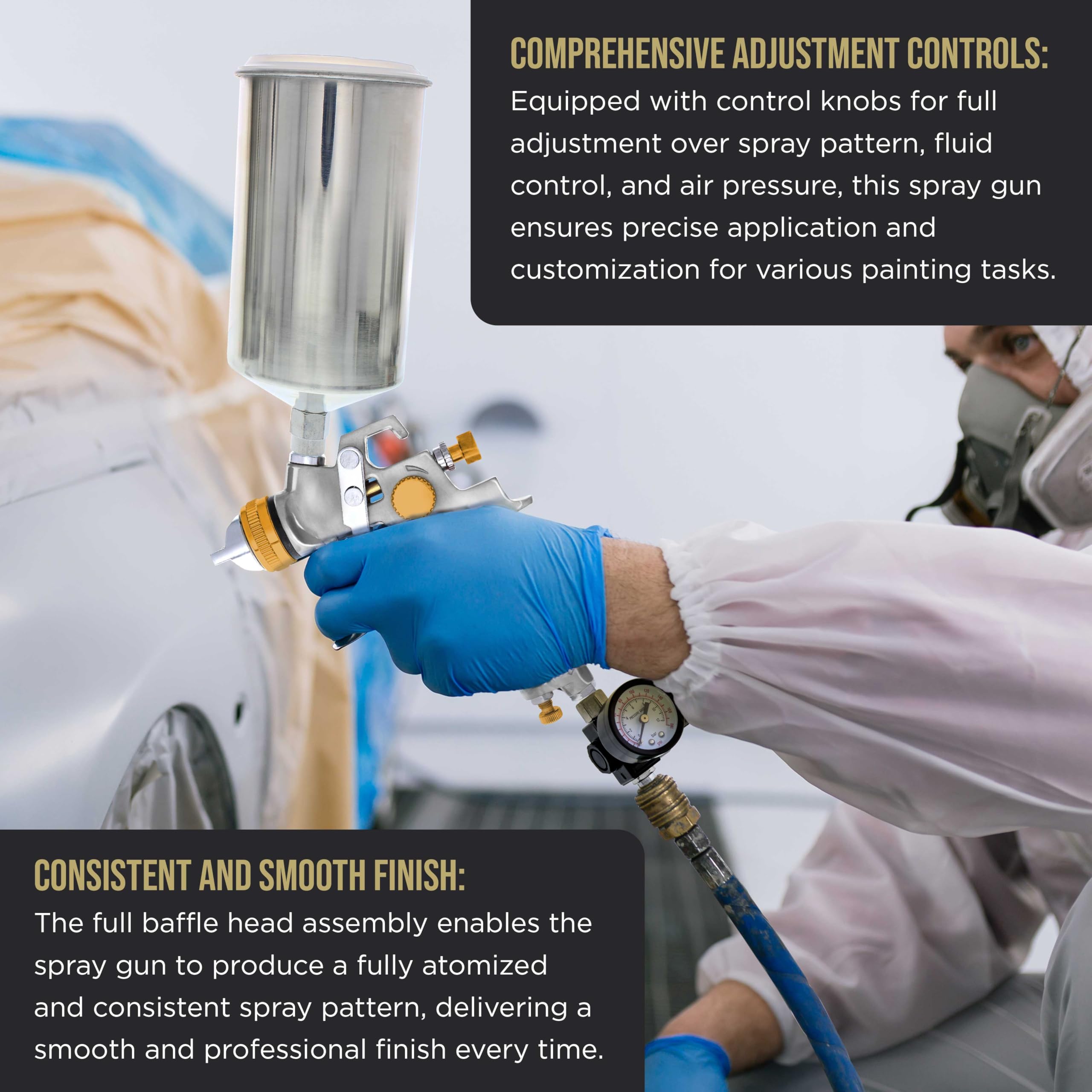
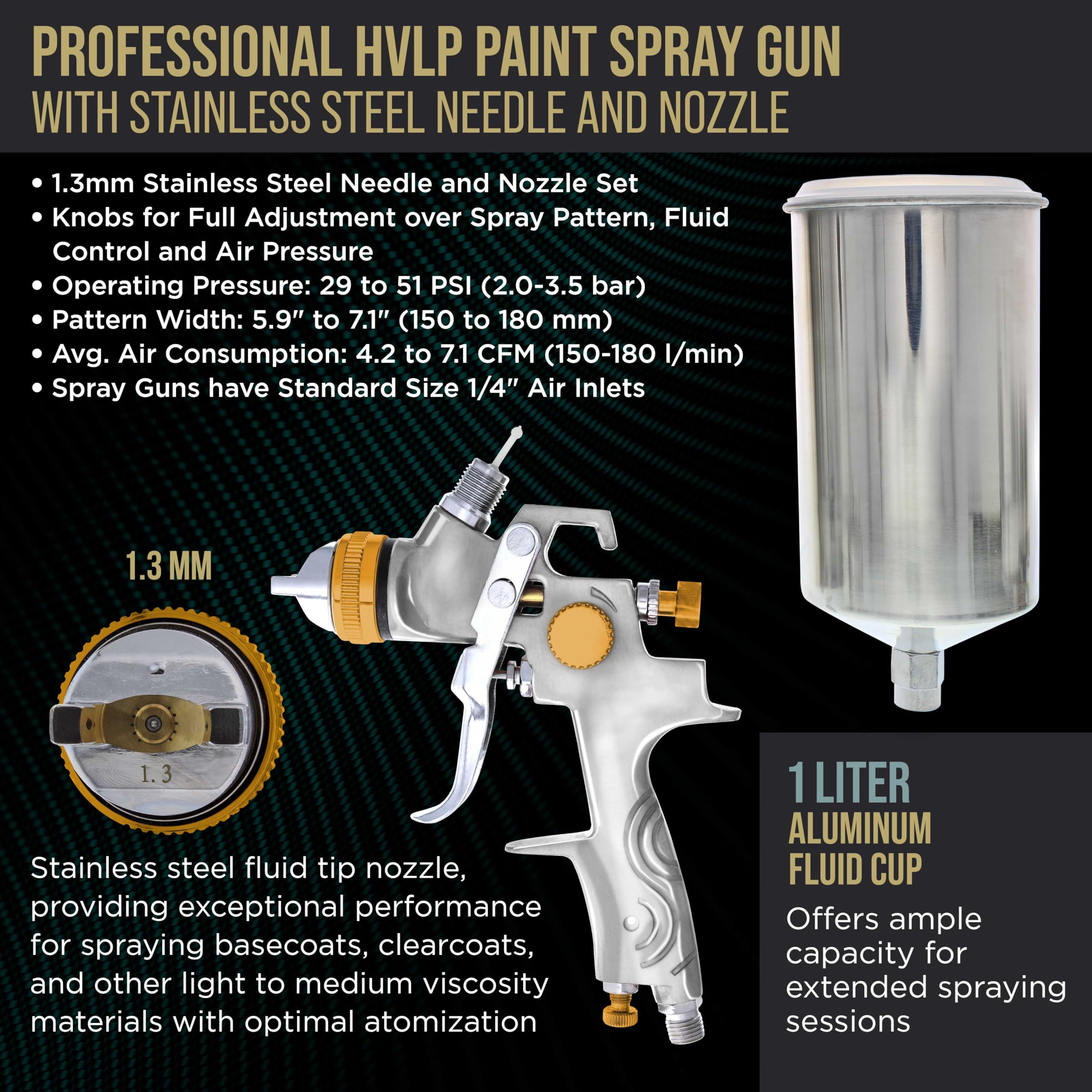
The TCP Global® 1.3mm HVLP Spray Gun is a professional-grade gravity feed paint sprayer designed for automotive basecoat, clearcoat, primer, and single-stage materials. Featuring precision adjustment knobs for spray pattern, fluid flow, and air pressure, it delivers optimal atomization and a showroom-quality finish. Built with durable aluminum and stainless steel, it includes a large 1-liter cup to minimize refills and maximize efficiency. Perfect for both professional painters and serious DIY enthusiasts seeking versatile, high-performance results.


| Best Sellers Rank | #572,561 in Tools & Home Improvement ( See Top 100 in Tools & Home Improvement ) #1,919 in Power Paint & HVLP Sprayers |
| Brand | TCP Global |
| Color | Silver |
| Customer Reviews | 4.4 out of 5 stars 2,293 Reviews |
| Item Weight | 0.01 Ounces |
| Material | Aluminum , Stainless Steel |
| Recommended Uses For Product | Painting |
| Tank Volume | 1 Liters |
A**R
Solid and Versatile Gun
Thirty years ago, when I put away my brushes and started spraying furniture projects, I bought a Devilbiss siphon feed gun. It’s a great gun for nitrocellulose lacquer, but I have never had a sophisticated enough booth to spray lacquer. For oil based polyurethane, siphon feed is not so great – lots of spitting and sputtering. I thought that was my fate until gravity feed HVLP guns came along. I am a big fan of the Harbor Freight purple gravity feed gun. I have two of them (for a total investment of $18.00 plus tax). I also have two of Harbor Freight’s professional guns. They are so inexpensive, I can have a separate gun for each type of material and avoid any chance of cross contamination. There is not much difference between the two Harbor Freight guns, though the professional guns spray a little smoother. Most of the gravity feed HVLP guns on the market seem to have been made from similar molds. I build furniture and spray mostly water borne clear topcoat finishes. However, from time to time, I do spray oil based finishes, stains and latex paint. For different materials, we need different size nozzle sets. Though the Harbor Freight guns are incredibly inexpensive, there is no way to obtain different size nozzle sets for them. Believe me, I have tried. All you can do is adjust the viscosity and the results of thinning material can be undesirable. As a result, the Harbor Freight guns totally lack versatility. That is what drove me to the search for an HVLP gravity feed gun for which different nozzle sets were available. I found two, both on Amazon. One is the ETE Etmate HVLP gravity feed gun and the other is the TCP Global Brand Professional HVLP Spray Gun. I prefer the TCP because it is a bit more sturdy and because the nozzle sets can be purchased separately. So far, I have purchased 2.0 mm and a 2.5 mm nozzle sets and I have only used it to spray latex. Of course, if a gun can spray latex well, it can probably do anything. The gun arrived while I was in the middle of spraying primer and 3 coats of latex on a project of five cabinets that I had started with the Harbor Freight purple gun with a 1.7 mm nozzle set. So I switched over to the TCP with a 2.5 mm nozzle set between coats. What a difference! With the paint properly thinned, it flowed on almost as well as oil based (but without the toxic fumes and difficult clean-up). I have read some reviews complaining about the grease on the gun upon arrival. Come on! You have to clean a spray gun out of the package. You should never risk your project with a new gun that has not been cleaned and tested. The instructions call for running lots of solvent through the gun to clean it. I don’t do that. I break the gun down, immerse it in solvent, and clean it with brushes. The key to cleaning the gun is removing the nozzle so you can really flush it out. All these guns come with a wrench that fits the nozzle, but you could break the gun or even your hand before that nozzle will come out. I read somewhere that a heat gun will dissolve the locktite put on the threads at the factory and the nozzle will come right out. It works! I have now removed the nozzles from all of my spray guns, thoroughly cleaned the locktite off the threads, and I have been able to clean them more thoroughly and with less effort than ever before. The one drawback I have observed on the TCP gun is the huge metal cup. TCP is probably marketing this gun to automotive painters who need more material and don’t often have to wrangle the gun into tight spaces. Once I experienced the arm fatigue of that big cup, I went to Home Depot and bought a smaller plastic cup for my TCP gun. You could also use the disposable cups Harbor Freight sells. All that said, I recommend this TCP gun with little reservation. I sure appreciate some of the detailed reviews some other Amazon customers have offered on other products. So, I hope this review has been helpful to some others. By the way, if anyone wants a really expensive vintage Devilbiss siphon feed, I have two of them hanging on the wall of my spray booth collecting dust.
C**K
Incredible quality at such a bargain price
I bought this along with a 2.5 of the same model to spray Autobody polyester primer. Both guns work amazing! I also build and finish cabinets and other woodworking projects, spraying nitrocellulose lacquer. Just for fun I thought I would try these on some cabinets I was spraying the other day. They worked amazing! For the price you cannot go wrong. I read a review on these guns where the guy writes, stated that he just throws the guns away when he's done spraying. That is insane!!! I don't care how cheap it is, we have to think about the wonderful workers that build these guns, putting their pride of quality into assembly and final testing. Throwing this gun away is downright disrespectful, especially when it cleans up so easily. I've sprayed multiple gallons through these guns while my Iwata guns and Sata guns are hanging on the gun hangers. I continue to use these even though they are a fraction of the cost of my regular paint guns. Its fun to see how well they spray job after job, making me more and more money, all the while thinking about the dude that thought it was cool just to throw it away after one job.....insane! Buy it, care for it by taking apart to clean it, only takes about 5 minutes to do a good cleaning. You will not be sorry and you'll still be using it next year holding a bunch of extra cash in your pocket. Note: make sure to purchase the proper fluid tip and needle size for the product that you will be spraying. I bought the 2.0 and the 2.5 because I originally purchased these for polyester primer. The 2.0 works great for nitrocellulose lacquer but if I tried to paint a car with this setup, would not be a good thing. If you need a beginner gun to shoot automotive base-coat and clear coat, buy the 1.3 tip size for your starter gun. Turn the volume screw all the way in, back it out about 2-3 turns, open the fan pattern screw all the way out until the fan is at its widest pattern. Now turn it in just a little bit, while spraying cleaning solvent through it so you can watch the pattern, turning the fan knob in until you see it just start to narrow, this is where you want your fan pattern for normal spraying. Now go practice on an old fender or something like that. Keep the gun cap about 6 inches off the panel, use a 70% overlap of the fan pattern while adjusting your speed of movement to compensate for the amount of flow coming out of the tip and the amount of overlap you're using. If you feel you're not getting enough paint or clear coming out of the gun,open the fluid knob a 1/4 turn at a time until you get the volume where it works best for you. Remember, if the gun is too far off the panel, you will never succeed. The tips for success is: close in,(about 6 inches), tight overlap, (about 70%), adjust the speed of movement to achieve the finish you're looking for. Practice, Practice, Practice! Before you know it, even with this inexpensive spray gun, you can be laying down a finish to be proud of. Have fun!
S**E
It's getting the job done for a newbie
I didn't have any prior experience with HVLP sprayers, but I am doing a cabinet refacing in our kitchen and had a lot of doors and drawers to paint. The price on this gun seemed pretty good, and reviews were decent, so I gave it a shot. So far it has worked out pretty well. I've painted around 40-50 doors with it and the gun has performed better than I have. I'm still learning how to get it dialed in correctly for the best finish, but that reflects more on my skills than on the gun itself. I do seem to be getting better at it. Cleaning it isn't too bad. I've had a high pressure sprayer in the past and I remember it being a pain in the neck. This one you can remove a few components with the supplied wrench, then it rinses out with water pretty easy. The only thing I have had trouble with is I can't remove the main brass fitting that the nozzle screws in to. It is TIGHT! I tried using the supplied hex wrench and I felt like I was going to break something before I could get it to crack loose. Fortunately, it doesn't seem to hinder cleaning to leave it in place, so I haven't worked too hard at removing it yet. I did pick up a couple different sized nozzles to go with it, because it seems like a lot of times when you buy a tool like this then come back later to get accessories, they no longer exist. Haven't used anything but the 1.8 yet. I have been spraying latex, thinned about 20%. The only complaints are: 1. The regulator got screwed up and a part ended up breaking. I don't know if I turned it too far or it jammed or what, but it suddenly stopped regulating and started leaking like crazy. I fiddled with it for a while and ended up breaking a plastic piece in the knob, then it REALLY got messed up. Fortunately, I have a 3D printer, and I was able to print a replacement part and get it working again. 2. The interior of the aluminum paint cup is the perfect surface for bonding to primer! The first time I poured in primer, it stuck to the walls of the cup and now appears permanently bonded. Maybe some steel wool or scotchbrite would take it off, I haven't tried. It doesn't seem to affect anything so not a big deal. It's just kind of annoying that it stains so easily. Not sure if a smoother finish would help. For you fellow noobies out there, be sure to get a line drier. Maybe a couple. I have two installed now because I was still getting water drips out the end with just one. I live in Colorado where it's fairly dry and have never had a moisture problem in my hose until I started spraying. Now it's crazy wet. First attempt was a mess with big drips landing on the MDF and raising the grain ruining the finish. It can't be too dry! I'm happy with my purchase. I'm almost done with the cabinets, and really my goal was just to have a gun that would get me through that project. The fact that it still seems to be going strong and will get more use in the future is a bonus. Dinging one star for the regulator that caused some grief, otherwise it would probably be a 5.
D**T
Tcp hvlp spray gun
Yes the TCP spray gun work perfect for the primer that i used it for.
W**.
A Savior of a most expensive paint job.
When remodeling my house I found a beautiful metallic brown paint from Home Depotfor my living room accent wall. But the specialized roller would leave a least one streak.I went through several gallons of paint to get it right. Home Depot advised me to try using a HVLP sprayer. So I went to Harbor Freight to save some money and bought a Hvlp spayer and that didn't come out looking right. I was thena dvised to rent a commercial sprayer. Well that $120 afternoon rental made the job very quicik n easy but gave the same look as the Harbor Freight Hvlp sprayer gave. I was about to give up but I was checking out Professional Sprayers for Automotive painters and then learned about larger diameter sprayers for metal flake. Those sprayers cost hundreds of dollars and lve spent way to much money already for just one 20 foot living room wall. So I looked on the internet for the lowest priced large diameter metal flake sprayer and found this one Amazon. Well low and behold it work marvelously. It worked so good that sprayed on 3 coats of clear coat on top of it for easy washing and also because they discontinued the paint due to its difficult usability 10 years later the wall is still looks as good ever and it continues to get complements from most of the my visitors who see it. I've painted many more wall with it over the years.You can purchase different diameters but I only needed the one came with. It lays down non- metallic paint thick enough for 1 and done coats with out running. Its a great bargain and will purchase again because I lost the screw adjustment being to hasty cleaning and transporting. Thats the only problem I ever had with it.
N**N
Great for spraying Latex Paint
I bought this gun primarily for spraying latex paint, based on other reviews that I had read. For the record, I also have a Graco cordless sprayer that cost nearly $700, but I prefer this unit for most jobs. The Graco throws a TON of paint - great if you're painting big areas, but not great for smaller/precise/detail work. This gun is also much easier to clean out. I've used this gun mainly for spraying doors, though it would also work well for trim and furniture. If you're painting walls, a roller would probably be faster. I highly recommend using floetrol for reducing the paint and for helping it to flow out evenly. Most latex paints will need to be thinned for spraying with this sprayer. The amount of reduction will vary depending on the consistency of your paint. I just sprayed a gallon of Sherwin Williams Emerald, which comes out of the can about the consistency of pudding. I mixed roughly two parts paint with one part Floetrol and one part water. If I dip my stir stick in the paint, and then pull it out, I would get a stream of paint for about four seconds before the stream breaks up into individual drops. This seemed to be a consistency that sprayed well. YMMV (your mileage may vary). I set the gun regulator to about 60 psi. With my setup, it dropped to about 40 psi when actually spraying. The paint seems to splatter quite a bit when first sprayed, but the floetrol makes it flow out to a nice, even finish. I also added an inline moisture separator (NANPU brand, also found on Amazon for about $30). This probably isn't as critical with latex paint as it would be when spraying oil-based or lacquer paints, but it's still a good idea. You can see my photos - I'm totally happy with the results. This is so much easier than brushing paint on the doors. Keep in mind that if you're spraying any kind of oil-based, lacquer, or urethane paints that you'll want a gun with a smaller tip. This gun might also work for spraying super-thick automotive primers, but other than that I would only use it for thick latex paints. This gun does use a ton of air. A small pancake compressor just isn't going to keep up. I wasn't prepared the first time I used it; I had to run two compressors, and swap between them every 30 seconds or so. The next time I used a 3hp Harbor Freight compressor with a 21 gallon tank. I could almost spray 1 full side of a door before having to wait a minute for the compressor to catch up. Thankfully the paint flashes slowly (especially with the floetrol), so even if you have to stop for a minute halfway through a door it shouldn't cause any issues.
J**N
Junk
This gun worked ok the first time I used it. After that it leaked at bottom of paint cup and no way to fix it, also nozzle started dripping and can’t fix it. I would not recommend this gun. It’s Junk
T**2
Can’t Sufficiently Take Down to Clean
The only other HVLP gun I’ve tried before was the HF Purple gun, so admittedly, I’m a paint sprayer beginner. My application is spraying latex and primer on home projects (trim, doors, furniture, etc.) The purple gun would not spray latex well, even with modifying the fluid nozzle and thinning the paint. I found the TCP gun to be worth a shot since it had a 2.5 tip and reviewers experienced success with thick material. This week’s project was to spray primer and latex over a stained fireplace mantel. I used 40 psi, no filter, fluid adjustment knob backed all the way out. and thinned both the primer and Sherwin Willams paint with 15% Floetrol Flood. I shot 2 coats of primer and 3 top coats. My project was a success and I’m pleased with the smooth finish. The gun worked well and I would recommend it as a viable option for thick paint.. Also, this gun ships with a significant amount of grease, so best to clean that before use. The problem I have is not being able to unscrew and remove the Fluid Nozzle Joint in order to sufficiently clean the inside. It comes with a wrench and allen type tool to remove the Joint, but good luck getting it off. The first one stripped the wrench so I called TCP and spoke to someone in technical support. The answer given to me was I shouldn’t have to remove the Joint to clean the gun. I asked what size allen would work, because a 9 or 10mm didn’t, and they had no idea. Unacceptable answer for me and since I like the gun, I set up an Amazon replacement. Less than 24 hours later, Amazon delivers a new gun (nice job Amazon). This one had even more grease, so I disassembled it for a thorough cleaning. Guess what….the Joint is screwed on by the Hulk himself and can’t get it backed out. Immediately stripped the wrench. So frustrating. I’m sending it back. The guns works well and at 50 bucks it’s a great value, especially if you’re ok with “good enough” cleanings. I’m more particular about my stuff. I don’t consider it a disposable gun and with proper cleanings after use, it certainly doesn’t have to be. After this post, I think I will shoot TCP an email and see if they offer any support / suggestions. What I’d like is if they loosen the Nozzle Joint prior to shipping, that way we can disassemble and degrease the thing, It also would be nice if the Joint was a standard size allen, but I doubt that will change.
Trustpilot
2 weeks ago
1 month ago