Desert Online General Trading LLC
Dubai, United Arab Emirates
Desert Online General Trading LLC
Dubai, United Arab Emirates


Full description not available
R**N
Excellent Book
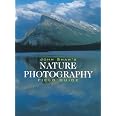
Quick summary: excellent - buy it. For more detail, read on.Possibly the best book about photography I've ever read. It doesn't just describe nature photography, but also goes into many technical details about how to obtain the picture *you* want to obtain. Many of these details are fundamental to all types of photography (exposure, lighting, etc.), so there is something to be gained for everyone.However, as the title of the book clearly indicates, the bulk of the text is dedicated to photographing in outside lighting - it *is* nature after all - so you might want to consider another book if your primary interest is indoor studio photography.In terms of experience level, I think anyone from an amateur photographer just starting out to the seasoned pro will find useful tips and anecdotes in this text. I've been using an SLR camera for many years but I'm amazed at how many things I've learned from this book.One small drawback is that the author only uses Nikon cameras and hence most of the equipment related advice is for Nikon branded equipment. He does occasionally mention Canon equivalents, although the charts and comparisons of sizes, weights, etc. are only for Nikon. Still, I use a Canon camera and found this to be only a very minor annoyance.The book has so many excellent photographs (185) in it that it would be worth buying for the pictures alone. However, as long as you're buying a book of pictures, why not throw in an excellently written text describing in great detail how the pictures were taken and how to obtain similar results yourself?It also has all sorts of interesting mini chapters - one is even included on how to take aerial photographs and includes advice on the types of planes and pilots to rent! A section I think I'll find especially handy lists some of the author's favorite shooting locations and what you can find there by month of the year (mainly in the United States).The book was published fairly recently (2000), but still deals exclusively with film (mostly slide). So those of us using the newer digital SLR's will want to skim past the sections on choosing a film type, push processing your film, etc. However, it's kind of fun to read over these sections and realize how much easier things are now with digital. No more waiting through a whole roll of film to change your ISO, much faster ISO speeds with good results (I frequently use 1600 for macro work with no problem), no need to *buy* film or process, etc. After you've read the book, go out and buy yourself a Canon EOS 20D or equivalent and you'll see what I mean. ;-) The only time I wished the book discussed digital is with regard to the number of stops film can accurately reproduce (about 5). It would have been nice to see the equivalent information for digital, and some sections on digital exposure tips and tricks - but I suppose this is for the next version of the book.Highly recommended.
H**6
Detailed Photos and Attention Grabbing Techniques.
Let me just thank [...]Now to the book. I made a cursory reading of Nature Photography Field Guide and I can already tell that I did not make a mistake ordering it. It is like a course in photography itself on first glance with specialization in nature and outdoor photography. All the main stuff that I wanted to know are there: exposure, what type of lenses to use, equipment and film, composition, etc.I especially like the fact that tricky lighting situations and exposure are addressed and techniques recommended. This is the chapter that grabs my attention at the moment, as this is my weakness: how to compensate exposure manually based on scene lighting. I will try out Shaw's suggestions as soon as I can. His photos are breathtaking and detailed with camera, lenses and accessories used.I shall be updating this review once I made thorough reading of it. Meanwhile, thanks again Amazon for the speedy delivery of my copy of Shaw's Nature Photography Field Guide and Immortal Beloved DVD!
J**E
Great advice for all photographers
John Shaw is a master photographer who excels at communicating his knowledge in very clear and concise language. This book is a marvel of efficiency as he covers topic after topic in highly succinct fashion. While keeping each section brief, he manages to teach a lot in the clearest way possible.Many tips on how to get correct exposure and strong composition are in here as well as techniques for macro photography. Also, a significant portion of the book is devoted to considerations when purchasing equipment and the information is invaluable.As others have pointed out, the equipment he favors is not cheap but some seem to miss the entire point of those chapters. Shaw does not give the reader a shopping list. He discusses the pros and cons of various equipment and encourages you to weigh the trade-offs to develop your own equipment list. Since much of the better equipment is expensive, this may mean rationing your money to get the best bang for the buck.This is an excellent book. It covers a variety of topics with a rare clarity that makes it a must have for any serious photographer.
G**R
Excellent Introduction to Photography
Although written for film photography rather than digital, if you need to learn the basics of exposure and lenses and the general process a photographer must go through to take great photographs instead of just snapshots, this is an excellent guide.The basic fact of the matter is that good photographs are produced in this order1. Photographer's "eye"2. Good equipment, handled expertly3. Post processingDigital photography differs from film primarily in the last category. This book's focus is on the first two, without which good photography is not possible. Look elesewhere for books on Photoshop, but look here to learn how not to need it so much.
Trustpilot
2 weeks ago
2 weeks ago